The Secret Cost of Eggs
Many compassionate people refuse to eat meat because they know that killing an animal for his or her flesh is wrong. They might not realise, however, that eggs, although unfertilised, still come at a terrible price.
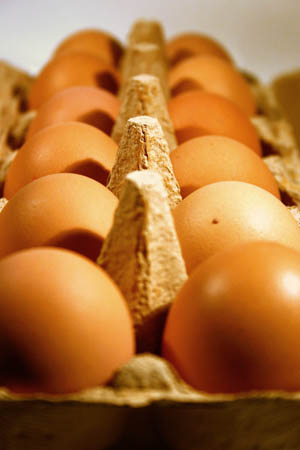
The UK has a laying flock of 34.8 million chickens, each one of whom lays roughly 314 eggs per year. This flock includes both “barn” and “free-range” birds. Don’t be fooled by the labels, though, as these animals are still typically kept in squalid, crowded conditions; are often debeaked, a painful mutilation in which the ends of their sensitive beaks are cut off; and are usually slaughtered after a year of laying. The egg-hungry British public consumes more than 11 billion eggs every year – roughly 30 million a day! This figure includes eggs eaten whole and processed or as part of other products, such as scotched eggs, egg sandwiches and mayonnaise.
The average price of an egg is worryingly low at only 7.5 pence, but the egg industry itself is worth about a billion pounds per year. A typical hen will make a farmer £2.35 a year (or as little as £1.80 for intensively produced eggs). At this price, you start to realise how much is not spent on the welfare of the birds. The fact that one chicken can be housed and fed (and turn a profit) for a week at less than the cost of a penny sweet is quite frankly alarming.
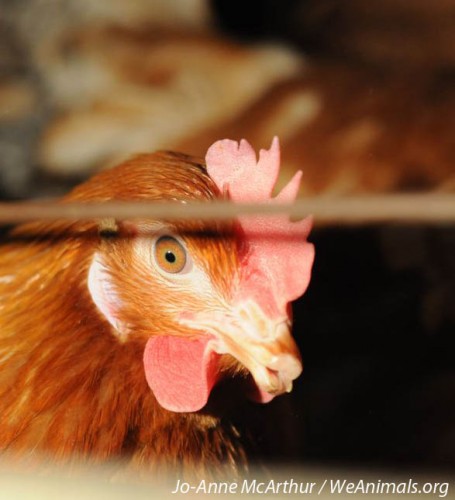 An average chicken in the UK is kept “producing” for around 12 months. During this short time, chickens may be kept in cramped barns with only artificial light or in severely crowded squalid conditions – a far sight from what is shown in adverts to the public. It’s hard to think which birds have it worse, though, the 34 million hens who are fed a high-calorie diet in order to produce eggs or the same number of male chicks who are killed days after hatching because they are deemed “useless” by the egg industry.
Most hens are treated as egg-laying machines whose only purpose is to fill the demand for low-cost eggs. It’s no life for these intelligent, curious animals. The best way to help chickens is to stop eating their eggs and flesh altogether – because labels such as “free-range” and “organic” certainly do not mean “cruelty-free”. These birds can still be farmed intensively, denied the most basic freedoms and usually killed in the same terrifying abattoirs as conventionally reared chickens.
Now that you’ve learned about the ethical implications of egg production, please consider going vegan. Our free vegan starter kit will help you on your way to a truly compassionate diet – order yours at PETA.org.uk/vsk
Help Animals in 2026: Renew Your PETA Membership!
Donate Now