PETA’s Campaign Urging Hermès to Drop Wildlife Skins
PETA entities have documented how in the fashion industry, workers hack at crocodiles’ necks and shove metal rods down their spines, chop off conscious lizards’ heads with machetes, and electrically stun ostriches before slitting their throats in full view of their terrified flock mates.
PETA is urging Hermès to stop using skin taken from snakes, crocodiles, alligators, or other animals in its collections. See our latest actions below, and send Hermès a message!
Update (13 November 2025): Body-Painted PETA ‘Crocodile’ in Filthy Pool Condemns Hermès’ Skins Sales
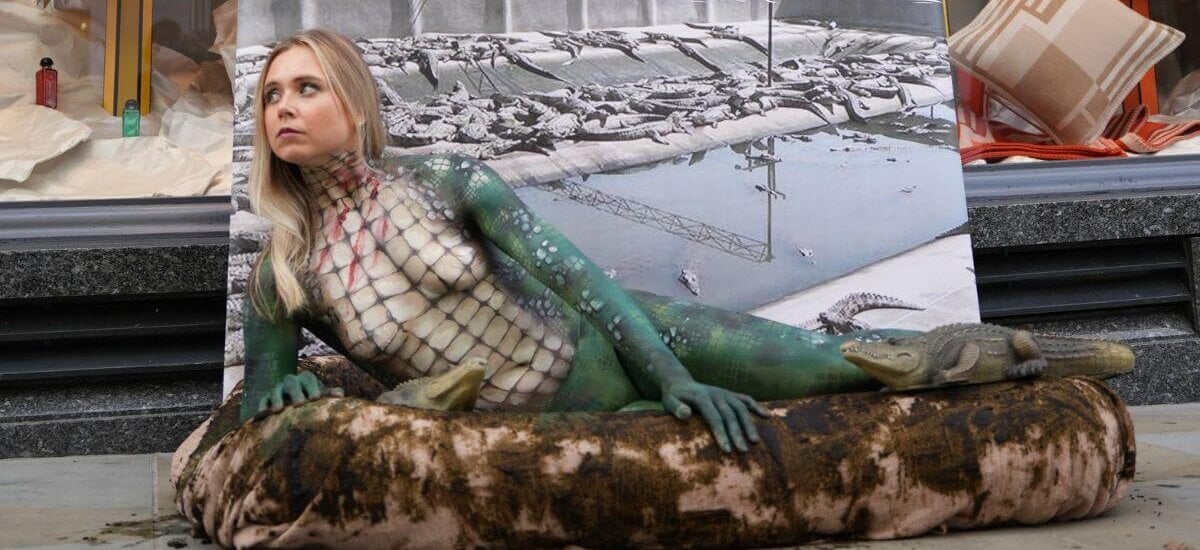
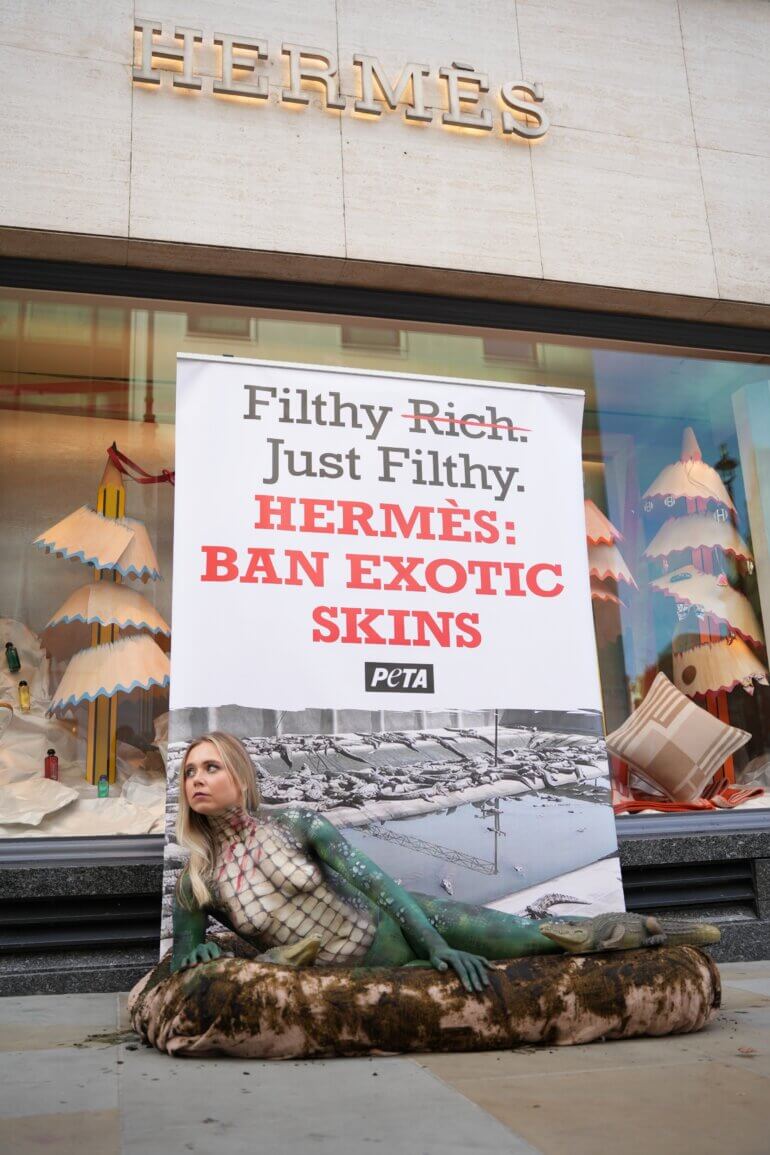
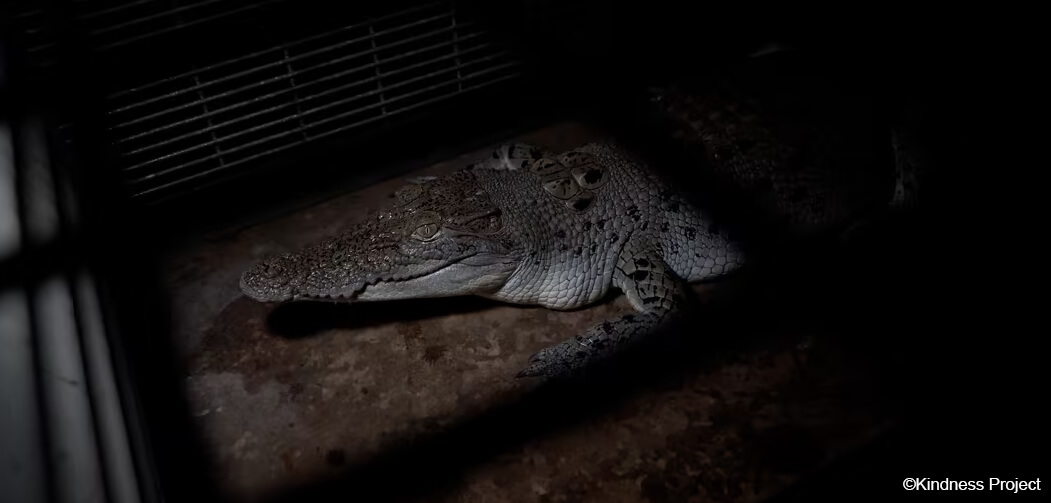
London’s New Bond Street shoppers got an eyeful when a PETA supporter body-painted as a crocodile lay in a pool of dirty water beneath a banner with the message “Filthy Rich” -Just Filthy” outside the Hermès store, slamming the “luxury” brand for peddling the skins of tormented wild animals. Footage of farms owned by Hermès and its suppliers has revealed that crocodiles are confined to dank, unsanitary concrete pools and cramped wire cages before being electrocuted, mutilated, and stabbed with a screwdriver.
Update (9 July 2025): Auction of Original Birkin Bag Prompts PETA Plea to Owner: Donate Proceeds to Wildlife Charity
Ahead of the 10 July auction of the original Hermès Birkin bag, PETA has sent a letter to the bag’s current owner, Catherine Benier (founder of vintage boutique Les Trois Marches) asking her to donate the proceeds from the auction – which could be in excess of €500,000 – to wildlife charities to make up for at least some of the harm caused to animals by the production of Birkin bags.
Update (2 July 2025): Hermès CEO Receives Birthday Gift from Charles Darwin Descendant Urging Him to Evolve
For his birthday on 3rd July, Axel Dumas will receive an unusual gift: Charles Darwin’s great-great-grandson is sending the Hermès CEO a copy of his ancestor’s famous work, On The Origin of Species, to encourage him to evolve and leave wild-animal skins, such as those made from crocodiles, ostriches, snakes and lizards, in the brand’s past.
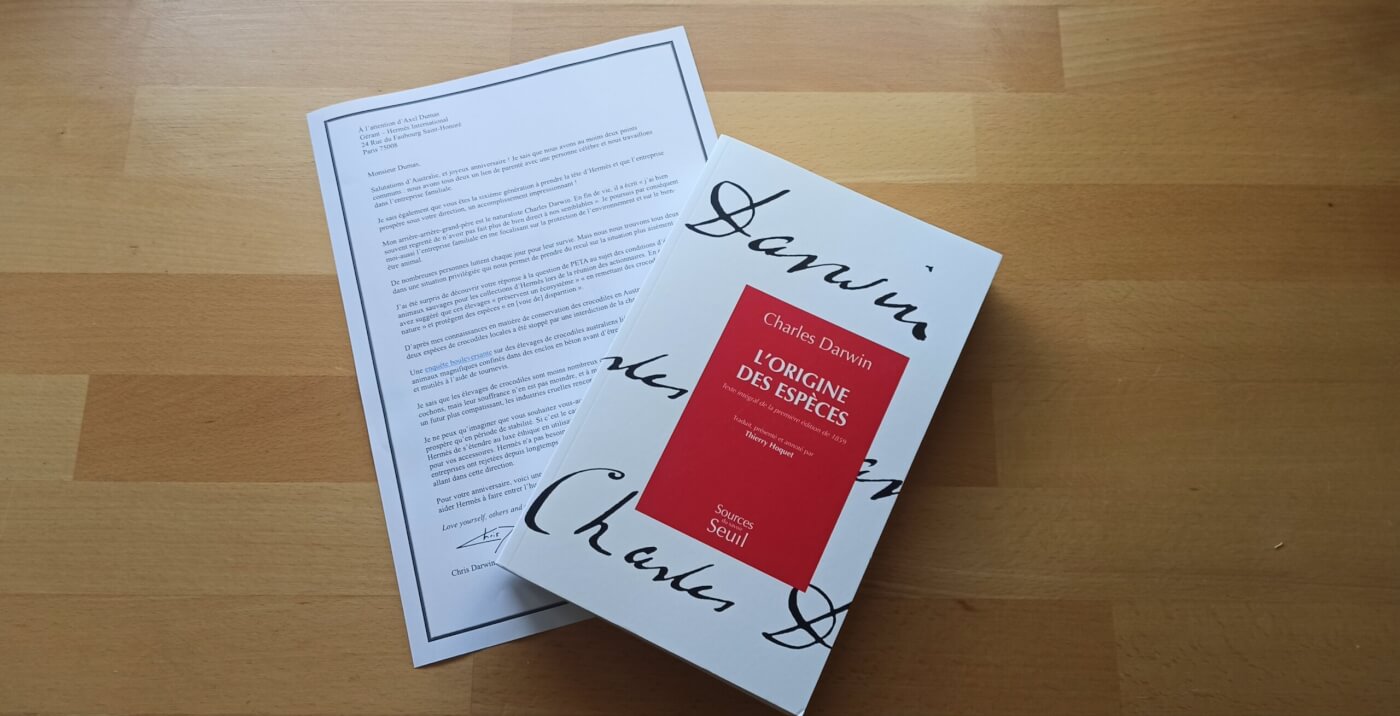
“I know we have at least two things in common: we are both related to famous people, and we both work in a family business,” writes Chris Darwin in a letter accompanying the gift. “My great-great-grandfather is the naturalist Charles Darwin. Late in life, he wrote, ‘I have often and often regretted that I have not done more direct good for our fellow creatures.’ Consequently, I also work in the family business, which focuses on nature conservation and animal welfare.” He goes on to say, “I urge you to consider the opportunity for Hermès to expand into ethical luxury by using eco-friendly plant-based leathers for your accessories. Hermès doesn’t have to be wedded to cruel materials that other companies shunned long ago.”
As a conservation expert, Chris Darwin refutes Axel Dumas’s claims made at the recent Hermès shareholders’ meeting, where the CEO said that the Australian farms which supply leather to the fashion house “preserve ecosystems” and protect endangered crocodile species. In the letter, Darwin clarifies that the decline in these species has, in fact, been prevented by banning hunting. The conservationist also cites an investigation by the Australian group Farm Transparency Project, filmed in intensive farms owned by Hermès, which shows crocodiles confined in cramped concrete enclosures or barren cages before being electrocuted, dragged, mutilated, and stabbed with screwdrivers.
Update (29 April 2025): PETA Entities Speak Out Ahead of Shareholder Meeting
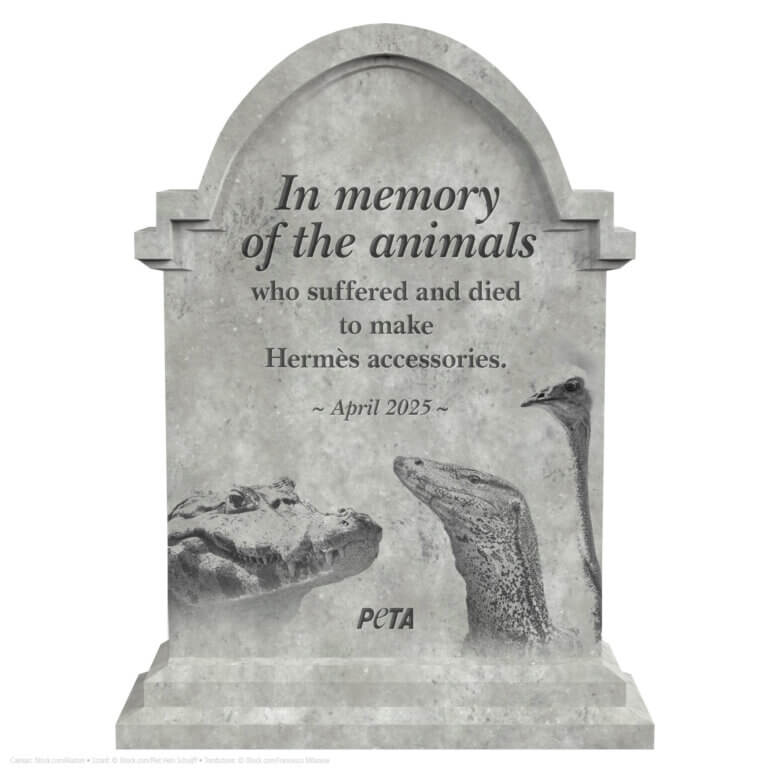
Ahead of the Hermès shareholders’ meeting on April 30, PETA France sent a letter to the mayor of Neuilly-sur-Seine, Jean-Christophe Fromantin, requesting permission to place a memorial in the town’s cemetery, where founder Thierry Hermès is buried. The tombstone would commemorate the wild animals killed for the brand’s “luxury” bags.
PETA US, which owns stock in the company, will also be asking Executive Chair Axel Dumas to address a question on wild-animal skins during the meeting.
Update (28 September 2024): Activists Take Over Hermès Runway
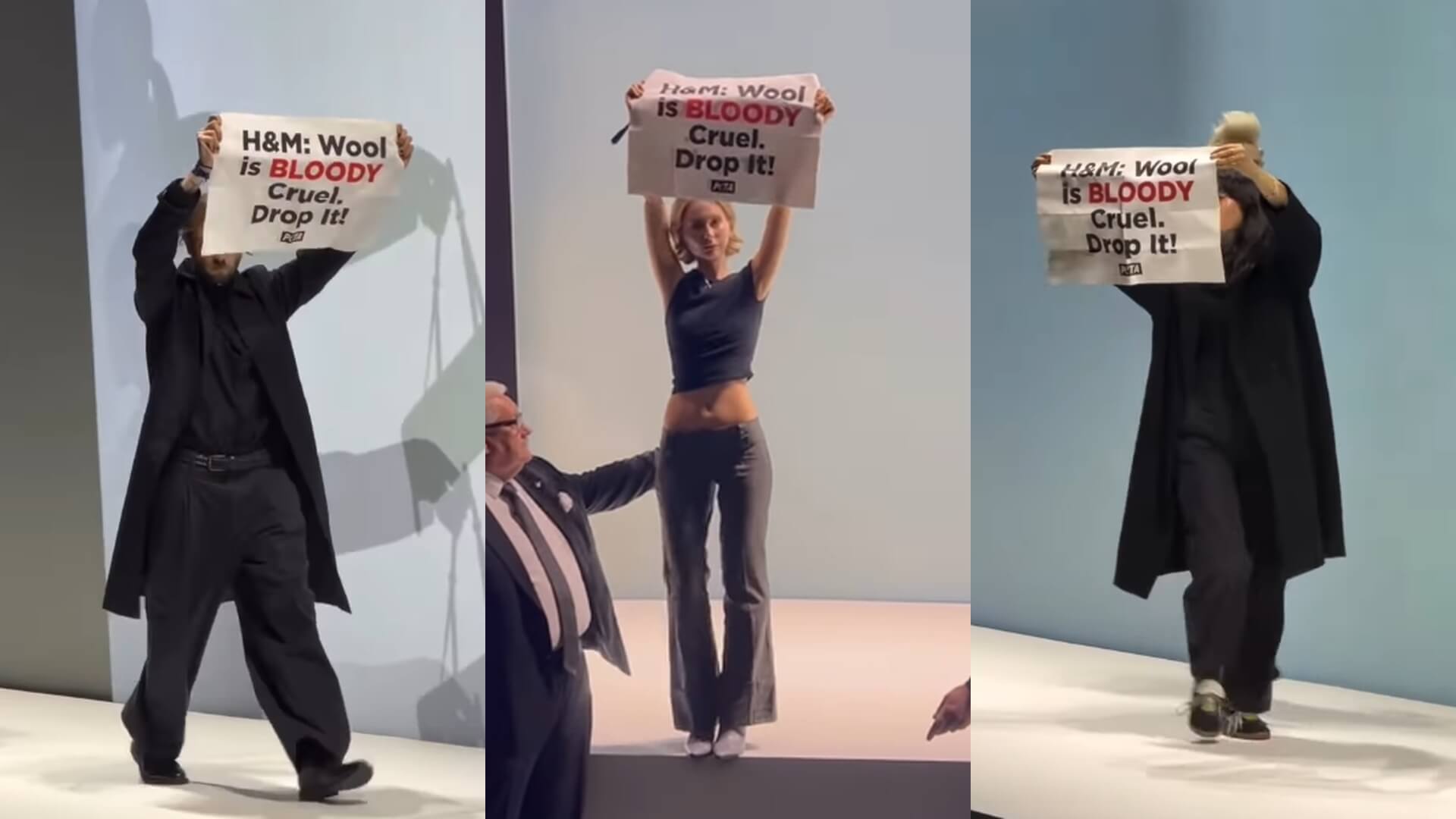
During the Hermès Spring/Summer 2025 show at Paris Fashion Week, three activists took turns storming the runway wearing tops that read “Animals Are Not Fabric” and holding signs with the message “Hermès: Ban Wild-Animal Skins.” This is PETA entities’ third disruption of the season, following appearances on Burberry and Dior catwalks.
Update (30 April 2024): Hermès Challenged to Visit Wild-Animal-Skins Abattoirs With PETA
“You act as if you have nothing to hide .… Prove it.” During the French fashion house’s annual meeting, a representative of shareholder PETA US asked Hermès CEO Axel Dumas, “When shall we go together to examine the actual conditions in which the animals live and die?”
Many major designers have abandoned wild-animal skins, but Hermès continues to sell items made from the cruelly obtained materials – and PETA entities are keeping the pressure on the company to drop these products of suffering.

Hermès should not continue to ignore the atrocities taking place on the farms and at the abattoirs that supply it with wild-animal skins. There’s nothing luxurious about the suffering of sentient beings, and the brand must switch to the cruelty-free plant-based materials that caring consumers demand.
“It makes no difference which farm Hermès sources skins from. This is standard industry practice. Your own animal welfare policy states, ‘The Hermès approach to animal welfare recognises animal sentience and the importance of providing opportunities for animals to have positive life experiences.’ Yet you continue to subject reptiles to a lifetime of suffering and a slow, agonizing death. You act as if you have nothing to hide, so we say, “Prove it.” We have asked to join Hermès on visits to wild-animal farms and slaughterhouses—and your lack of response speaks volumes. We believe our fellow shareholders would agree that this would be a useful endeavor. So our question is this: When shall we go together to examine the actual conditions in which the animals live and die?” – James Fraser, on behalf of PETA US
In response, the CEO declined the invite, while admitting: “I’m not saying there are no problems in the industry”. Dumas went on to gaslight shareholders, referencing CITES – the Convention on International Trade in Endangered Species of Wild Fauna and Flora – regulation which relates only on the number of animals traded, not the horrific manner in which they are reared and killed.
Update (7 November 2023): BREAKING: PETA Supporters Crash Hermès Event in London
Update (19 July 2023): Hermès Should Respect Jane Birkin’s Legacy and Drop Croc
Update (8 September 2021): Hermès Store Hit With PETA ‘Crocodile’ Protesters
Update (6 June 2017): Activists Speak Up for Animals at Prada and Hermès Annual Meetings
Update (28 July 2015): Jane Birkin Demands That Luxury Hermès Birkin Handbags Be Renamed!
Update (1 July 2015): Will This Naked, ‘Bleeding’ Activist Persuade Hermès to Ditch Reptile Skins?
One Birkin Bag Means the Death of Three Crocodiles
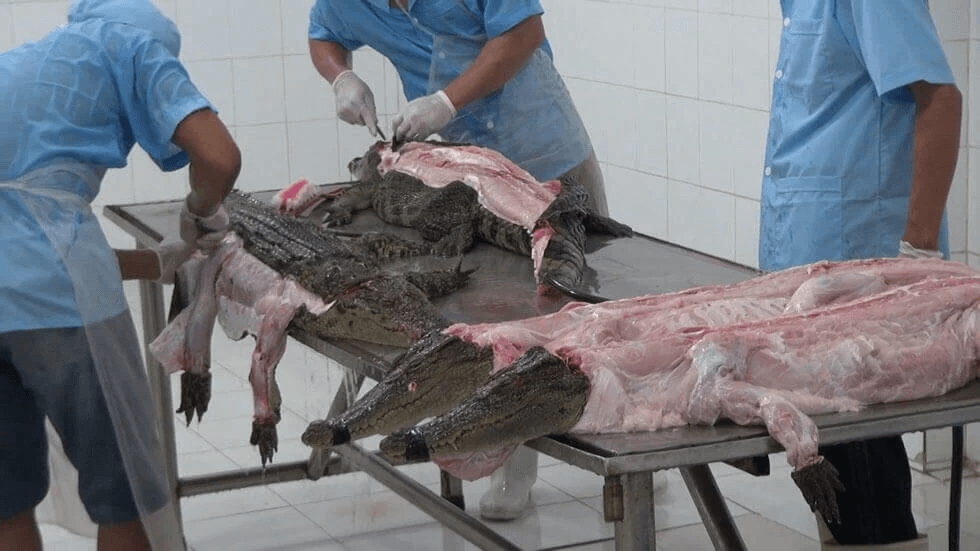
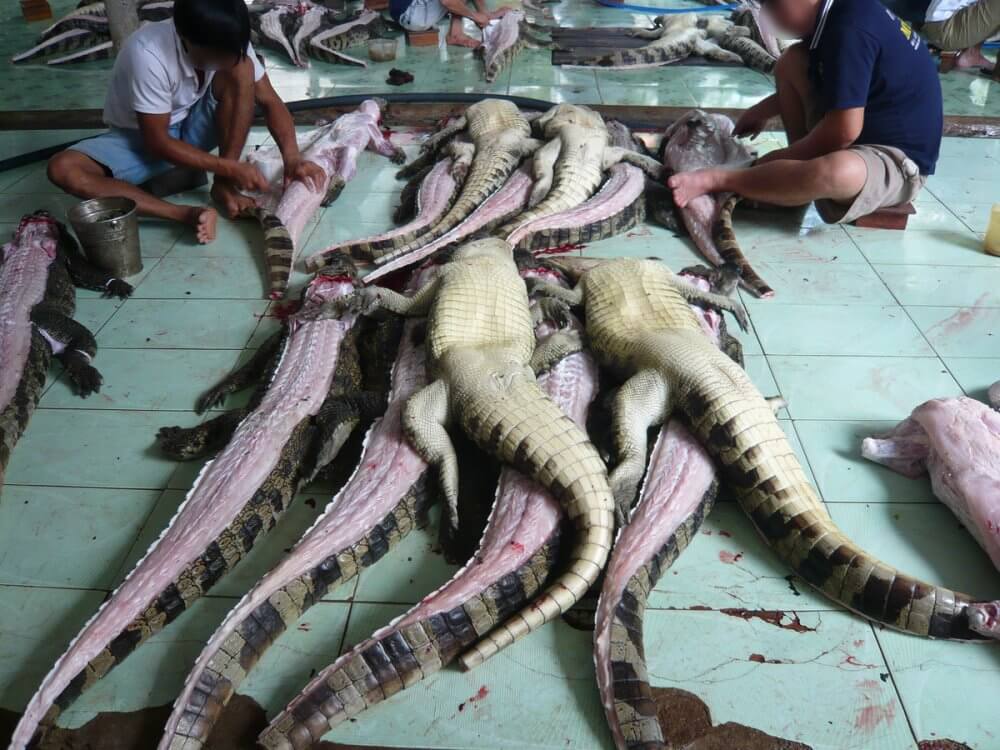
Three crocodiles are killed to make just one Hermès Birkin bag. Undercover investigations – including a video from the Australian association Kindness Project filmed on intensive breeding farms belonging to Hermès – reveal the horrors reptiles who are confined, tortured, and killed for their skin endure. The footage shows crocodiles crammed into cramped enclosures and then isolated in small, filthy cages before being dragged out to be mutilated, including by being stabbed with a screwdriver.
A PETA Asia investigation into crocodile farming in Thailand showed how crocodiles bred for their skin spend their lives in barren enclosures containing murky pits of water before being violently killed. One crocodile was seen moving for a full 23 minutes after a worker plunged a metal blade into the animal’s neck.
Fashion Without Abuse
Many major designers, such as Mulberry, Victoria Beckham, Chanel, Burberry, Diane von Furstenberg, and Vivienne Westwood, have banned the use of the skin of reptiles or other wildlife. Copenhagen Fashion Week also recently banned wild-animal skins from its runways.
Progressive designers are championing vegan leather options made from pineapples, mushrooms, apples, cacti, and other innovative materials that look fabulous and are better for the planet and kind to animals.
Help End the Wild-Animal Skins Industry
Send a message to Hermès now to urge the brand to drop wild animal skins:
Help Animals in 2026: Renew Your PETA Membership!
Donate Now