What is Cashmere? Origins, Cruelty, and What to Wear Instead
If you’ve ever been in a high street store, you will have come across cashmere, likely in the form of a jumper, pashmina, cardigan, or socks.
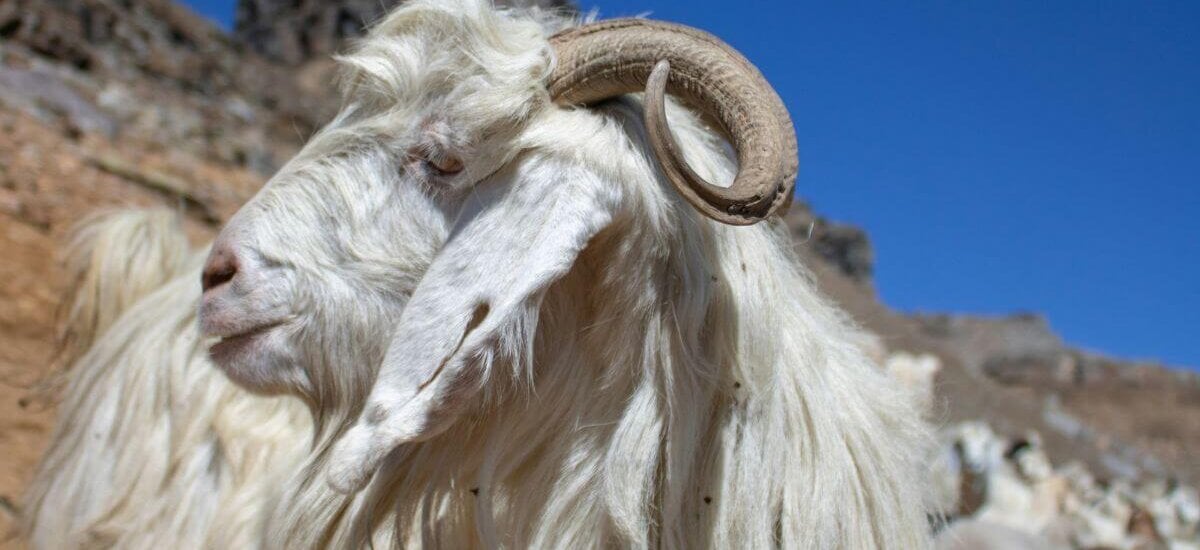
A delicate wool taken from the soft hair of cashmere goats, cashmere has long been marketed as an indulgent, high-end product, but its production is violent and environmentally destructive. Far from being luxurious, the cashmere industry is cruel and adds to the climate catastrophe.
Behind every cashmere item is a goat who suffered immense cruelty.
About Cashmere
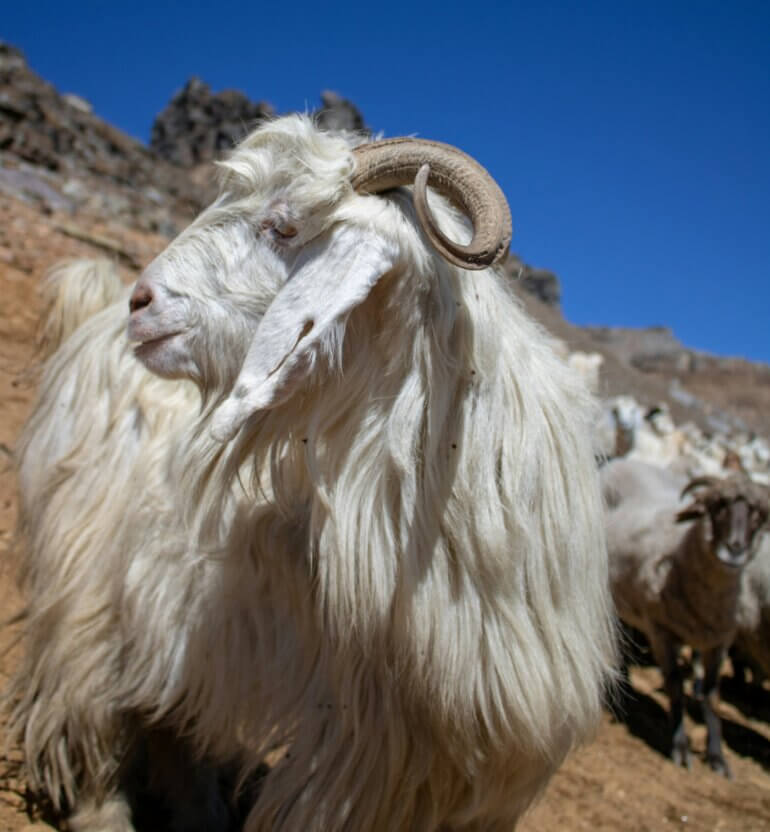
Cashmere is a wool taken from goats and used in self-described “luxury” items. Its status as a coveted item comes from its softness.
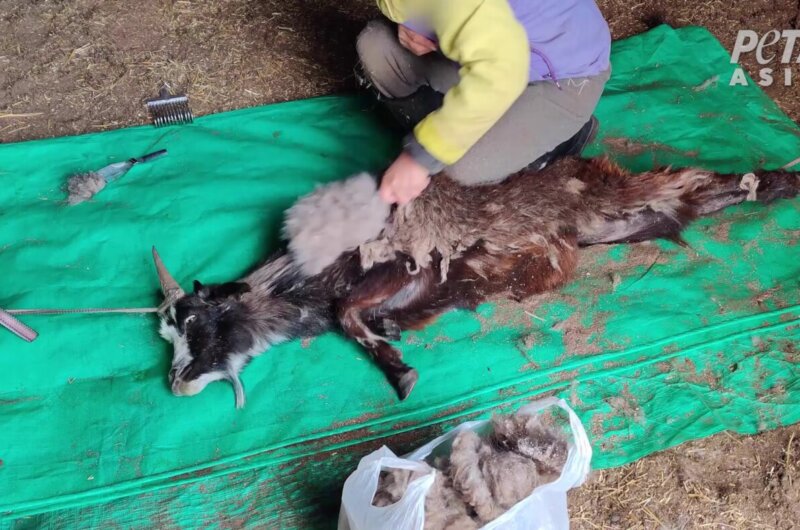
Cashmere is taken from the fluffy, downy undercoat of several breeds of goat. To remove this coat, goat herders pin the animals down by standing or kneeling on them, and quickly and carelessly brush the undercoat with sharp metal combs. The action is fast and painful, tugging at and tearing the goats’ delicate skin, leaving them with bloody wounds.
As several eyewitness cashmere investigations released by PETA reveal, goats scream in pain as farmers lean on their delicate bodies, toss them around, and contort their spines and limbs to access their hair.
Where Does Cashmere Come From?
The vast majority (90%) of cashmere comes from China and Mongolia, but it’s also produced in Tibet, Afghanistan, and Iran. Small amounts of cashmere also come from Australia and New Zealand.
Scotland is also known for cashmere production, but the goats are not raised there. Rather, cashmere items from Scotland are made with raw fibres coming from Asia and the Middle East.
Why is Cashmere Cruel?
Goats farmed for their fleece rarely get a moment’s peace. As soon as their soft under fleece grows long enough, they’re violently grabbed, wrestled to the ground, pinned down and roughly brushed to pull the delicate hair from their sensitive skin.
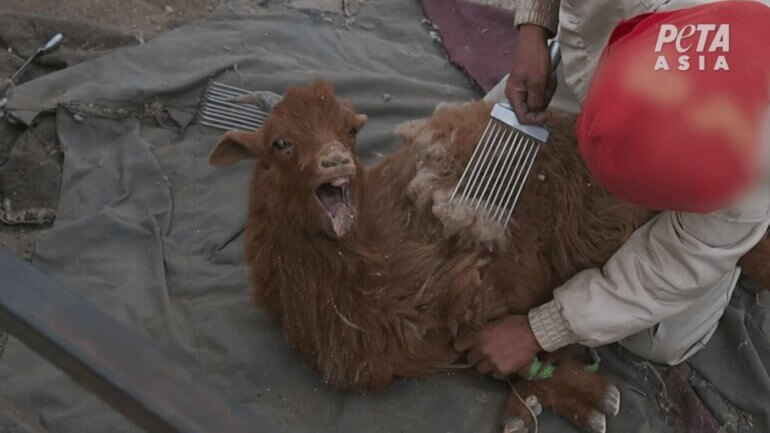
A PETA Asia investigation into the cashmere industry in China and Mongolia revealed animals screaming in pain and fear while workers stood on their delicate bodies, wrenching their limbs, and tearing out their hair from the root. Goats were given no pain relief or veterinary care. One worker even poured rice wine into an animal’s gaping wound.
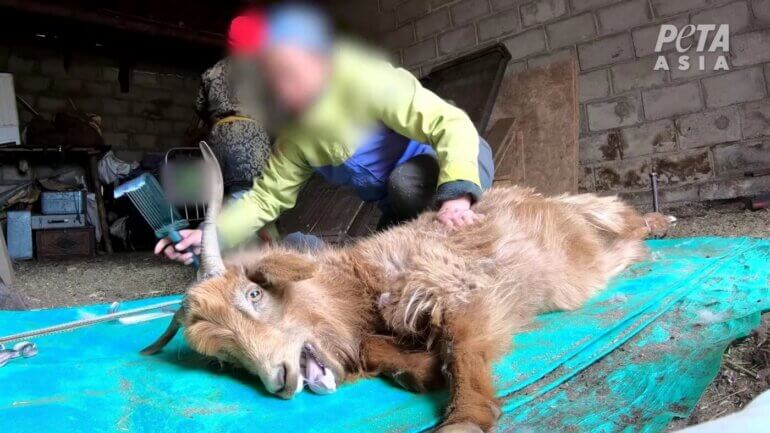
A second PETA Asia investigation into cashmere operations in Mongolia also found one herder using an unsterilised knife to cut open baby goats’ (kids’) scrotums and pulling their testicles out with his bare hands – all without pain relief. Meanwhile, female goats are repeatedly bred to condemn more goats to the cruel cycle.
Are Goats Killed?
All animals used for their flesh, skin, fleece, eggs and milk are kept alive only so long as they remain profitable, and accommodated, from a welfare perspective, only so far as is financially feasible. It’s no different for goats in the cashmere industry.
Like sheep, once a goat’s wool production drops with age, so does their value in the eyes of farmers. “Older” goats (still only five years old at most) are subject to a slow, agonising death. Naturally, goats live as long as 12 years.
At one abattoir in China, eyewitnesses saw workers bludgeoning goats with a hammer in an attempt to stun them. At another abattoir in Mongolia, workers were witnessed dragging goats by the leg across a filthy “kill floor” before slitting the animals’ throats while other, terrified goats watched on. They were left to bleed out, and some were seen still moving a full two minutes later.
Having spent their short, miserable lives repeatedly, painfully harvested for their hair, cashmere goats’ flesh is then sold as cheap meat.
The Environmental Impact
All products derived from animals harm the environment, and cashmere is no exception.
Goats are voracious browsers, feeding constantly on not only plants, but also plant roots. This means that plants don’t regenerate their stalks and leaves, leading to soil erosion and degradation.
This loss of soil quality triggers a destructive loop, wherein plants no longer grow, and the problem is exacerbated until land is merely a barren dustbowl.
In Mongolia, more than 70% of the country’s grasslands are affected by desertification. This leads to reduced carbon sequestration and an increase in potentially deadly dust storms, which can affect air quality over large areas, choking the air as far afield as the United States.
Goats, like sheep, emit methane, a potent atmosphere-warming gas that’s escalating the climate catastrophe. Add to this the water-polluting chemicals needed to process and dye cashmere, and you end up with a product that’s killing the planet alongside animals.
What to Wear Instead
Many natural fibres from plants – known as plant wools – offer the softness and warmth of cashmere, without the cruelty or contribution to climate catastrophe.
Plant Wools are growing in popularity as shoppers realise not only how cruel, but also how environmentally destructive animal wool is.
Bamboo, cotton and even soya fibre are all woven to replicate the feel and drape of cashmere without the cruelty or damage to the planet.
FAQs About Cashmere Ethics
Is Cashmere Wool?
Yes, like sheep’s wool, cashmere is a type of animal wool taken from goats.
What is Cashmere Made of?
Cashmere is made from the soft undercoat of goats, torn from their necks, chests, and torsos and woven into fibres to make textiles.
Is Cashmere Vegan?
No, Animal-derived cashmere is not vegan.
How are ‘Cashmere Goats’ Treated?
Like all animals farmed for profit, goats used for cashmere are left to face the elements without their insulating hair, which is repeatedly, painfully ripped out while herders pin them down. They’re violently killed at a fraction of their natural age, after wool production drops.
What is the Problem with Cashmere?
The problem with cashmere, aside from the fact that animals are not ours to use, is that goats are subjected to a life of suffering and exploitation, painful brushing, and violent early deaths. Aside from the cruelty involved in cashmere production, it causes immense environmental damage, including desertification, methane emissions, excessive water use, and pollution.
Can Cashmere be Ethical?
Cashmere wool taken from an animal can never be ethical. Plant Wools, however, are on the rise, and plant cashmere, such as that made from soy, is becoming a popular, kind, and green alternative to animal hair.
What Countries Produce the Most Cashmere?
China and Mongolia are responsible for approximately 90% of the world’s cashmere production. Demand is trapping farmers in an unending cycle of trying to profit from increasingly barren land, and animals in a cycle of abuse.
Take Action for Goats
Tell major fashion designers to stop using cashmere:
Check out our ultimate vegan fashion guide:
Help Animals in 2026: Renew Your PETA Membership!
Donate Now