

Goats Beaten, Dragged, and Left Bleeding for ‘Humane’ Mohair
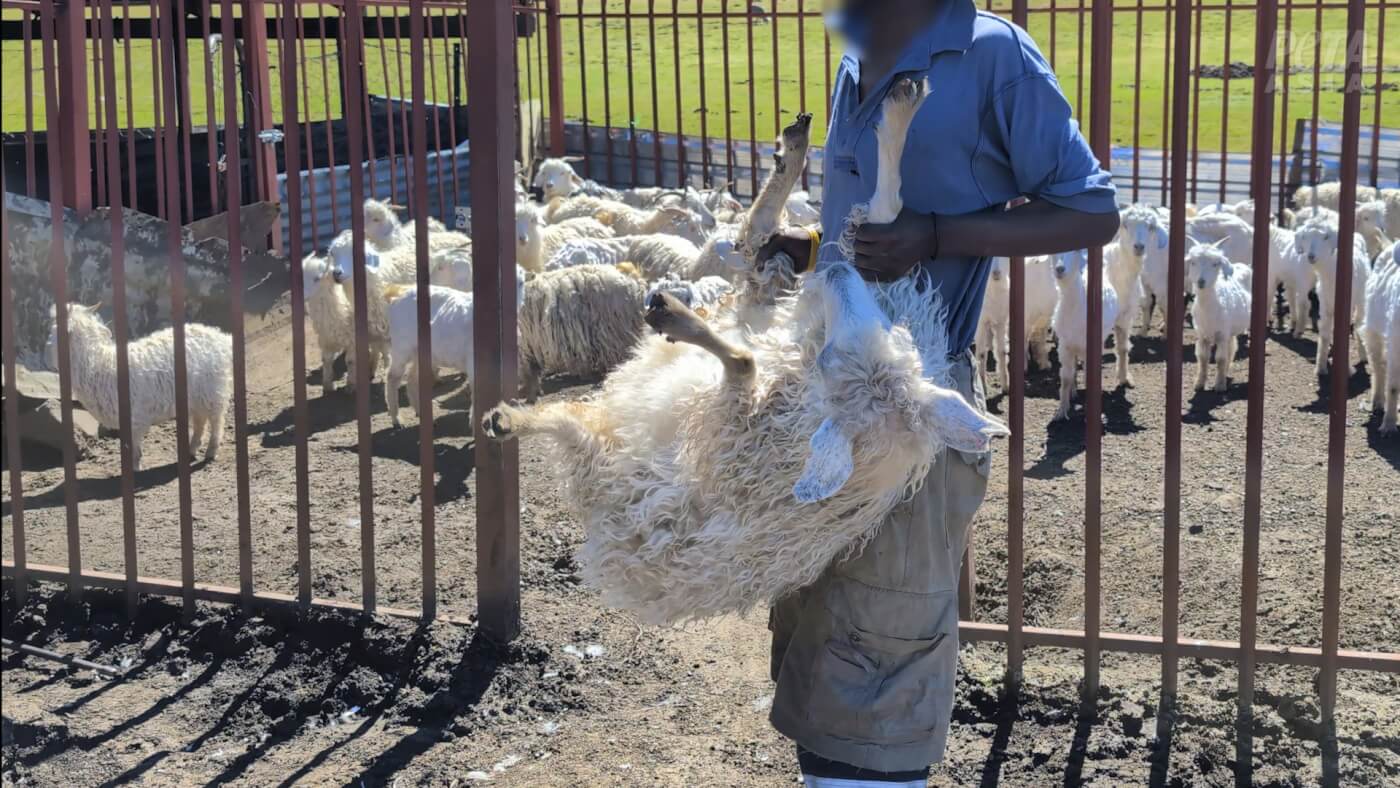
On “humane” and “responsible” mohair farms in South Africa and Lesotho, workers force goats to endure hell on earth. New footage, captured by PETA Asia investigators, shows workers violently hitting goats with brooms and poles, dragging struggling goats by their horns and legs, and pinning goats to the ground as the animals cry out in fear and pain.
The investigation includes footage from shearing sheds certified by the misleadingly named “Responsible Mohair Standard”. See the shocking video for yourself, and take action for goats.
Goats Scream as Workers Shear Them for Mohair
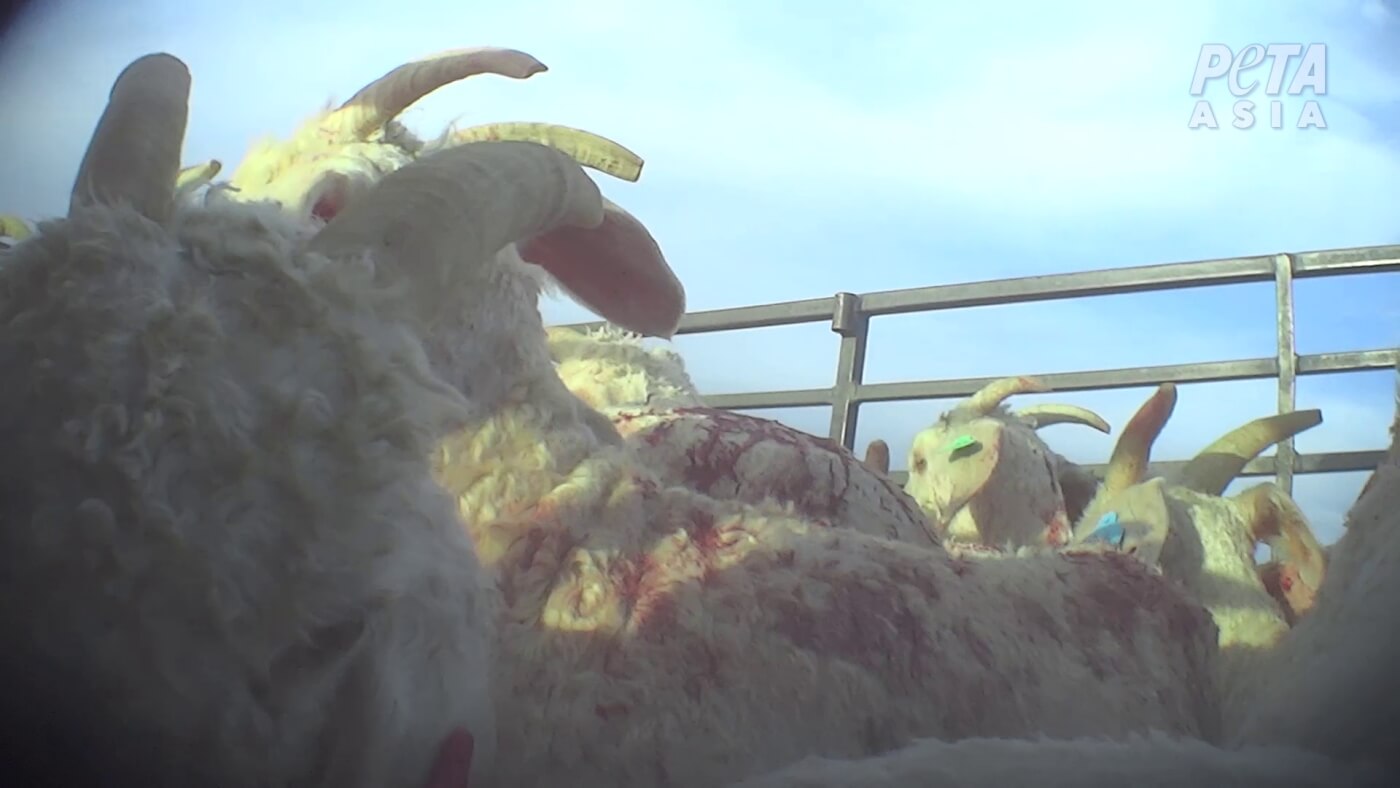
Shearing is extremely stressful to goats, who are instinctually terrified of being pinned down. Because shearers are paid by volume, not by the hour, they work quickly and often without care for the panicking goats. PETA Asia investigators recorded workers shearing goats so carelessly that several were left with bloody wounds. The undercover footage also shows workers grabbing and dragging goats by their sensitive ears, horns, tails, legs, and fleece – often lifting or yanking them in ways that caused the animals to fall, flail, or cry out during shearing.
Their screams are a wake-up call to anyone considering buying a jumper made with mohair.
One goat was suffering from a large, gaping wound after reportedly being attacked by a jackal – yet was shorn anyway. The goat screamed in agony while a worker carelessly cut around the animal’s torn flesh.
There’s No Such Thing as ‘Responsible’ Mohair
The explosive footage marks PETA Asia’s second investigation into mohair operations in South Africa, where most of the world’s mohair originates. In the first investigation, eyewitnesses caught shearers cutting broad swaths of skin off some animals and crudely stitching up the most gaping wounds on the filthy shearing floor, without providing any pain relief.
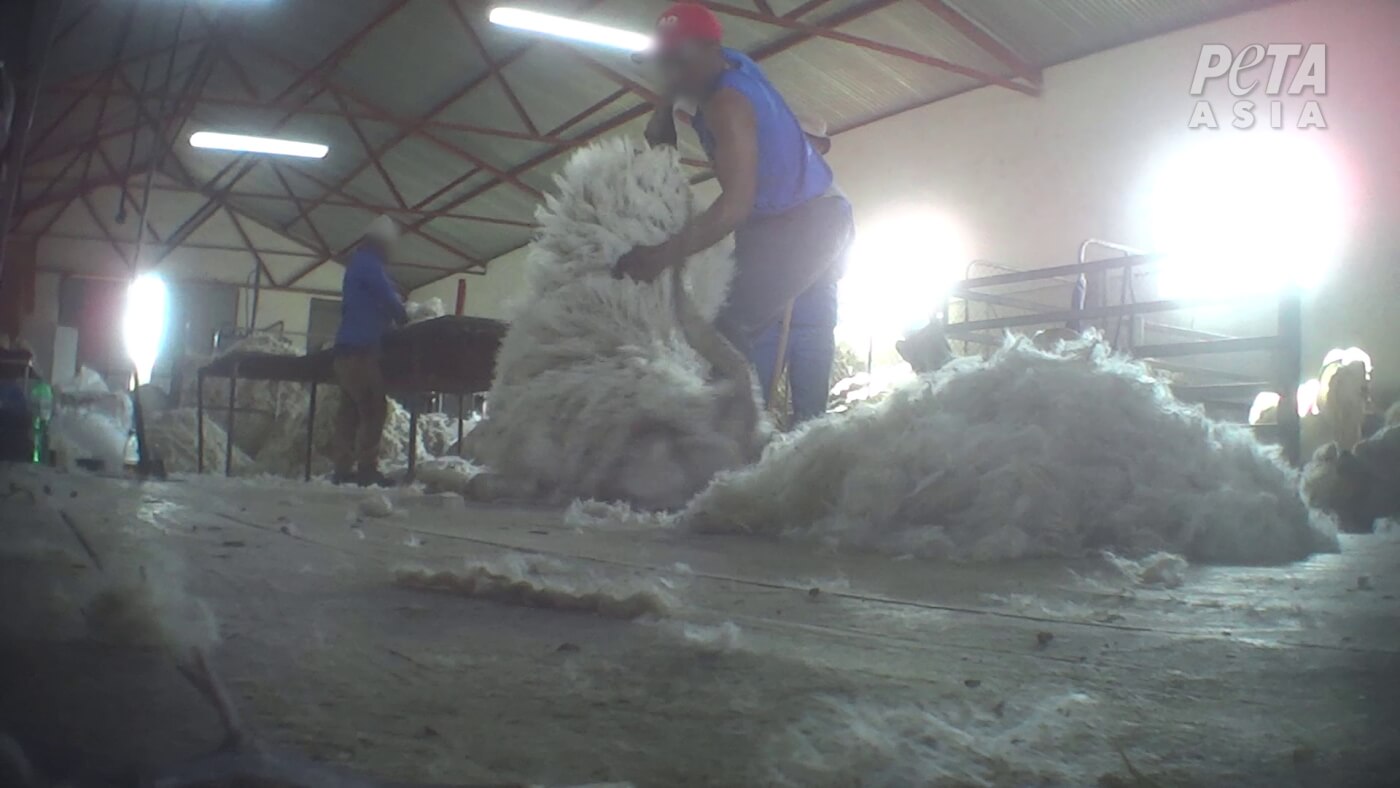
This second investigation makes it clear that the mohair industry is rampant with pervasive cruelty and systemic abuse, regardless of whether the facility is certified by the Responsible Mohair Standard.
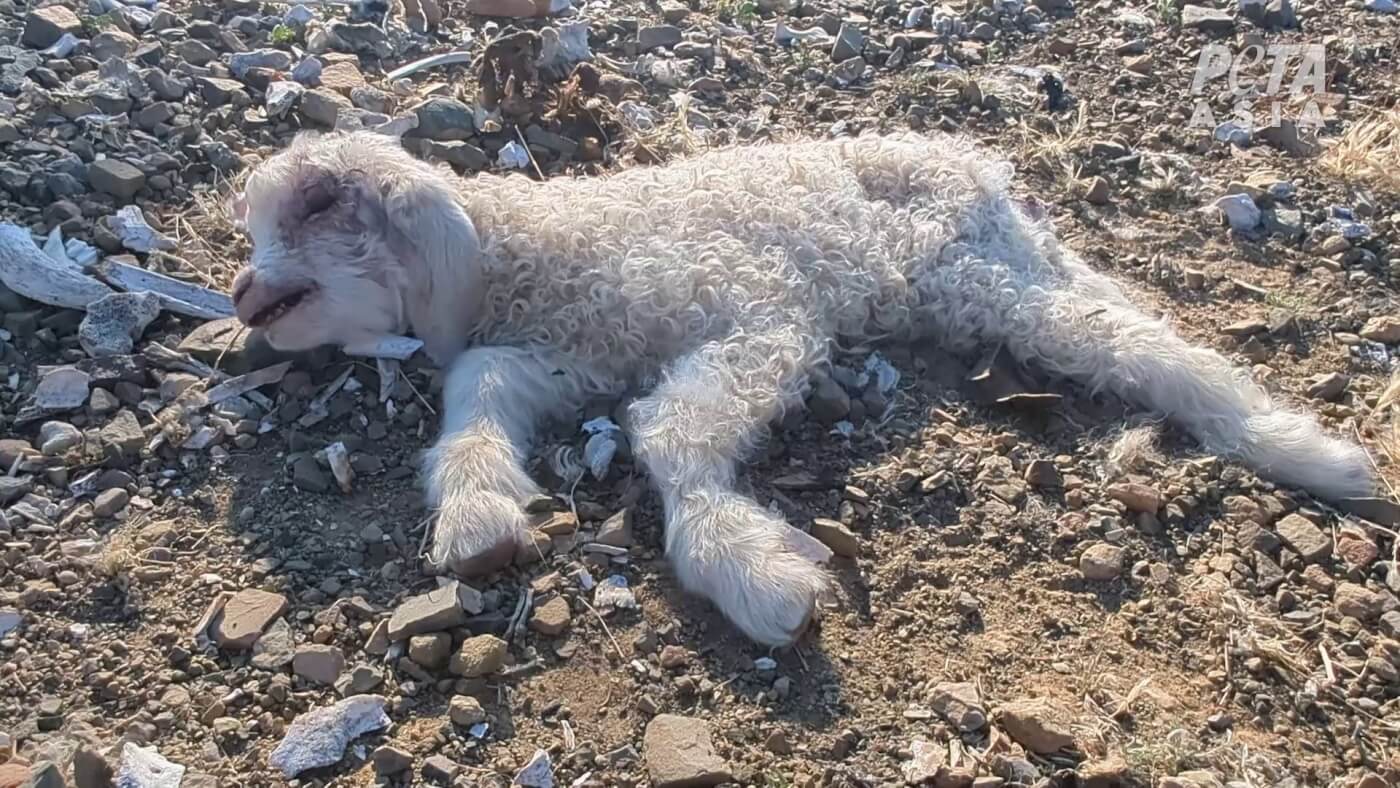
Goats wag their tails and jump for joy when they’re happy. Mother goats form strong bonds with their babies, and both mother and baby recognise each other’s distinct calls – or “bleats” – shortly after birth. But in the mohair industry, goat kids are shorn starting as early as 6 months old. As soon as their hair quality declines or they’re deemed no longer useful, workers kill the goats, often many years short of their natural life expectancy.
What You Can Do
The best thing that you can do for goats is to refuse to buy mohair. It’s easy to check the label when you’re shopping. If it includes the word “mohair”, leave the item on the shelf.
Please also take a moment to take action for the goats: