The EU Is Cracking Down on Testing on Animals for Detergents – but It’s Not All Good News
The EU has adopted a revised Detergents Regulation that includes an explicit ban on tests on animals for detergents and surfactants.
This is the first such ban in EU chemicals law since cosmetics in 2013 – a positive milestone for cruelty-free progress. But before we celebrate too much, let’s look at what this means in practice.
Significance of the Ban
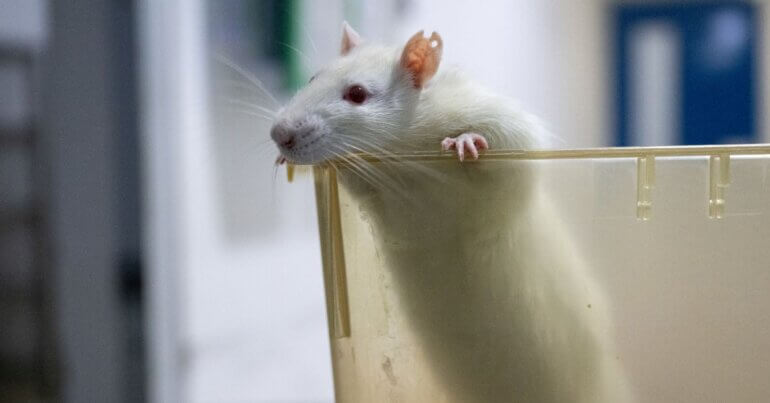
First, the good news: there will be no new experiments on animals for detergents under this regulation. Manufacturers can only use non-animal methods to guarantee chemical safety.
Digital product passports will make ingredient information more accessible, and stricter biodegradability rules aim to protect waterways.
There will also be greater recognition of non-animal methods, such as human cells and tissues, computer modelling techniques, and AI, as well as human volunteer studies, thanks to the ban. The EU Commission has been tasked with validating and promoting such innovative methods – marking a significant step towards a world in which animal-free research is the norm.
Loopholes Still Kill Animals
Compliance with REACH remains a major loophole, despite the new ban. REACH is the EU’s overarching chemicals law. It stands for Registration, Evaluation, Authorisation and Restriction of Chemicals, and requires companies to prove that substances are safe for human health and the environment. Despite the Detergents Regulation, REACH can still mandate experiments on animals for ingredients used in detergents when it’s decided that a non‑animal method of testing would be unsuitable.
This means detergent ingredients, just like cosmetic ingredients, may still be tested on animals to meet REACH safety obligations.
Derogations also remain. The new Detergents Regulation allows exemptions for ingredients deemed “essential,” creating further scenarios where experiments on animals could still be permitted.
Impregnated, Poisoned, and Killed
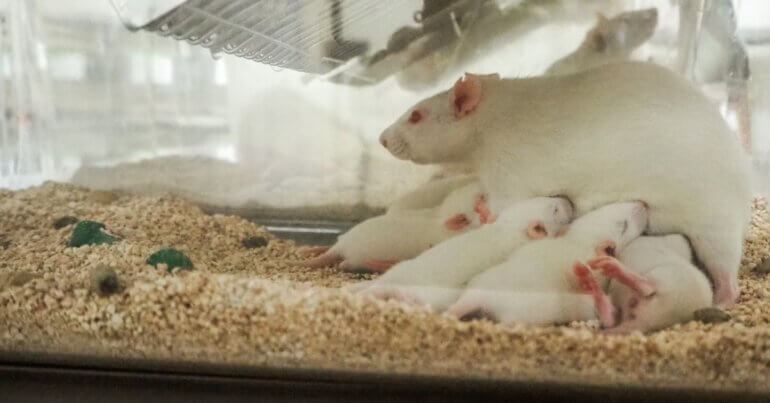
In laboratories around the world, experimenters force large quantities of chemicals into the stomachs of rats, mice, and rabbits every day for months at a time. Animals are also impregnated to determine if their offspring will die or be born with abnormalities. Experimenters will dissect babies and either re-impregnate mothers or kill them.
Consumers overwhelmingly reject experiments on animals for household products, and non-animal methods have been shown to be effective for chemical tests. There are also already plenty of safe ingredients on the market, making subjecting animals to horrific tests even more unjustifiable.
A Cruelty-Free Future
PETA wants to see a full ban across all chemicals legislation, not just detergents.
This regulation is progress, but it’s not the finish line. Until all EU chemicals laws are cruelty-free, animals remain at risk. Let’s keep pushing for a future where cleaning your home never costs an animal their life.
Choose Cruelty-Free Household Products
There are plenty of vegan and cruelty-free detergents you can opt for to avoid paying for animals to be harmed. Check out the list below:
Take Action for Animals in Laboratories Today
You can help animals languishing in laboratories right now with these rapid actions:

Help Animals in 2026: Renew Your PETA Membership!
Donate Now