Towards a Truly Cruelty‑Free Britain: PETA at 11 Downing Street
PETA was proud to attend a special event at 11 Downing Street celebrating the UK’s thriving cruelty‑free industry – an industry that proves innovation, ethics, and commercial success can go hand in hand.
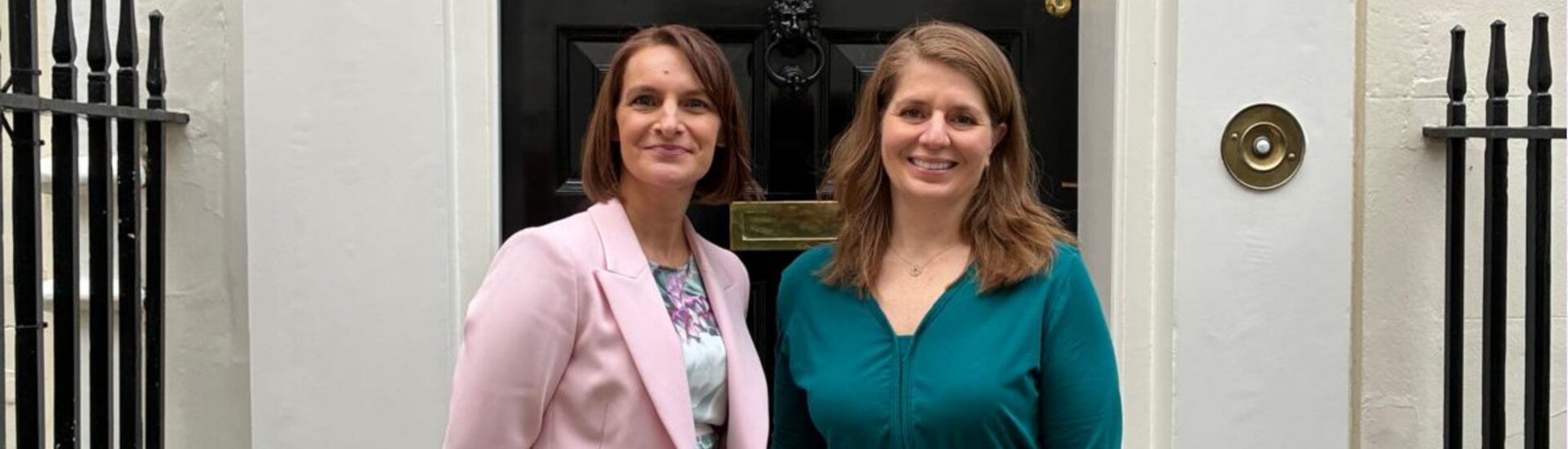
We were invited to speak as a leading organisation working to end animal testing for cosmetics and other products. Dr Julia Baines, PETA’s Head of Science Policy, and Mimi Bekhechi, Senior Vice President of PETA, attended the event. The invitation itself reflects the growing recognition that ending animal testing is not only an ethical imperative, but a scientific and economic opportunity.
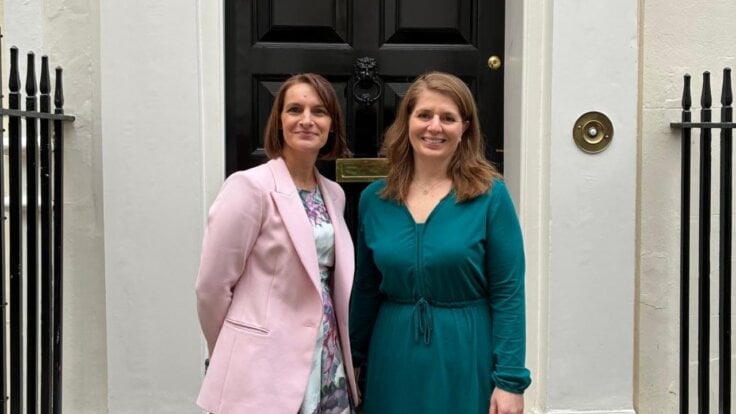
The evening brought together ministers, members of both houses of Parliament, industry leaders, scientists, and advocates to celebrate what Britain has already achieved – and to look ahead at how the UK can take leadership in building a truly crueltyfree future.
A British Success Story
The cruelty-free‑ sector is one of the UK’s quiet success stories. British brands and companies – such as Dove, Lush, and The Body Shop – have proven that ethical science builds trust, brand loyalty, and international reputations. Many of these companies are recognised on PETA US’s Ultimate Cruelty-Free List.
The Ultimate Cruelty-Free List began in 1987 with just a handful of mail-order businesses. Today, it includes more than 6,500 companies worldwide, making it the most comprehensive and longest-running crueltyf-ree certification of its kind.
Listed companies never test on animals for any reason, in any country, at any time. There are no exceptions for ingredients, no loopholes for regulations, and no compromises for market access.
A Ban Worth Celebrating – But Not the End of the Story
The UK’s cosmetics animal testing ban, alongside those introduced elsewhere around the world, is something to be proud of. These bans were hard-won victories, achieved only because consumers, scientists, campaigners, responsible businesses, and animal protection organisations worked together over decades.
However, the current legal framework does not always deliver what people believe the cosmetics testing ban guarantees.
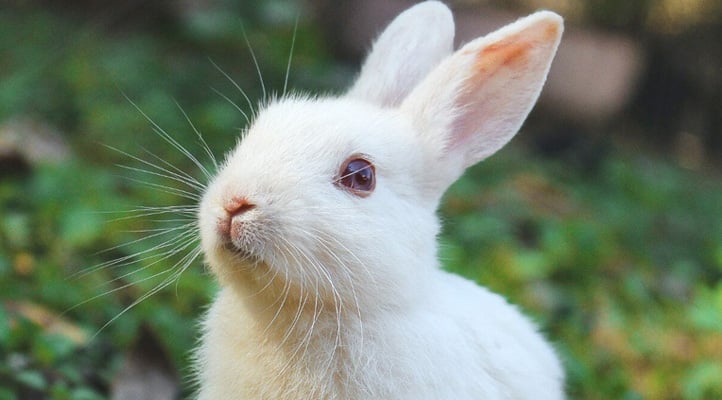
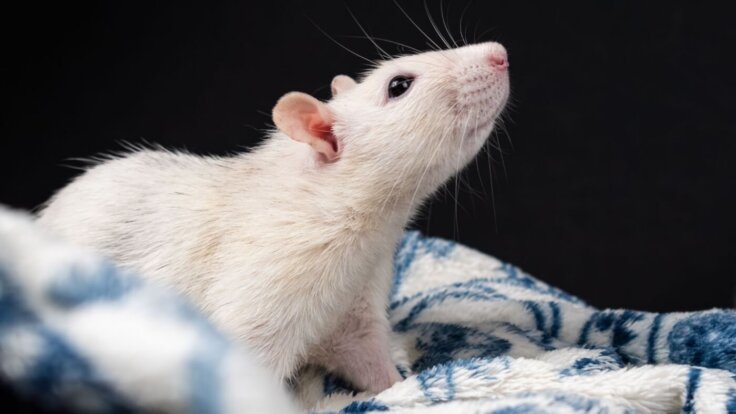
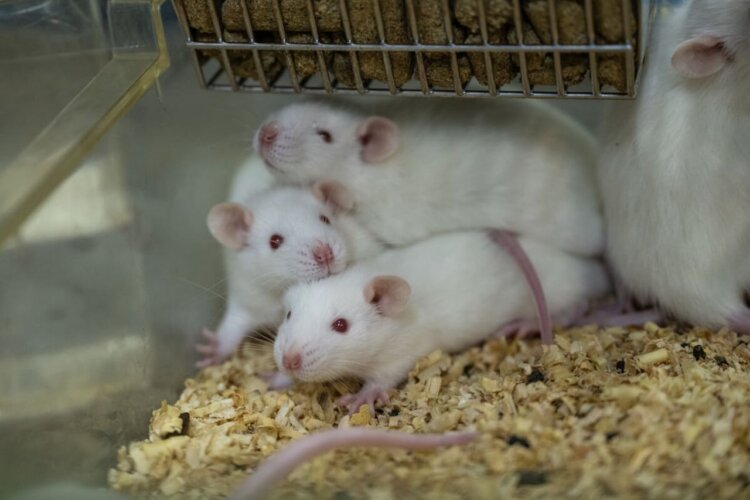
Loopholes remain. Ingredients used in cosmetics can still be tested on animals under separate chemical regulations. As a result, animals continue to suffer in experiments that consumers rightly assume were banned long ago. Rats are force-fed cosmetic ingredients for weeks or months at a time. Pregnant rabbits and their babies are subjected to toxic exposure and then killed.
This contradiction – found in UK law, EU regulations, and other jurisdictions – undermines public trust and must be addressed.
A Cruelty-Free Future
Despite these shortcomings, this is not a moment for frustration. It is a moment for ambition.
The UK has published a strategy to phase out all animal testing – a genuinely historic development. This creates an opportunity to think beyond cosmetics and household products, and to work towards something far bigger: a truly cruelty-free Britain.
Achieving that goal will require leadership. Ending animal testing cuts across chemical regulation, innovation policy, education, trade, and research funding. It cannot be siloed or treated as a niche issue. PETA called for dedicated ministerial leadership on animal-free science to ensure progress is coordinated, consistent, and meaningful across government.
At the same time, this transition cannot be imposed from the top down alone. Government can and should set direction – but industry must also lead. Ministers should actively encourage companies to develop their own clear, time-bound plans to end experiments on animals altogether. When businesses drive change from within, with government support, progress is faster and more durable.
Universities also have a central role. In countries such as the Netherlands, many universities now operate Transition to Animal‑Free Innovation hubs. These provide internal expertise, training, and practical support to help researchers move away from animal use.
Funding is another powerful lever. UK Research and Innovation and the Research Councils must play a stronger role in shifting public investment away from experiments on animals and towards modern, reliable, non‑animal approaches.
PETA’s Role – and the Road Ahead
The cosmetics testing ban would not exist without animal protection organisations that brought together scientific evidence, public concern, and political accountability. While PETA is often known for its bold public campaigns, behind the scenes PETA entities worldwide employ more than 40 scientists working across toxicology, regulatory science, and biomedical research.
As the UK’s roadmap to end animal testing is implemented, PETA stands ready to help –
by providing scientific expertise, regulatory insight, and global experience.
The question is no longer whether Britain can end animal testing. The question is whether we will act with the urgency, coherence, and integrity that this moment demands.
Events like this one at 11 Downing Street show that the will is there. Now it’s time to turn commitment into action – and make cruelty‑free science the norm, not the exception.
Take Action for Animals in Laboratories
Help animals abused in laboratories today with these rapid actions:
Take Action
Help Animals in 2026: Renew Your PETA Membership!
Donate Now