Crocodile Factory Farming: What’s Really in a Hermès Birkin Bag?
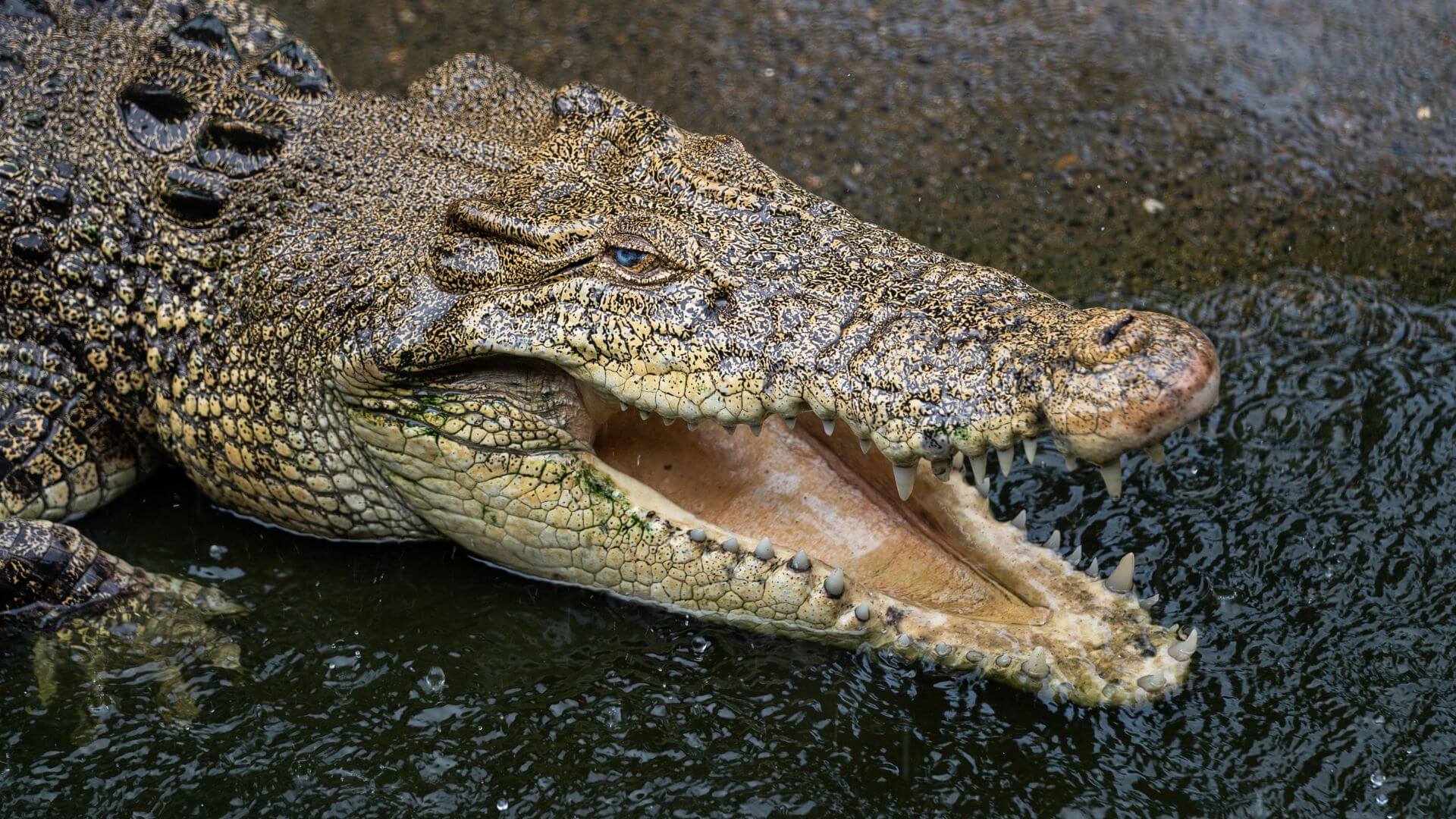
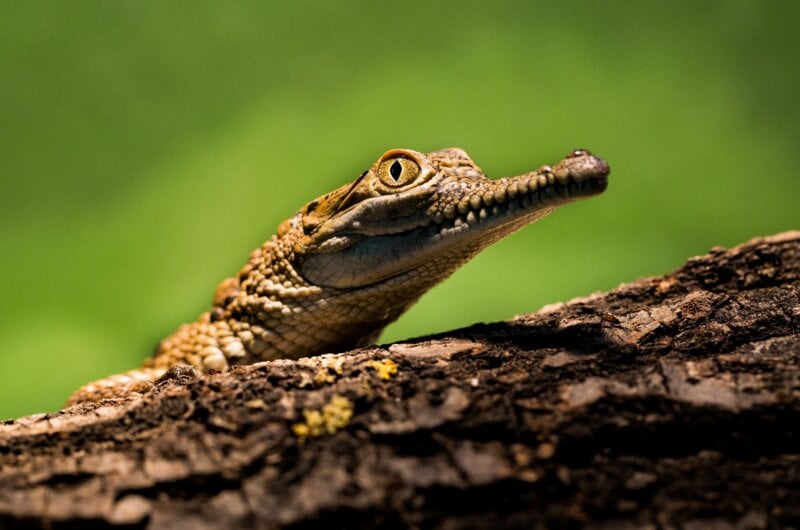
The crocodiles we know today have been on this Earth for around 100 million years – compared to just 300,000 for humans. But we have inflicted unfathomable abuse on these ancient, intelligent, resilient animals for little more than shoes, belts, and handbags.
Designers like Hermès and Louis Vuitton notoriously use crocodile skin in their products. The Hermès Birkin Bag, one of the most expensive bags on the planet, is often made with crocodile and alligator skin.
But how are crocodiles farmed? And what happens to them? Here’s everything you need to know.
Crocodile Farming in 2026
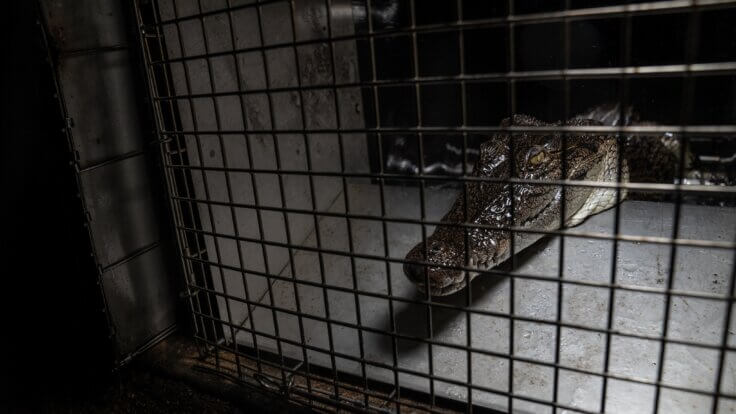
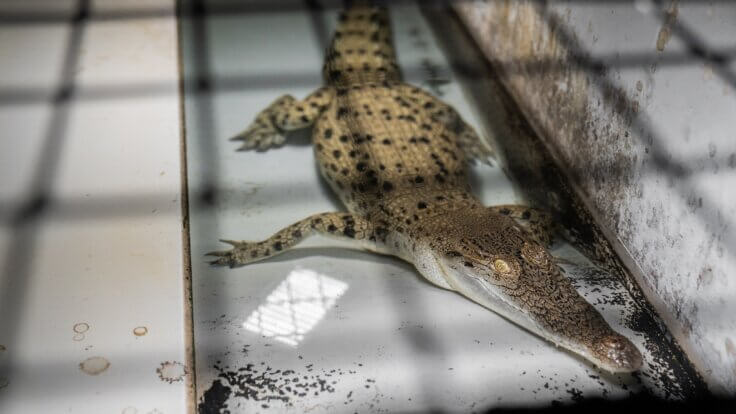
Crocodile farms typically consist of cramped, barren enclosures where the animals are confined with little to no environmental enrichment. They are held in small concrete pits or narrow cages, often so restrictive that they can barely move. If they do have access to water, it is generally filthy or polluted. Due to hierarchies among crocodiles, it may be that only the most powerful animals get access to the water.
Crocodiles Are Someone
They may look different to us, but in all the ways that matter, they are the same. They are someone, not something.
Female crocodiles are excellent mothers. They put huge effort into building and guarding their nests, staying nearby for up to three months to protect their eggs from predators.
Crocodiles engage in playful behaviour and gentle interactions with mates or familiar companions – in other words, they care for their partners and have friends!
In nature, they live in tropical and subtropical regions of Africa, Asia, the Americas, and Australia. Some crocodiles live in freshwater, some in saltwater, and some in brackish (a mixture of the two).
Confined, Caged, and Killed
On crocodile factory farms, they aren’t able to do anything that comes naturally to them.
They’re either bred on the farm, or snatched from the wild. Sometimes, their eggs are stolen and hatched on farms.
These facilities may house thousands of crocodiles at a time, keeping them for months in dank, dirty conditions that deprive them of digging, exploring, or social interaction.
PETA Exposes Crocodile Farms
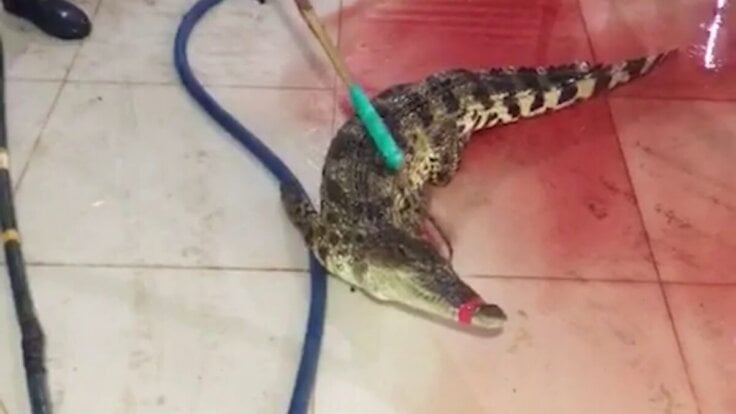
In 2017, PETA Asia visited reptile farms in Vietnam that imprisoned both snakes and crocodiles. The investigator saw piles of crocodiles wrapped in bags so they couldn’t move. They also had their mouths tied up with tape.
A worker then electrocuted them with what appeared to be a car battery. Electrocution is supposed to render animals unconscious, but this does not work properly for reptiles. They don’t respond in the same way other animals do – and there is no evidence that they become unconscious before being killed.
Crocodiles are stabbed with a metal blade, which damages their spinal cord, rather than killing them. It likely causes paralysis and extreme pain instead of death. Research has shown that crocodiles may remain alive for up to an hour and a half afterwards, meaning they may be fully aware and conscious when they have air pumped into them to inflate them before being skinned and disembowelled.
Where Are Crocodiles Farmed?
Crocodile farms can be found in Australia, the USA, Thailand, Vietnam, Malaysia, Indonesia, South Africa, Zambia, and Zimbabwe.
Australia, predominantly the Northern Territory, produces around 60% of the world’s crocodile skins, and most of its farms are thought to be owned by Hermès and Louis Vuitton. Hermès is the owner of the world’s largest crocodile farm, which reportedly confines up to 50,000 saltwater crocodiles at a time.
A 2021 investigation revealed horrific treatment of Australian saltwater crocodiles in farms directly linked to Hermès. They were confined in cramped cages or else languishing in tiny concrete pits filled with dirty water.
Workers mutilated them, dragged them, and scrambled their brains with screwdrivers. In one harrowing bit of footage, a crocodile tried to get up after having their neck cut open with a blade and a screwdriver inserted into their skull.
Environmental Impacts of Crocodile Farming
Crocodile farms contribute to pollution through waste runoff and contaminated water. They also encourage the continued capture of wild animals to maintain genetic diversity in breeding programs, wreaking havoc on ecosystems. Rather than protecting wild populations, the crocodile farming industry is contributing to their demise.
Vegan Leather Is the Future
Innovations in animal-free leathers are transforming the fashion landscape. Designers are creating premium vegan leathers made from cactus, pineapple leaves, mushrooms, as well as synthetics.
Take Action for Crocodiles
We are calling for Milan and Paris Fashion Weeks to ditch wild animal skins. Send them a message today:
You can also urge Hermès to stop selling items made from crocodile skin:
Help Animals in 2026: Renew Your PETA Membership!
Donate Now