
Crabs, Lobsters and Other Crustaceans Overlooked in Cruel Experiments
Decapod crustaceans, including crabs, lobsters, prawns, shrimps and crayfish, are a common sight on our beaches, but have you ever stopped to marvel at just how complex and sophisticated these creatures are?
Like us or the companion animals with whom many of us share our homes, decapods are sentient individuals. This means they consciously experience feelings and sensations including pain, distress and pleasure.
Despite this, decapods are violently abused and killed in experiments in UK universities and other facilities, and, because they’re not recognised by the Animals (Scientific Procedures) Act 1986 (ASPA) – the primary legislation governing the use of animals in experiments – their use remains largely invisible to the public and regulators, while they suffer in the shadows.
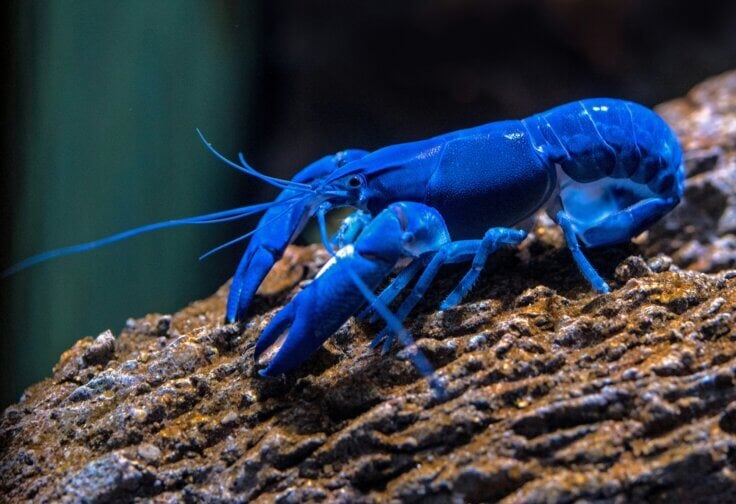
Every Decapod Is Someone
Decapod crustaceans are curious, complex, and clever animals. They explore their surroundings, learn from experiences and respond to danger.
Shrimps are social beings who recognise others as mates or kin, by social rank, size, or even just because they’ve met before.
Hermit crabs can arrange themselves in size order to organise orderly shell exchanges, with one crab moving into a new shell and then leaving its old shell available for the next crab, who, of course, does a thorough home inspection.
Cleaner shrimp on coral reefs operate ocean ‘fish wash’ stations, waving their antennae to attract fish ‘customers’ and even cleverly altering their signalling depending on whether the approaching fish is a likely predator or not.
Despite all these examples of their unique personalities, it wasn’t until 2021 that a government-commissioned scientific review examined 300 studies and concluded that decapod crustaceans meet multiple criteria for sentience. This led to their recognition as legally sentient beings when the Animal Welfare (Sentience) Act 2022 was passed.
Unfortunately, this recognition has yet to be reflected in ASPA, meaning their use continues unregulated in experiments.
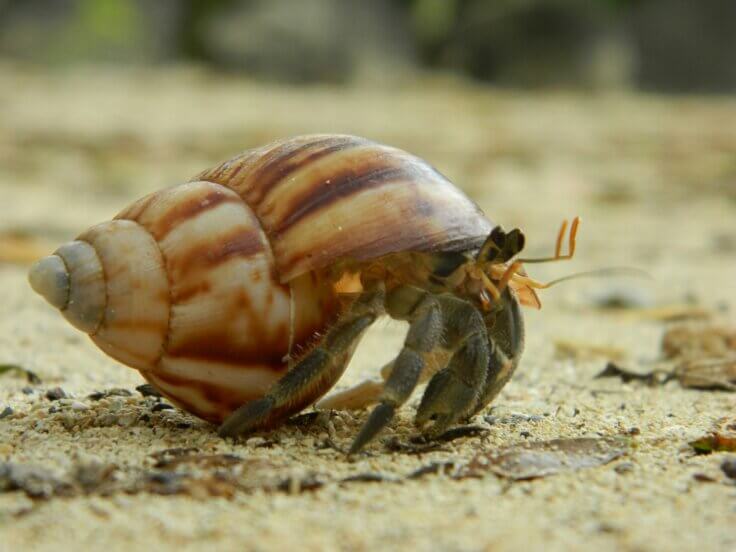
Decapods Abused and Killed in Experiments
Decapods are far from unfeeling laboratory tools; they’re emotional individuals with rich, inner lives.
Yet, every year in the UK, thousands of decapods may be snatched from their natural homes, caged, transported long distances and subjected to terrifying and painful procedures.
In recent experiments in the UK, they’ve been electrically shocked; injected with acid without painkillers, placed in water with toxic chemicals for days, had their organs removed and their sensitive eyes brushed with caustic soda, had limbs amputated while still alive, and have had their hard shells removed to expose their soft bodies.
They may be killed as part of the experiment or when the experiment ends, but we have little information on this, because there’s no requirement for experimenters to report what happens to these animals in experiments.
ASPA Inclusion is Vital for Decapod Crustaceans
Over four years after scientific evidence led to their legal recognition as sentient beings, the government continues to drag its feet, and decapods are still not included in ASPA.
ASPA requires ethical and scientific review of the use of animals, and enables the number of animals used, as well as the procedures that they endure, to be recorded. It also mandates minimum training requirements for personnel involved in experiments and that minimum standards be set for their housing, care, and breeding. While ASPA doesn’t prevent their use, it does make them visible and holds those who exploit them accountable.
Improved visibility will also help drive efforts to end their use; it will enable us to identify opportunities to replace them with non-animal approaches.
Decapods Are Being Left Behind
Their exclusion from ASPA doesn’t just allow decapod crustaceans to be killed following painful, stressful, and terrifying procedures without any oversight; it also means they’re being left behind in efforts to replace the use of animals in experiments.
The UK government committed to replacing the use of animals in experiments when it published its Replacing Animals in Science Strategy in November 2025. Yet decapods cannot be meaningfully included in that effort if their use remains largely hidden. Without their inclusion in ASPA, the Strategy risks leaving these animals behind.
Help Make Decapod Crustaceans Visible
You can help decapods by urging the Home Office and the Department for Business, Innovation, Science and Trade (DBIST) to bring decapod crustaceans within the scope of ASPA.
Crustaceans can’t wait! Take action now to remind leaders: We can’t replace what we can’t see. Bring decapod experiments out of the shadows.
Help Animals in 2026: Renew Your PETA Membership!
Donate Now