

Caged Beagle Appears on Westminster Ad to Urge Parliament to Ban Animal Testing
Parliamentarians at Westminster station are being met with a surprising sight on their commutes – a massive beagle in a cage who urges passersby to help end cruel and useless experiments on animals.
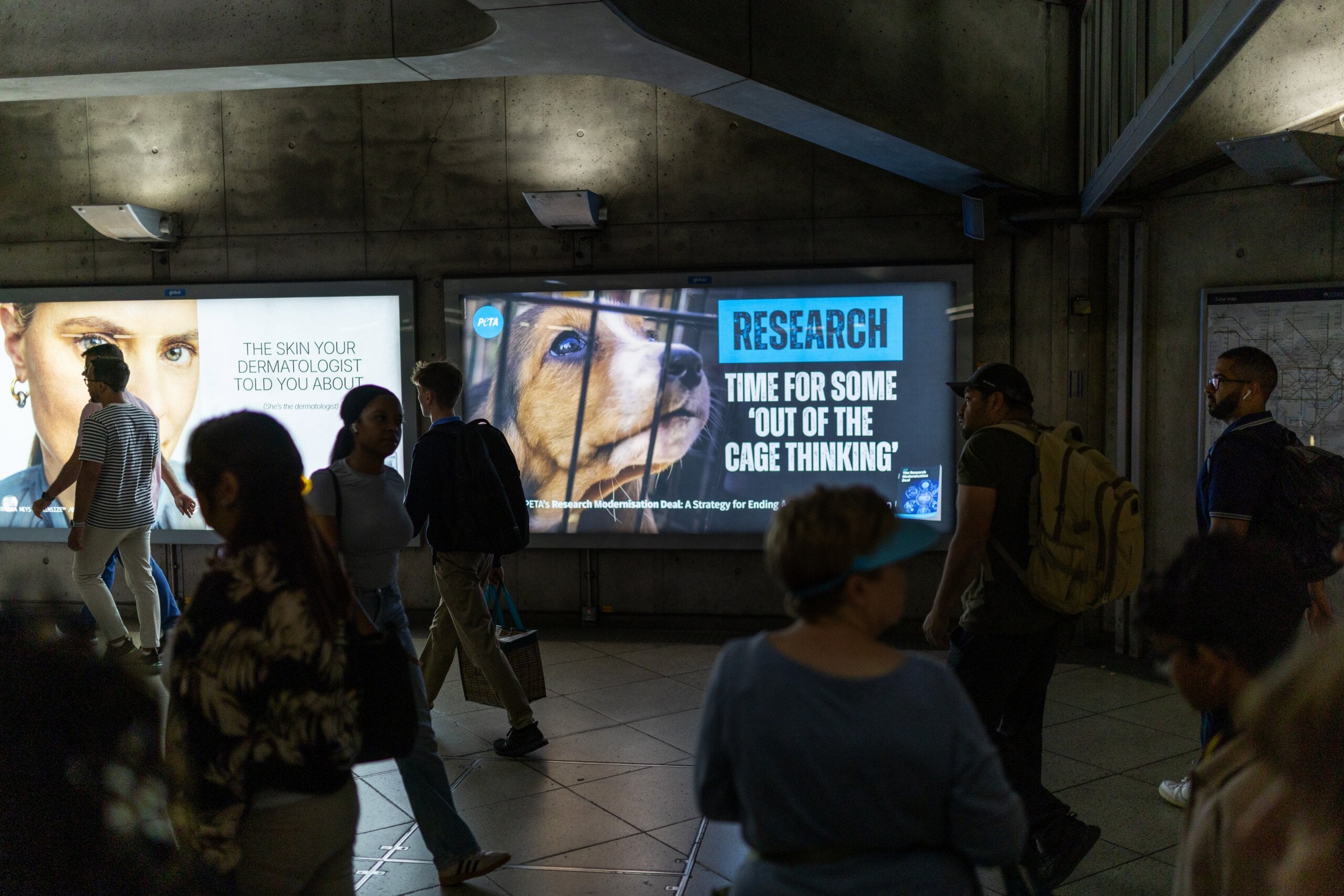
The pleading pup – strategically placed just around the corner from the Houses of Parliament and Downing Street – is part of PETA’s campaign calling on the government to adopt its Research Modernisation Deal, a strategy to end animal testing and pivot to human-relevant research methods.
The billboard is located on Platform 2, Eastbound on the District Line at Westminster Station, Bridge St, SW1A 2JR and is live for 2 weeks.

The Labour Party Pledged to End Experiments on Animals
In June 2024, the Labour Party released its manifesto, pledging to work towards phasing out testing on animals and to “partner with scientists, industry, and civil society” to achieve this goal. PETA has since called on the Government to adopt the Research Modernisation Deal, a 6-step strategy to end all animal experimentation.
PETA Exposes the Life of Animals in Laboratories
Every year, millions of animals are bled, poisoned, deprived of food, isolated, mutilated, or otherwise subjected to psychological suffering and physical pain in British laboratories. Millions more are bred and discarded as “surplus” because, for example, they were not of the desired sex or lacked certain disease characteristics.
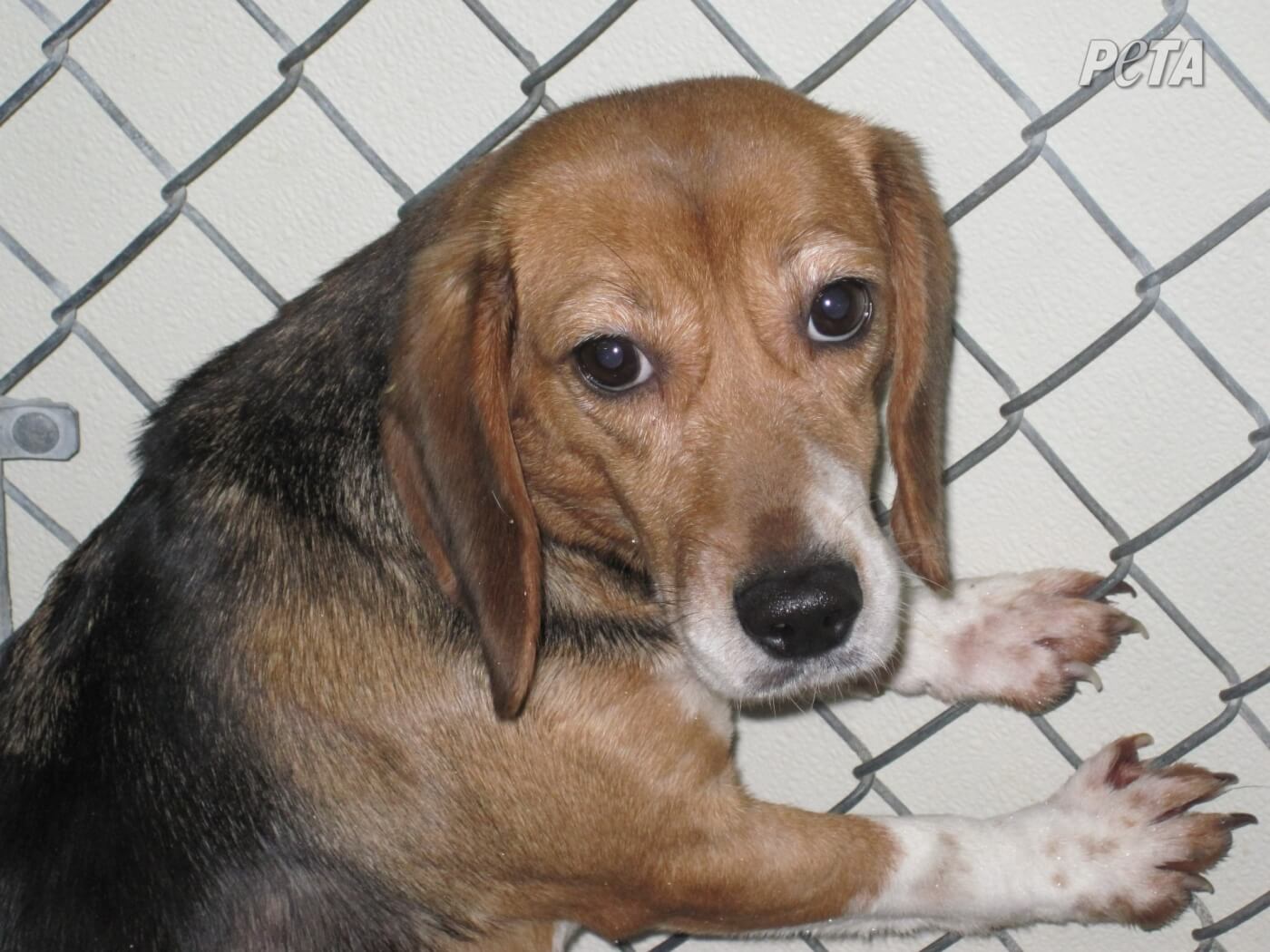
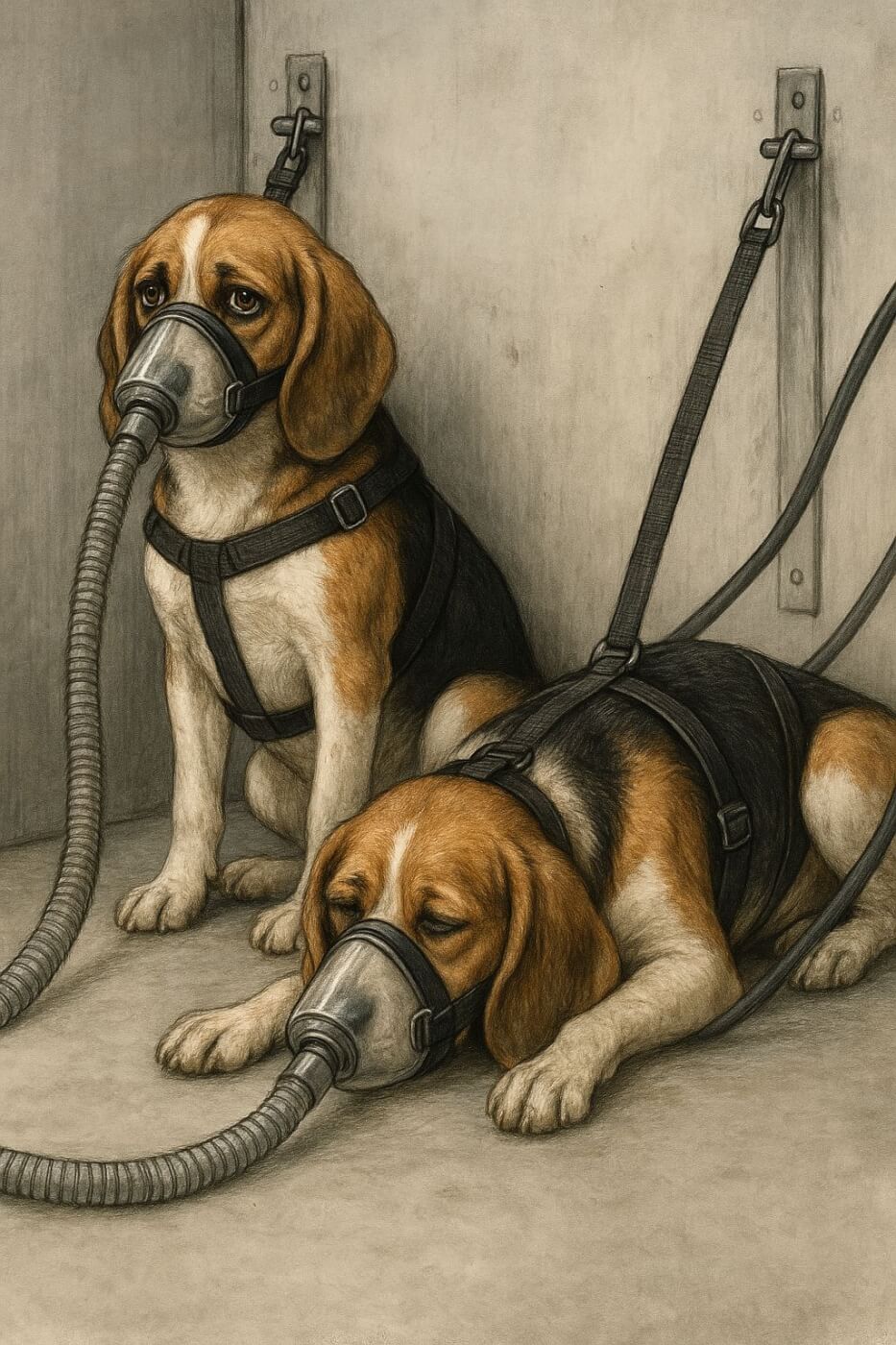
PETA has revealed a slew of atrocities in the experimentation industry – every year, countless dogs are forced to inhale or ingest chemicals, including pesticides, for regulatory approval and product development. During these tests, dogs may be forced to wear tight masks and inhale toxic chemicals into their lungs for hours, sometimes for days. Many suffer severe lung damage and chronic pain. Even if they survive, they are almost always killed afterwards. At highly regarded universities, experimenters drill holes into primates’ skulls and place implants into their brains before restraining them for hours on end, their heads bolted into place, as they are forced to engage in tasks on a computer screen.
Testing on Animals Delays Progress
Monkeys, dogs, rabbits, and other animals are being caged and tormented right now in horrific experiments that are holding back science, not advancing it.
Aside from the horror it perpetuates, experiments on animals are entirely avoidable. Ostensibly performed to gather data for human safety or diseases, most of what’s gleaned from these experiments is irrelevant to us.
Intricate differences between species can mean one is highly sensitive to a chemical while others remain unaffected, meaning that chemicals dangerous to humans may go undetected in tests on animals.
The average time from discovering a new drug to approval is about 14 years. The failure rate during this process is more than 95 per cent, and the cost per successful drug can be $1 billion or more. Meanwhile, as much as 89% of preclinical research isn’t reproducible. The current paradigm for developing and testing drugs and getting them to market has problems. Experiments on animals have been identified as one of the contributing factors.
Innovative scientists are leading the way with humane, human-relevant methods. Cutting-edge lab-grown human organ models, exposure systems that simulate real-life breathing of aerosols and gases, and advanced computational models that predict how substances behave in the lungs can all replace toxicity testing.
Similarly, organs on chips, computer modelling, and the use of human volunteers (who, unlike other animals, give their consent!) all exist but lack investment.
How You Can Help
PETA is calling on the government to keep its promise to phase out cruel and unreliable tests on animals and switch to cutting-edge techniques that help humans.
Please also sign our petition urging the government to mandate an end to all experiments on animals:
Sign the Petition
Help Animals in 2026: Renew Your PETA Membership!
Donate Now