Leather Working Group: Animal Suffering Behind Certified Leather
To produce leather items such as shoes, sofas, and car interiors, animals are bred, killed, and stripped of their skin. This industrialised process not only causes immense animal suffering but also leads to significant environmental damage, which fuels the climate catastrophe and global species extinction.
Fashion, furniture and car companies recognise that consumers are becoming increasingly conscious of their contribution to animal suffering and the destruction of the environment and would prefer to make a positive impact by buying animal-free products. However, instead of switching to vegan materials, some companies are desperately clinging to producing items made from leather, wool, or down and have signed-up to labels and certifications that dupe consumers into purchasing items that are the product of a lifetime of misery and the eventual slaughter of an animal. One such organisation is the Leather Working Group (LWG), whose logo can be seen on everything from hangtags to websites. Here’s why the LWG completely fails when it comes to both animal suffering and counteracting the ecological effects of leather production.
The Leather Working Group Upholds Cruel Practices
Numerous groups with interests in the leather industry, such as tanneries, chemical companies, and manufacturers of leather clothing, shoes, and furniture, have come together in the LWG. Instead of using their collective financial and technical capabilities to develop innovative, animal-free leather alternatives and make them widely available, the group sticks to a business model based on the mistreatment and slaughter of millions of animals.
What Is LWG-Certified Leather?
The certification of the LWG can be found as a label on leather items such as handbags or shoes. The LWG specifically audits tanneries and the finished and semi-finished leather trade. The focus is on the use and responsible handling of chemicals – therefore, consumers who care about animal welfare will be disappointed. Agricultural operations, the keeping of the animals, their transport, and how they are killed play no role in LWG certification.
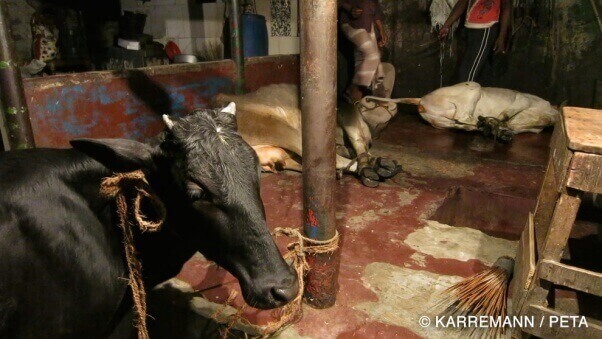
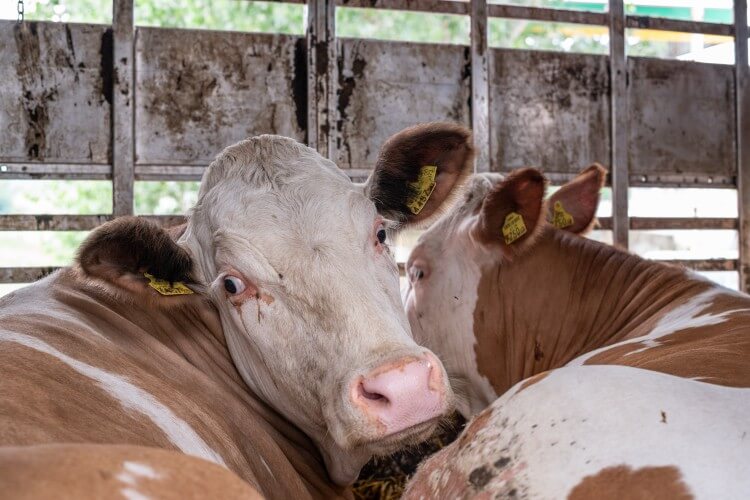
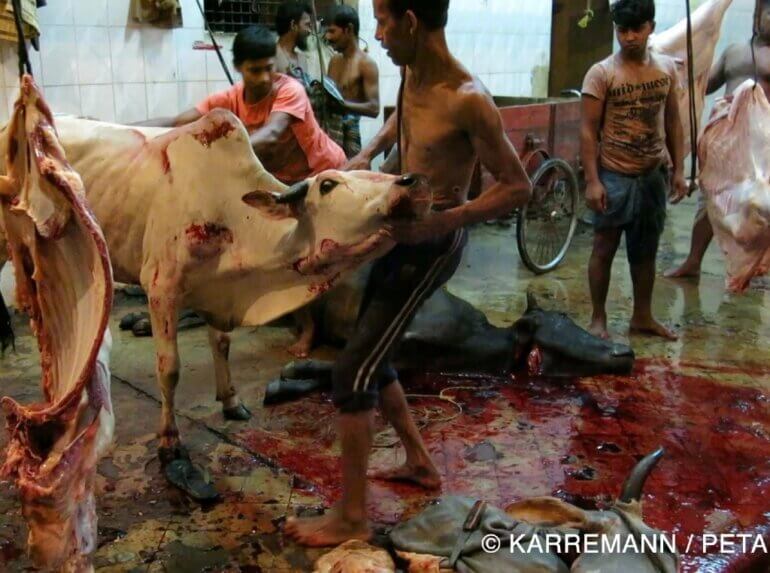
Standard torturous practices are carried out on cows around the world. Males are castrated without anaesthesia, and some calves are branded on the face with a hot iron. In many regions of the world, animals in abattoirs are not even stunned before their throats are cut. In England, abuse and incorrect stunning in abattoirs are also widespread.
The LWG considers animal welfare to be so insignificant that it only addresses it in a ‘self-funded subgroup’ called the Animal Welfare Group. This is a purely voluntary scheme and not part of the official certification process. It does nothing to improve the miserable lives of animals exploited for their skins.
Leather Production: Catastrophic for the Environment and Our Health
Whether LWG leather is declared “environmentally friendly” or not depends primarily on the manufacturing process in the tanneries and what materials are used. Tanneries usually work with environmentally harmful and toxic chemicals. In Bangladesh or India, which are the main producers of leather, repeated reports show how chemicals are not disposed of properly and are released into the environment instead of being cleared up.
It’s important not to forget that the production of leather – no matter where and how it takes place – always creates large amounts of waste. This includes flesh scraps, hair and trimmings, and toxic wastewater containing heavy metals, dyes, and solvents. The high energy requirements for processes such as hair removal or finishing contribute significantly to air pollution. The suffering of the animals and the devastating environmental and climate destruction associated with their breeding are not even taken into account by the LWG.
The LWG’s certification ignores the environmental problems linked to killing animals for leather. Many environmental disasters are caused by the animal agriculture industry, which globally accounts for up to 20% of human-induced greenhouse gas emissions. Yet they play a minimal role in the LWG. Because the leather industry processes the skins of ruminants like cows, sheep, and goats – the farming of whom emits the extremely destructive gas methane – leather production is a significant contributor to climate change. Animal skin is the most important co-product of the meat industry, and the value of the global leather industry was estimated at around £303 billion in 2024.
Another reason for the high environmental cost of animal agriculture is the amount of space it requires, which wastes valuable arable land around the world and destroys animal habitats. The most prominent example of this is the destruction of the Amazon rainforest, primarily for the cultivation of animal feed or the creation of pastures for cows who are later killed for their flesh and skin.
Destruction of Rainforests for Leather Can Never Be Ruled Out
So far, the LWG has not been able to consistently rule out the possibility that areas of rainforest have been cleared to raise animals for its certified leather suppliers. All JBS tanneries in Brazil, the largest meat and leather producer in the South American country, are LWG certified. Despite this, JBS has already been linked to the massive – and mostly illegal – clearing of the Amazon rainforest several times.
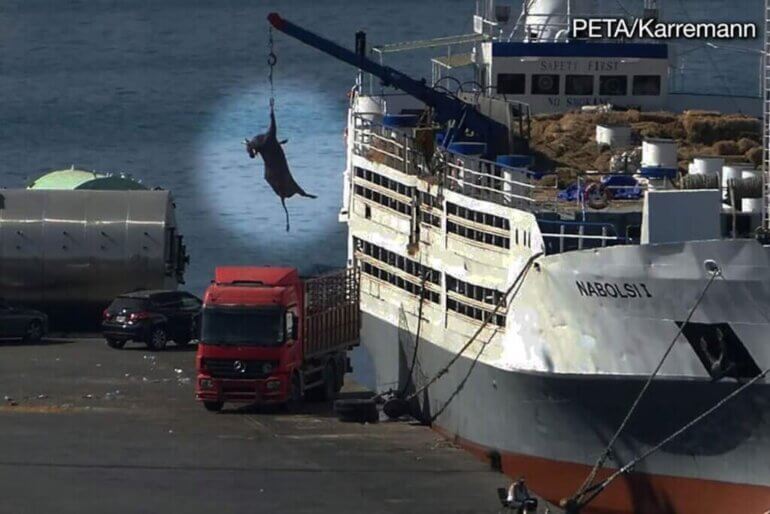
The LWG tries to reduce the evidence of deforestation for leather by tracing animal skins to the abattoirs, but the supply chains are so opaque that this is hardly possible. Even abattoir suppliers often don’t know where the cows they kill come from. Similar to “money laundering”, cows are “laundered” to conceal their true origin. In Brazil, suppliers move their animals from ranch to ranch, which means that at some point their origin is no longer traceable. The increasing number of harrowing long-distance journeys cows endure to be transported to distant countries for slaughter further complicates traceability. Deforestation in the Amazon region reached a 15-year high in 2021 – the same year that a report by environmental organisation Stand.earth identified connections between dozens of luxury and high-street brands – including those using LWG-certified leather – and deforestation.
Discover Animal-Friendly Leather Alternatives
Even with LWG certification, the production of animal leather involves terrible cruelty to animals, drives species extinction, contributes to the climate catastrophe, and tramples on the rights and health of workers.
Companies that take animal and environmental protection seriously must avoid animal-derived leather completely. In the future, tanneries should only be used to tan animal-free materials such as leather made from fungi or yeast cells.
Fortunately, responsible consumers can already choose from a wealth of innovative and superior vegan leather options: cork leather wallets, mushroom leather shoes, and cactus leather handbags are all available. Even many car manufacturers now offer vegan options for vehicle interiors.
Help Animals in 2026: Renew Your PETA Membership!
Donate Now