Achieving a Foie Gras Import and Sales Ban in the UK
Foie gras – the “fatty liver” pâté that’s made by force feeding grain to geese and ducks via a metal pipe that’s rammed down their throats until their livers become diseased – is still sold in the UK, despite the process to make it being so cruel that it’s illegal to produce here.
In the run-up to the 2024 General Election, the Labour Party pledged to ban the commercial import of foie gras produced by forced-feeding. It claimed a ‘vote for Labour was a vote for animals’. Since then, however, no action has been taken to fulfil this commitment. It may also now be at stake due to Labour’s push for a “Common Veterinary Agreement” to reduce trade friction with the EU. This could prevent the UK from banning imports, as strict alignment with EU rules might restrict the ability to block goods.
PETA Puts Pressure on the Government
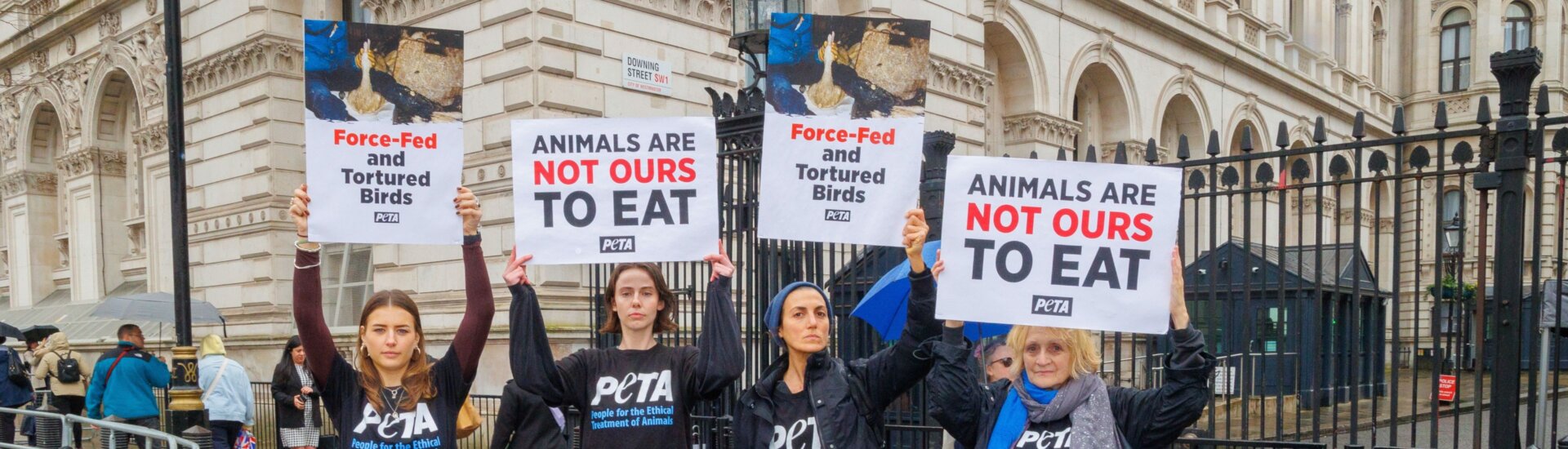
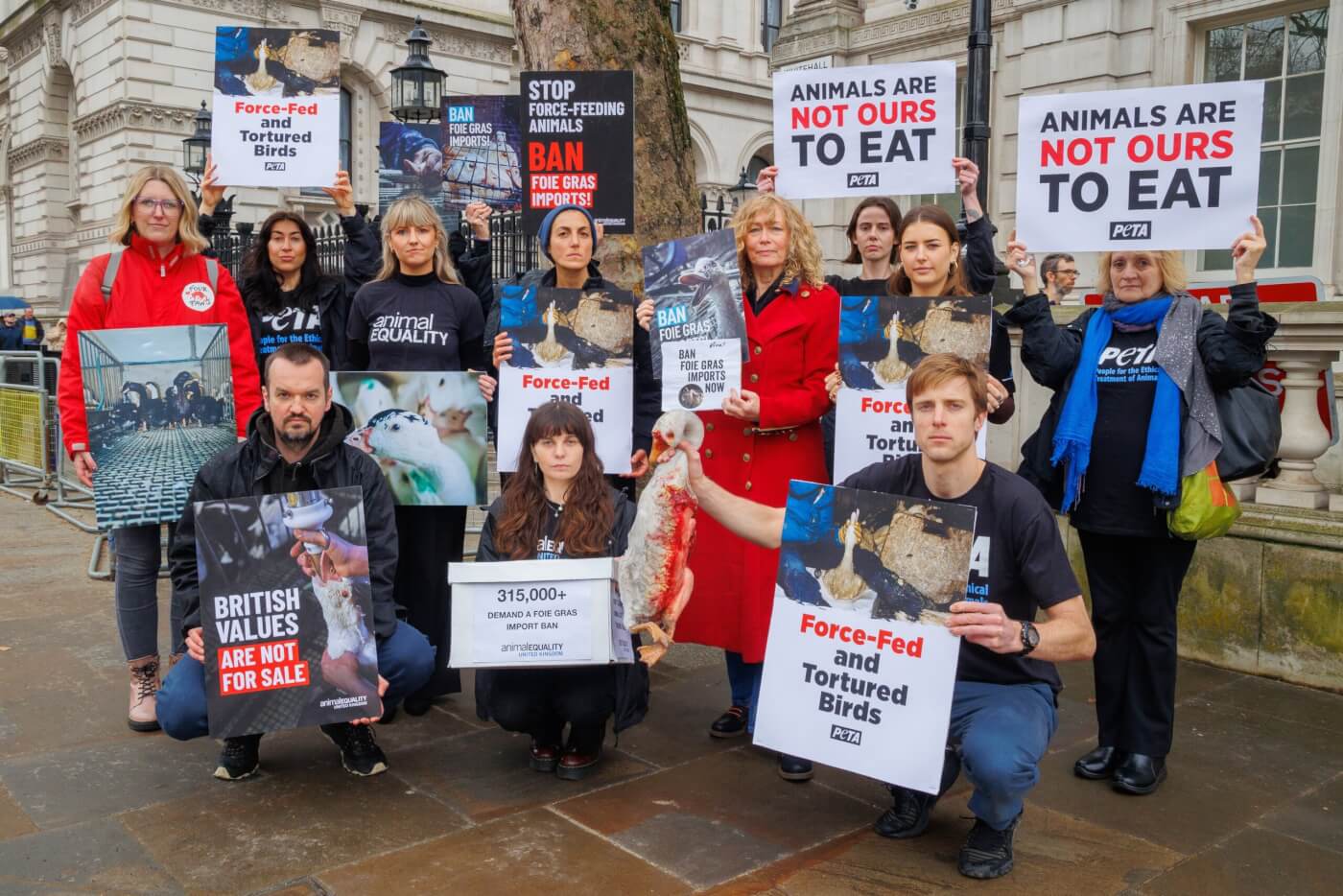
In March 2026, joined Animal Equality, Four Paws, and Viva! at Downing Street to call for a ban on foie gras imports.
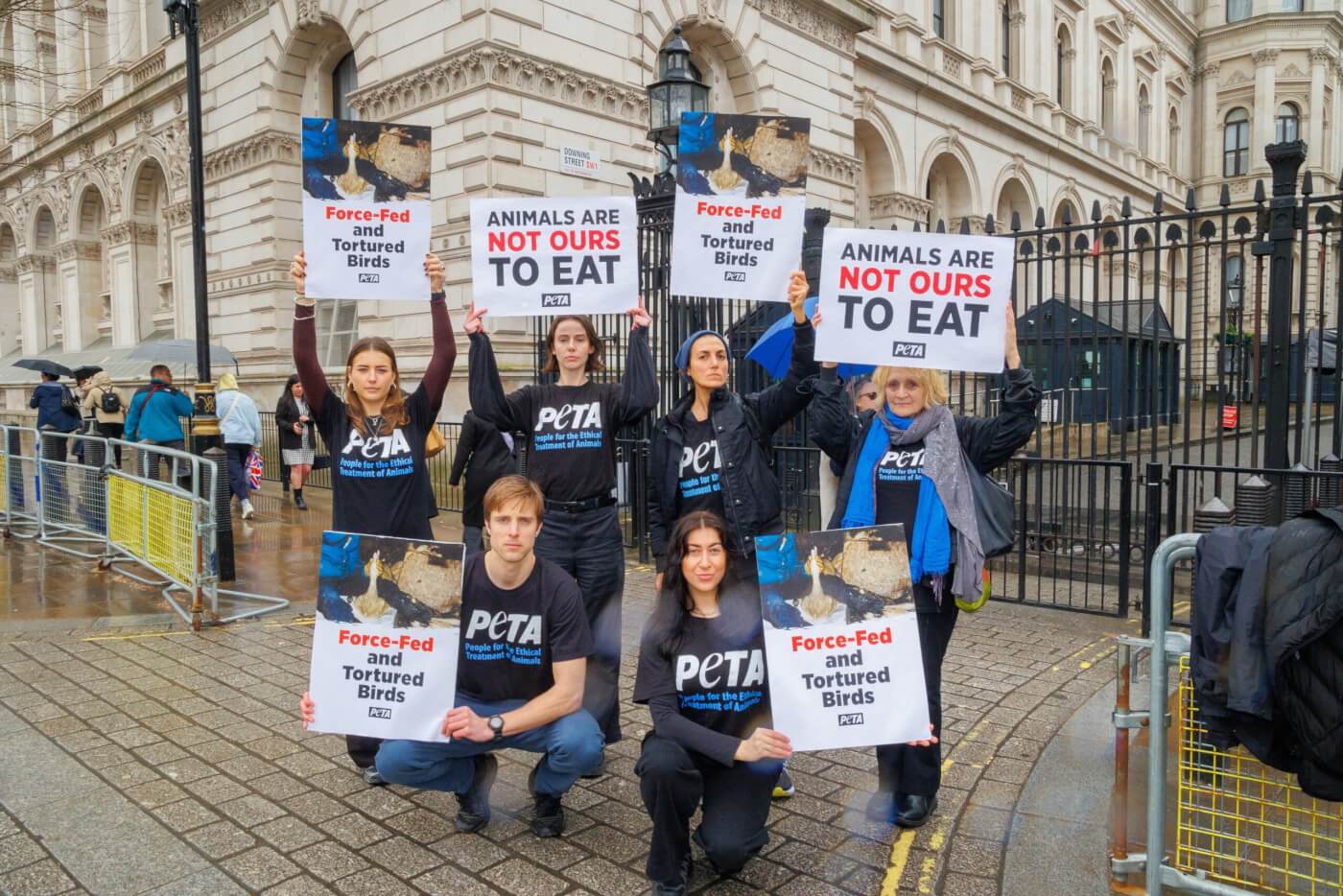
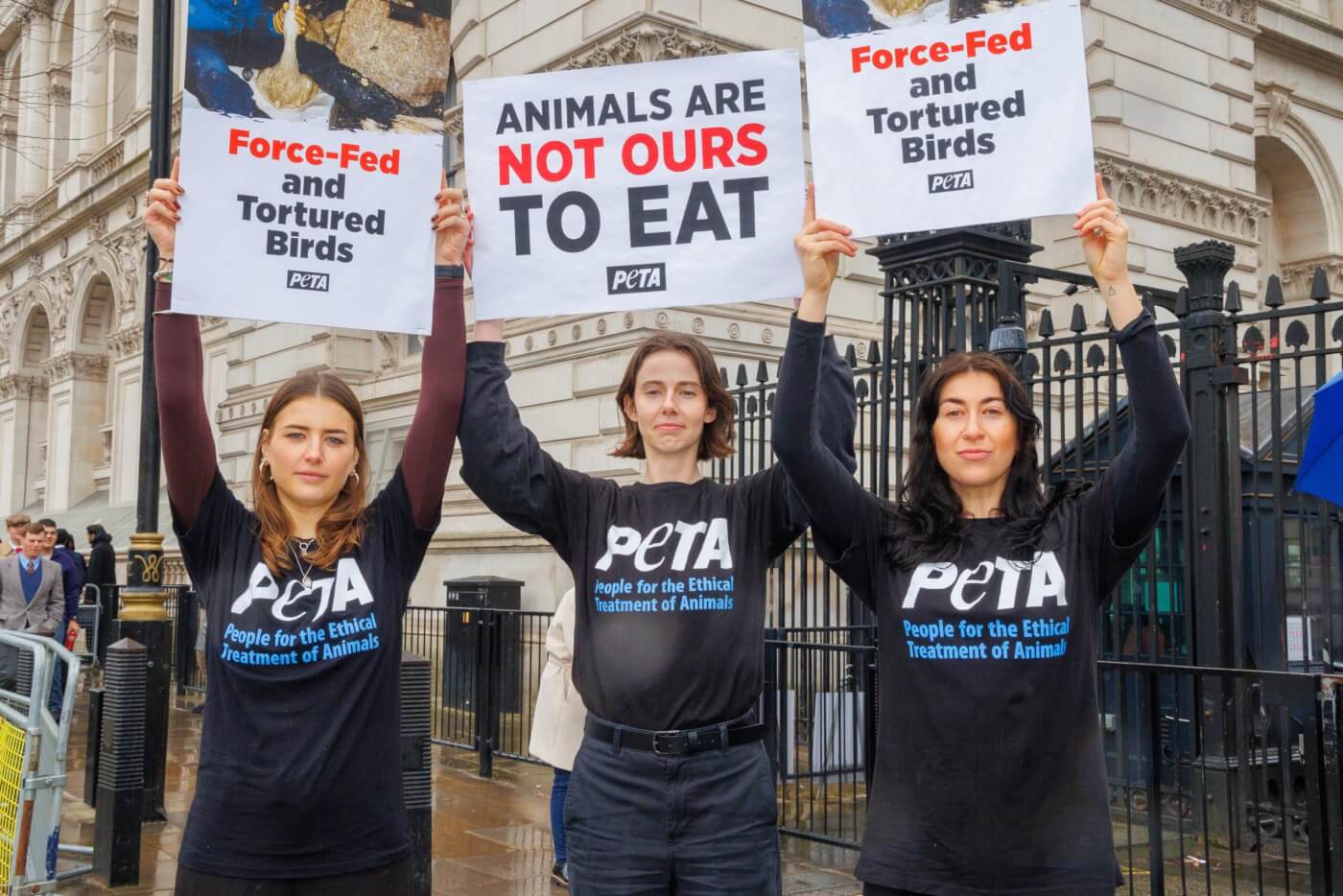
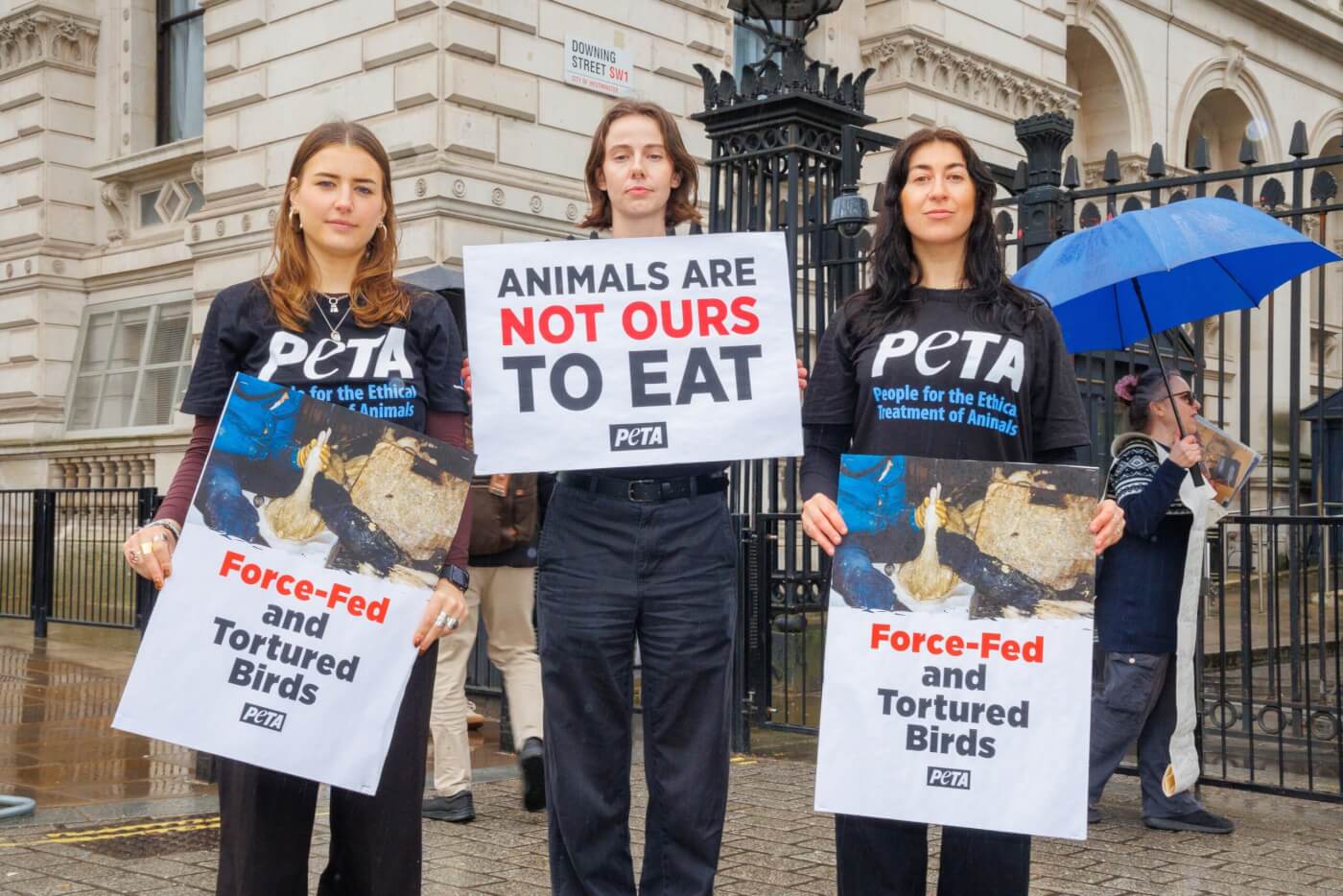
Unless animal welfare is ‘carved out’ of the Common Veterinary Agreement with the EU, it could be illegal to enact the bans.
We therefore reminded the government of its commitments to a foie gras ban, demanded it happen without further delay, and highlighted how many people support it. Animal Equality handed in a petition with over 300,000 signatures to the Downing Street door.
What Is Foie Gras?
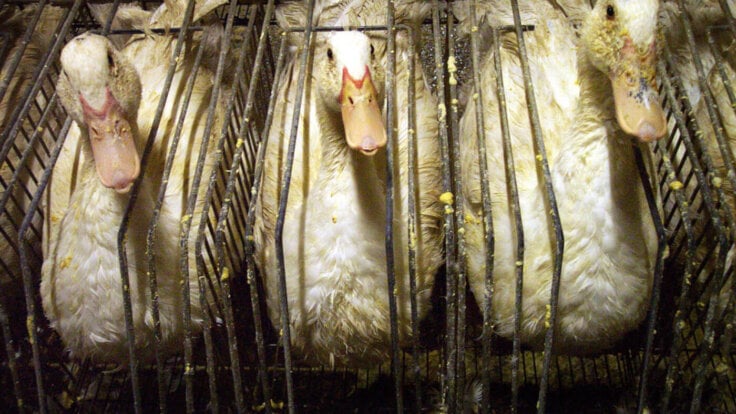
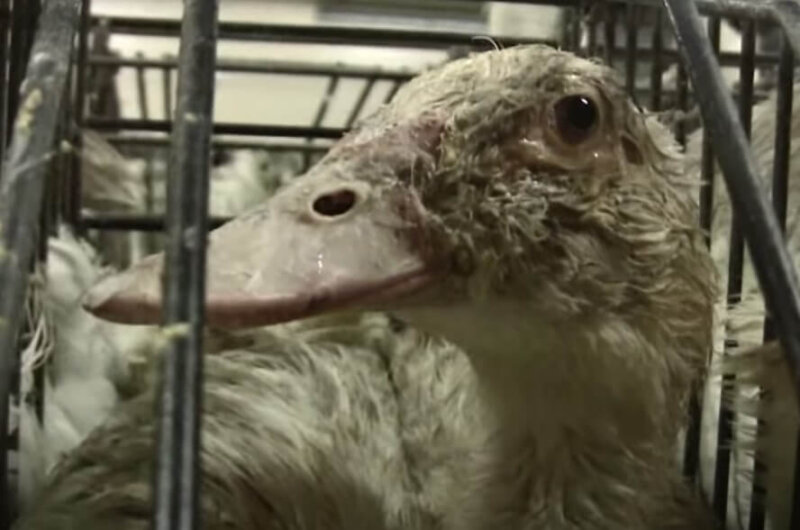
Foie gras is a pâté made from the enlarged livers of ducks or geese who are force-fed large quantities of grain up to several times a day using metal tubes that are pushed down their throats – a process known as gavage. The French term foie gras literally means “fatty liver”, and the production method deliberately causes the birds’ livers to swell to 10 times their natural size, leaving them diseased and in agony.
Ducks and geese raised for foie gras are often confined in small, individual cages or cramped group pens, particularly during the final force-feeding phase. These cages are often so small that the birds cannot stretch their wings, stand properly, or turn around. They suffer injuries to their throats, breathing difficulties, infections, stress, and premature death as a direct result of force-feeding. PETA exposés have revealed that some birds on foie gras farms have holes in their necks from repeatedly having the tubes rammed down their throats.
Once their livers are swollen, birds are hung upside down, have their throats slit, and are bled to death.
Join the Fight to End Foie Gras
Please sign our petition urging the government to ban the import and sale of foie gras in the UK, and share it with everyone you know:
Help Animals in 2026: Renew Your PETA Membership!
Donate Now