
5 Horrific Animal Experiments Approved in Britain in 2026 – And How to Help Stop Them
Every year, millions of animals are imprisoned, mutilated, and killed in British laboratories, hidden from public view.
In British laboratories right now, authorities have authorised experiments that will force animals to endure extreme pain and terror, despite such tests often providing poor and unreliable insight into the outcomes in other species.
Here are five experiments approved in Britain that reveal exactly what animals face in laboratories – and why change cannot wait.
1. Thousands of Mice Engineered to Develop Cancer
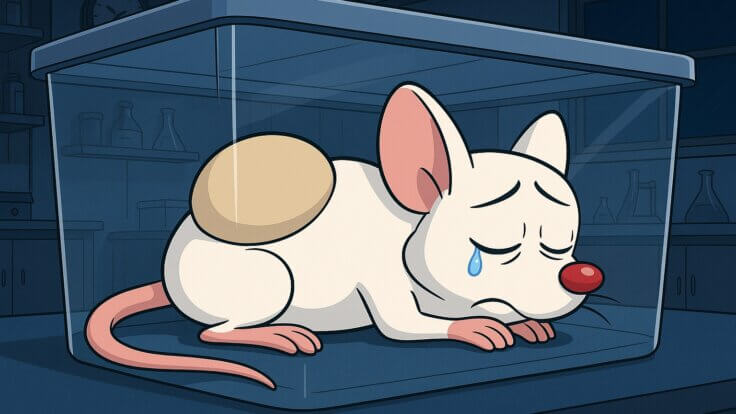
In just one approved project, up to 5,500 mice will be genetically altered, irradiated, injected, and cut open so that cancer can be deliberately created and spread throughout their bodies.
Some of these genetic changes are so severe that mice are expected to die before they are even born. Others will have tumours chemically induced or implanted beneath their skin, where the growths are allowed to expand until they reach enormous sizes.
As the disease progresses, many mice are expected to develop hunched backs, rough, spiky fur, extreme weakness, partial paralysis, or breathing difficulties. Some are expected to collapse and die in their cages before anyone intervenes.
Others will be restrained, anaesthetised, and bled to death so their blood can be harvested, before their bodies are dissected and their tumours removed. All of this suffering is authorised – and entirely legal.
2. Monkeys Starved, Drilled Into, and Deliberately Hurt to Force Compliance
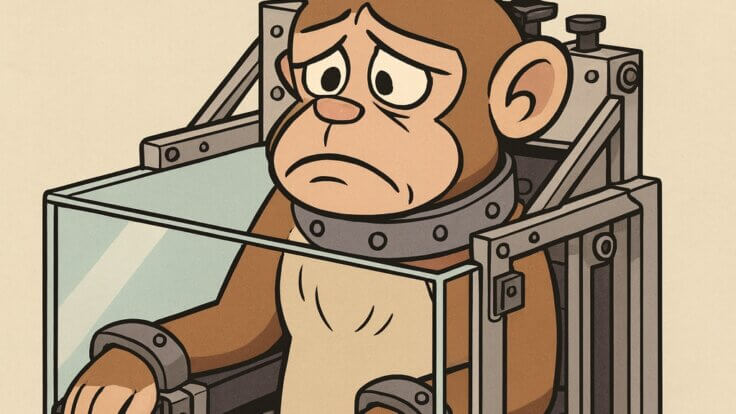
Another approved set of experiments will use rhesus and long-tailed macaques in what can only be described as prolonged torture.
Some of these monkeys will never wake up, as they will be used in so-called “non-recovery” experiments, killed while still under anaesthesia. Others will be forced into procedures lasting more than a year.
They will be trained to tolerate neck collars, arm restraints, and waist clamps, often through food deprivation. On certain days, access to food is made conditional on performing tasks dictated by the experimenters.
Once “trained”, holes will be drilled into their skulls, metal headpieces bolted on, and electrodes implanted into their brains, muscles, and arms. Some will even have electrodes inserted into the so-called “reward centres” of their brains to manipulate their motivation.
While fully awake, monkeys will be restrained for up to six hours at a time as intense heat, electric stimulation, and painful chemical injections are deliberately applied to their nerves. The aim is to increase suffering until the monkeys continue working despite the pain.
Every single monkey is killed at the end.
3. Animals Kept on Farms Treated as Disposable Test Subjects

Many people have no idea that animals exploited for food are also abused in laboratories. In one authorised project, cows, goats, pigs, and chickens will be deliberately given chemicals and then confined in appalling conditions.
Chickens will be locked alone in tiny cages where their urine and faeces fall through metal grids beneath them. Goats and cows will be trapped in stalls so small they cannot even turn around – sometimes for weeks at a time.
The standards of housing for these animals in experiments are even lower than the harsh conditions faced by those in industrial farming, further compounding their welfare.
They are expected to be restrained and repeatedly bled – before being killed once their “usefulness” ends.
4. Pigs, Sheep, and Rabbits Cut Open for Device Testing – None Survive
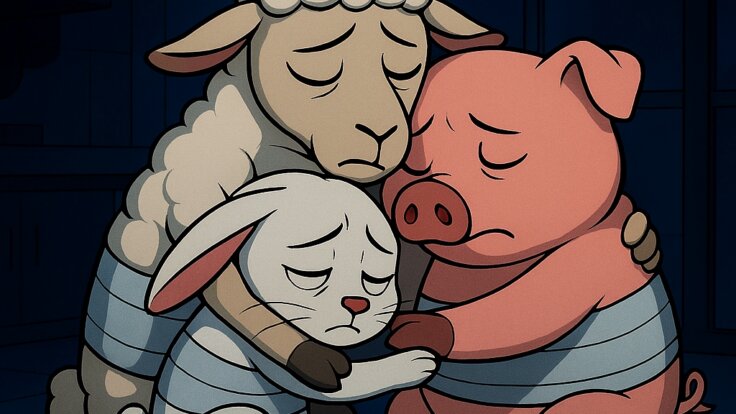
Another approved experiment expects to use hundreds of pigs, sheep, and rabbits to test cardiovascular devices.
These animals will be cut open so that devices can be pushed deep into their blood vessels or hearts. They will be given blood thinners and injected with contrast dyes while experimenters work inside them.
Some animals will never wake up, remaining unconscious as their bodies are treated like disposable testing platforms. Others will regain consciousness only to suffer pain, swelling, and weakness, and in some cases, animals may even experience seizures, paralysis, or altered consciousness following surgery. Whilst the animals will be offered some pain relief to ease their suffering, they rely on human intervention and cannot call out for help or self-medicate as humans can.
Every animal involved is killed at the end – sometimes without ever regaining awareness.
5. Thousands of Fish Made to Suffer and Die from Forced Disease
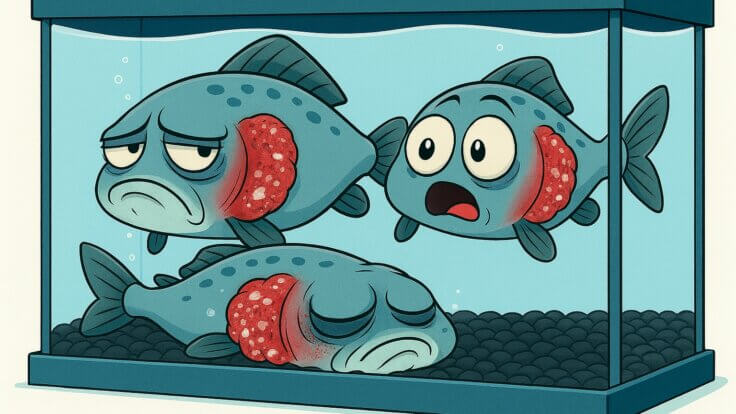
Fish are among the most used animals in experiments in the UK – and among the most ignored.
In one approved project, experimenters will tag up to 15,000 salmon and repeatedly handle, measure, and collect mucus and other samples from them throughout their lives, undoubtedly causing stress. When they reach their most vulnerable stage, researchers will deliberately expose them to a deadly disease.
Water from tanks holding infected fish will be pumped into tanks of healthy ones, spreading amoebic gill disease, a condition that smothers the gills with inflamed tissue and thick mucus.
As their gills fuse and fail, these fish are left gasping, weak, unable to swim properly, and struggling to breathe. Many will sink into respiratory distress before they are finally killed.
Animals Can’t Wait – and We Don’t Have to Accept This
These experiments are not relics of the past. They are happening now, approved by authorities, funded with public money, and justified using outdated claims about “necessity”.
But experiments on animals are cruel, unreliable, and increasingly indefensible. The majority of “highly promising” basic science discoveries are based on animal studies, but fewer than 10% of these enter clinical use within 20 years – while non-animal methods such as organs-on-chips, advanced computer modelling, and human-based research are already transforming science.
You can help with the campaign to end this animal abuse for good.
Take Action for Animals in Laboratories
Add your voice to the call for a future without animal experimentation. Take these rapid actions to help animals used in laboratories today.
Help Animals in 2026: Renew Your PETA Membership!
Donate Now