9 Reasons Not to Eat Salmon
Salmon are feeling individuals, not fillets. Whether they’re raised on filthy factory farms or hooked through their tender mouths and hauled from their natural homes, clever, tenacious salmon don’t belong on our plates. From health and sustainability to ethics and antibiotic use, here are nine reasons why:
1. Fish Have Feelings
We know that fish have complex central nervous systems that enable them to feel pain, and also have rich emotional lives.
Salmon, like many of us, experience fear, distress, joy, excitement, and curiosity. Studies of Atlantic salmon have shown that they have measurable, individual personalities, and are capable of making group decisions.
Salmon are anadromous, meaning they can live in both salt and fresh water, which allows them to travel up to 34 miles per day, mostly upstream, just to become parents.
Humans have no right to interfere with salmon’s tenacity and will to survive, just for a fleeting taste.
2. Salmon Farms Are Factory Farms
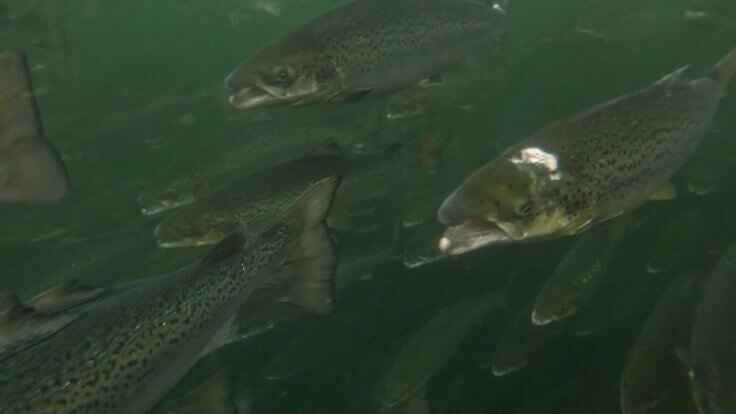
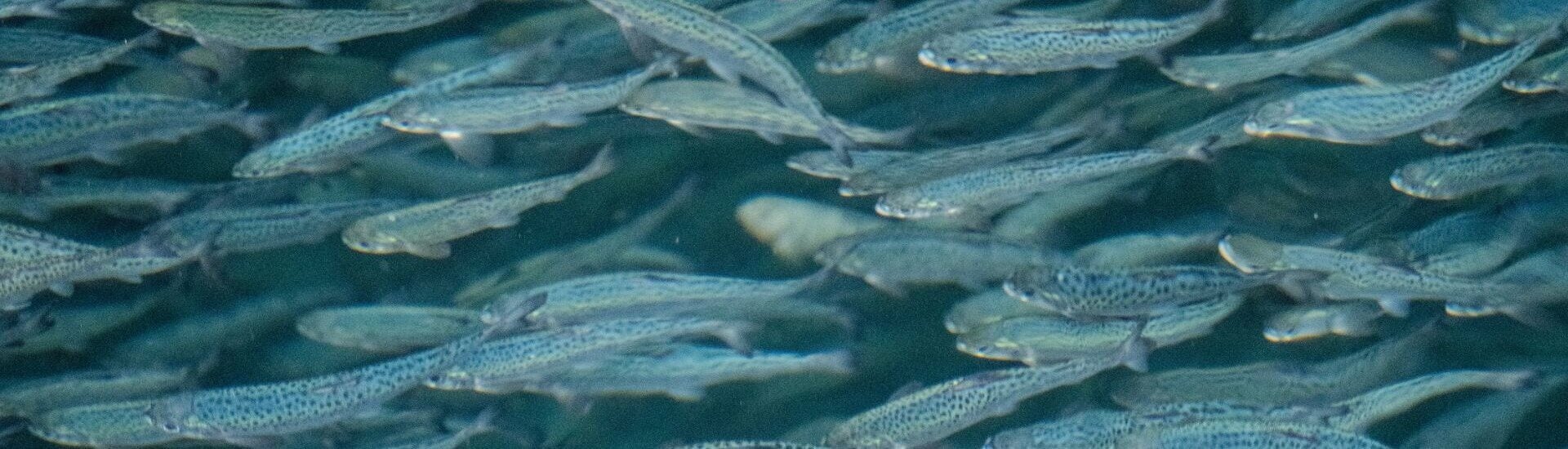
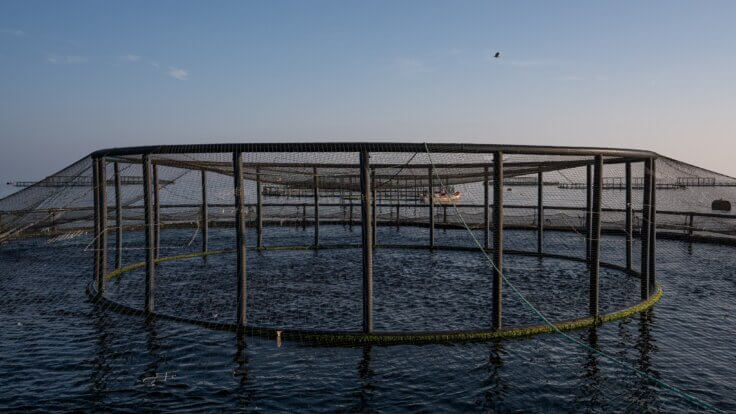
Fish farms are factory farms, and roughly 85% of people in Britain want a ban on factory farming. Despite this, salmon farming is expanding worldwide, with around 70% of salmon killed for their flesh now are raised in intensive confinement – hundreds of millions each year. Scotland is the third largest producer of Atlantic salmon flesh in the world with 200 farms exploiting up to 56 million fish.
Salmon farms are just as filthy and cruel as a barn full of miserable chickens or a shed crammed with sick pigs. Salmon naturally love to explore, but on farms, they’re confined to swim in circles.
Numerous investigations into Scottish salmon farms have revealed depressed salmon being eaten alive by parasites in dirty, deoxygenated and corpse-filled water .
3. Fishing Is Hunting
Most people are horrified by hunting, but have you ever considered that fishing – using a weapon to kill animals in their natural homes – is hunting?
Fishing is a violent act that involves luring a hungry animal toward a sharp hook, piercing their face and yanking them from the water.
Deep dwelling fish experience excruciating decompression pain when they’re rapidly brought to the surface, with one expert describing it as “The Bends (decompression sickness) on steroids”.
Like lions or elephants, hunted fish writhe in pain before being bludgeoned, beheaded, and dismembered.
4. Eating Fish Destroys the Environment
We know forests are vital for storing carbon, but so are oceans. An impressive 240 million tonnes of carbon is stored within just the top 10 centimetres of sediments on the seafloor in the UK and the Isle of Man alone! Removing fish from the ocean disrupts ecosystems and is destroying our planet.
People often believe that salmon farming is a more environmentally friendly option than fish caught from the ocean. But this is categorically false. In fact, consuming farmed salmon supports the most harmful fishing practices. To produce 1kg of salmon, 3kg of fish must be taken from the ocean to feed them. These fish may be caught via bottom trawling, where giant nets are dragged across the ocean to scoop them up, which tears up seafloors and releases carbon. Bottom trawling also captures unintended species as ‘bycatch’ – including sharks and dolphins.
5. Eating Fish Is Killing Oceans
With 92% of the UK’s historical seagrass already lost, it’s no wonder Sir David Attenborough called bottom trawling “unspeakably awful”, but it’s not the only way our appetite for fish flesh harms the seas.
Lost or discarded fishing gear is also the deadliest form of marine plastic, while waste from salmon farms, including antibiotics and pesticides, leaks into the ocean, and lice spread to wild fish.
When salmon escape, as they often do, they can also breed with wild salmon, weakening populations.
6. Plants Are Rich in Omegas
No one needs to eat salmon, or supplement with fish oils; you can get omega -3, 6 or 9 straight to the source – plants!
Chia seeds, flaxseeds, walnuts, and hemp seeds are all rich in alpha-linolenic acid (ALA), which the body converts to EPA & DHA, while algae-based supplements (which are where fish get their omegas) boost EPA (eicosapentaenoic acid) and DHA (docosahexaenoic acid) to help protect the heart, eyes, nervous system, and skin.
7. There Aren’t Plenty More Fish in the Sea
Because each fish is a person with their own wants and needs, killing one should be unthinkable. But the scale at which we slaughter fish and the methods used are also an environmental disaster.
At the 2025 UN Ocean Conference, scientists warned that commercial fishing and climate warming are decimating fish populations. No more fish means total ocean collapse, a huge price to pay when you could simply eat food from plants.
8. Fish Farms are Driving Antibiotic Resistance
The World Health Organization (WHO) warns that antimicrobial resistance undermines the effectiveness of life-saving treatments, putting all of us at a higher risk of dying from even minor infections.
But it’s not doctors “overprescribing” antibiotics to humans that’s causing the problem, it’s farmers feeding antibiotics to animals – including fish – to mitigate the disease spread on factory farms.
Salmon Scotland initially boasted about reducing antibiotic use but was then forced to admit it had underestimated the amount of antibiotics used to treat diseased fish in 2024 by 66%. It used a total of 1,564 kilograms that year.
9. Vegan Fish Upgrades Are Delicious!
There are so many vegan fish options available now, you can enjoy everything from a fish-free salmon bagel to seaweed caviar without harming anyone.
Vivera Plant-Based Salmon Fillets are perfect with parsley sauce, while the Squeaky Bean’s Beechwood Smoked Salmon Style Slices won a PETA Food Award and are perfect in sushi.
You can even make your own smoked salmon using the humble carrot!
Remove Salmon – and All Animals – From Your Diet
If being reminded that fish are friends, not food, has inspired you to stop following the flesh-eating pack to swim your own way toward a kinder, greener and healthier life, it’s time to go vegan!

Help Animals in 2026: Renew Your PETA Membership!
Donate Now