Bearded Dragon for Sale? 7 Reasons to Never Buy This Reptile
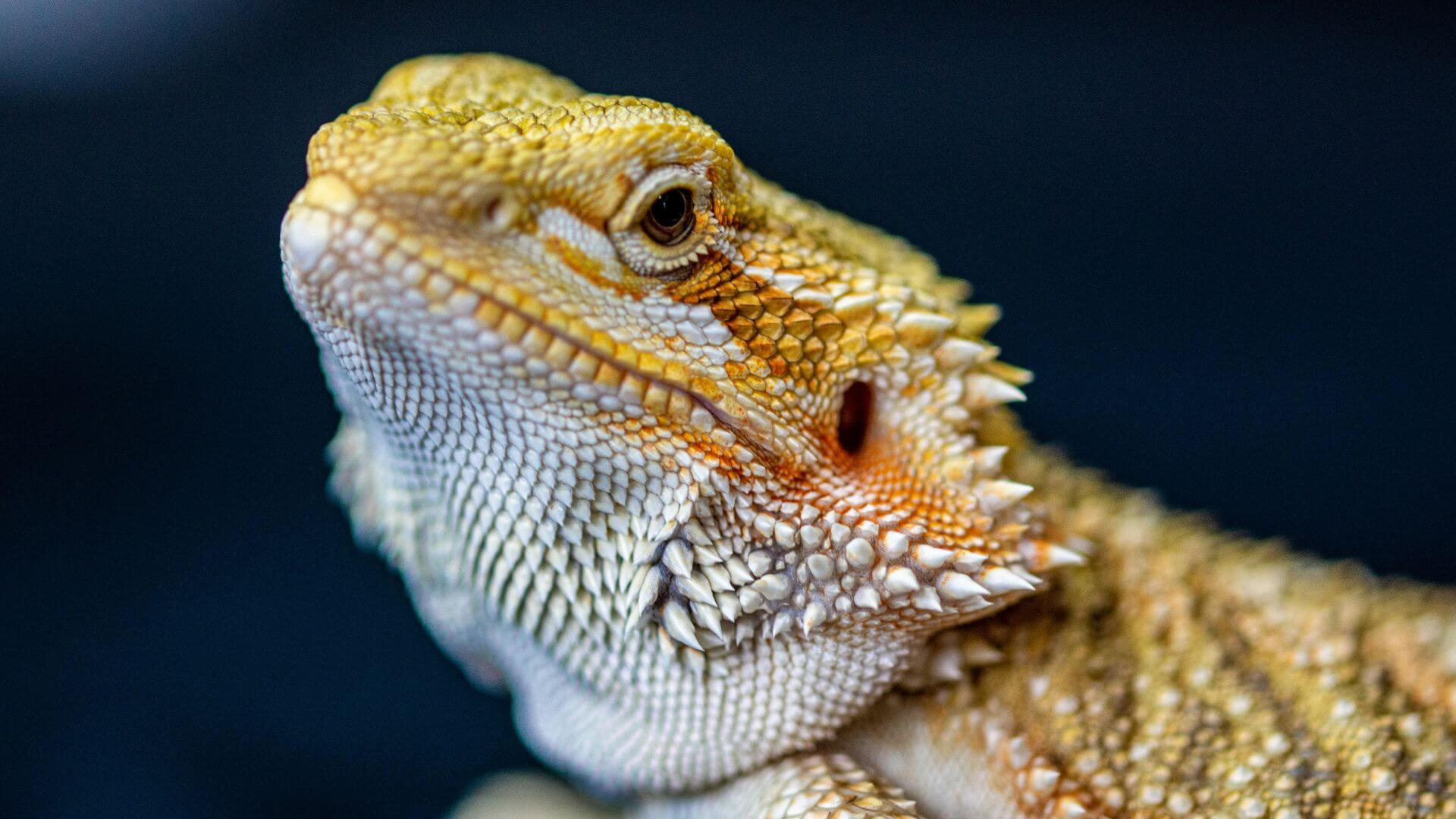
Pogona, better known as bearded dragons, or ‘beardies’, are sturdy, diurnal lizards with broad triangular heads and inflatable ‘beards’ under or around their throats, which puff up (and sometimes turn black) when the animal feels threatened, stressed, or is keen on a mate. These reptiles are incredible animals, and you may have been tempted to buy a bearded dragon. But here’s why you should never do so.
There are eight types of bearded lizards, and all of them live naturally in arid and semi-arid areas of Australia, a unique environment to which they are perfectly adapted.
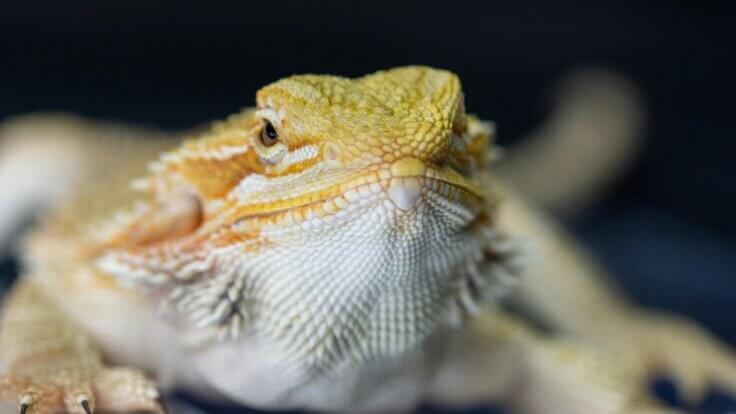
Unfortunately, thanks largely to fantasy TV series and films, the mystique of ‘owning a dragon’ has seen these gentle animals shoved into tanks all over the UK, and elsewhere, where ‘pet’ stores and breeders sell them to people who often don’t know how to care for them properly.
Here’s why you should never buy a bearded dragon.
1. Reptile Mills Are Cruel
You’ve likely heard of puppy and kitten mills, where dogs and cats are kept in squalor and repeatedly bred for profit, but did you know that most of the reptiles sold by breeders and in ‘pet’ stores are bred in reptile mills?
Like farms that pump out baby mammals, reptile mills are to blame for a glut of sick and miserable lizards, tortoises, frogs, snakes, and other animals. ‘Pet’ shops treat them like novelty items, and the advice from clerks is rarely adequate, leaving people who buy them unprepared.
In the wild animal trade, many animals don’t even make it to sale. Some perish from the trauma of being trapped and taken from their homes, others die during transport, and more still die from neglect as dealers pass them around.
People are so indifferent to reptile neglect and abuse that their suffering often happens in plain sight. Investigations into Terraristika, Europe’s largest reptile show, have shown that animals are kept in plastic tubs so small they’re barely able to move, and this is completely normalised. Just imagine the outrage if puppies were kept in boxes like these. Reptiles suffer just as much as them.
2. ‘Beardies’ Are Built for Hot, Dry Climes.
If there’s one glaring difference between Australia and the UK, it’s the climate – and bearded dragons, evolved for Australia’s hot, arid conditions, can never truly thrive in an artificial captive environment here. Bearded dragons need a dry and warm environment to be happy and healthy, an incredibly delicate balance which requires expert knowledge as well as time, attention, and funds.
Ectothermic reptiles like bearded dragons are reliant on heat sources to maintain body temperature, so it’s important to calculate the right heat. They also require adequate ventilation, natural sunlight to regulate their body rhythms, and a low-humidity environment to prevent skin or breathing problems.
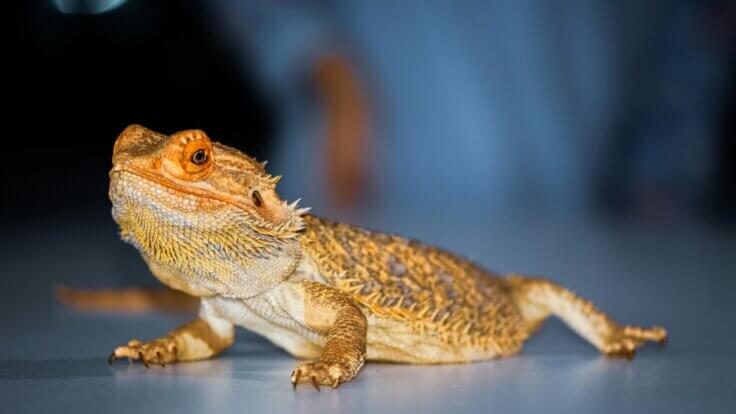
Lots of beardies end up dumped because people underestimate their complex needs, and the reptiles fall ill and often die.
3. They Need Room to Roam
In their natural homes, bearded dragons roam a wide territory freely and are able to forage for food, find the perfect basking rock, and meet their mate.
Bearded dragons would ideally never live in captivity, as no cage is enough to truly meet a bearded dragons’ needs. And, in fact, many people who buy them choose to keep them in cages far too small to come close to meeting even their most basic needs.
Bottom line? Bearded dragons are meant to live free in the vast land down under. It’s virtually impossible for the average person to meet their complex needs. They will never be happy cooped up in a tank.
4. They Demand Time and Attention
In captivity, bearded dragons require consistent monitoring to ensure their habitat is comfortable and daily feeding of a wide range of foods, including live insects. This means that buying a bearded dragon doesn’t just harm them – it also means that other animals will suffer in order for them to be fed.
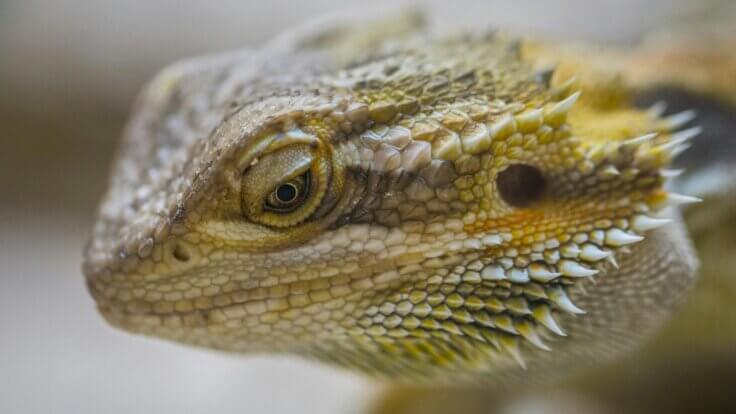
As well as ensuring their habitat is perfect, clever, and curious, bearded dragons need enrichment, including things to climb and hide inside, places to dig, an array of textures to touch, and space to roam and explore.
5. They Need Specialist Health Care
Wild animals require specialist vet care, which can be costly and sometimes hard to find, especially in an emergency.
Bearded dragons are prone to several health issues, most of which can be prevented with proper care. The most common illness is Metabolic Bone Disease (MBD), which occurs when bearded dragons fail to absorb enough vitamin D3 or calcium, , usually due to factors including insufficient UV exposure and not enough greens in their diet.
Other issues include respiratory infections from cold and damp, blockage of the digestive tract, mouth and tail rot, parasites, and dysecdysis (when they become stuck in a skin shed), which is a common risk when they live in too-dry indoor environments due to dehumidifiers running in our homes during winter.
6. They May Carry Salmonella
Up to 90% of reptiles carry salmonella in their intestine. While for them this is largely harmless, the transfer of bacteria from their faeces can lead to infections if proper hygiene isn’t practised after touching them or anything in their tanks.
Other companions, like dogs and cats, can easily be infected by a roaming lizard or by handling both without thoroughly washing hands in between. In other animals, including humans, Salmonella can cause vomiting, fever, and even death.
7. Lots of Bearded Dragons Need Homes
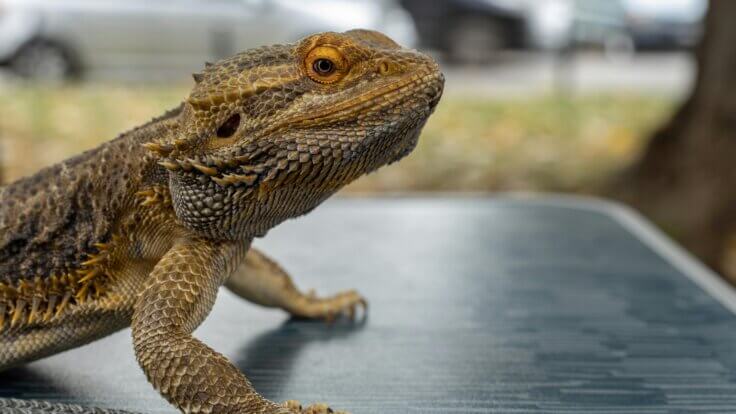
Because people get caught up in the fantasy of owning a dragon, they’re also one of the most commonly abandoned animals, and they are often dumped in woodlands, streets, outside ‘pet’ shops and rescues and even in bins and at graveyards.
A lack of knowledge is cited as the largest driver of bearded dragon rehoming, with owners often saying that they didn’t fully understand the commitment required.
Bearded dragons are delicate, sensitive individuals, not decorations to be sold and bought. They’re not someone to invite home on a whim, and you should never buy any animal.
Want To Help Lizards and Other Reptiles?
Urge designers like Gucci, Louis Vuitton and Hermes to end their use of wild-animal skins!
Take Action
Help Animals in 2026: Renew Your PETA Membership!
Donate Now