
Chris Packham Challenges Burberry Over ‘Appalling’ Cashmere Cruelty
Broadcaster, wildlife campaigner, and environmentalist Chris Packham is challenging Burberry to stop using cashmere, urging the luxury fashion house to leave it behind – just as it previously banned fur and wild-animal skins.
Speaking on behalf of PETA at Burberry’s annual general meeting on 15 July, Packham will ask shareholders whether the company is prepared to live up to the “Prorsum” (“Forwards”) motto featured in its iconic branding by moving away from cashmere – which is linked to severe animal suffering and environmental destruction.
“Will Burberry once again lead the way by banning cashmere?” Packham will ask. “Just as I welcomed your decision to ban fur and wild-animal skins, I’m asking you to move forward once again by ending the use of cashmere in Burberry’s collections. There’s no such thing as ‘responsible’, ‘sustainable’, or ‘cruelty-free’ cashmere. We must do better.”
Burberry Must Drop Cashmere
The challenge comes as luxury brands face increasing scrutiny over both the animal and environmental impacts of animal fur and skins. Burberry is a founding partner of the Sustainable Fibre Alliance (SFA), an industry-backed certification scheme that claims to promote responsible cashmere production. However, reports have questioned whether cashmere certified under the scheme can legitimately be marketed as sustainable.
Cashmere production contributes significantly to environmental degradation. Goats raised for cashmere release methane, a greenhouse gas far more potent than carbon dioxide over the short term. Growing demand for their fleece has also led to increased grazing pressure in parts of China and Mongolia, where fragile ecosystems are vulnerable to overgrazing, soil erosion, and desertification.
Goat Suffering Exposed
But the suffering endured by goats remains the industry’s most disturbing reality.
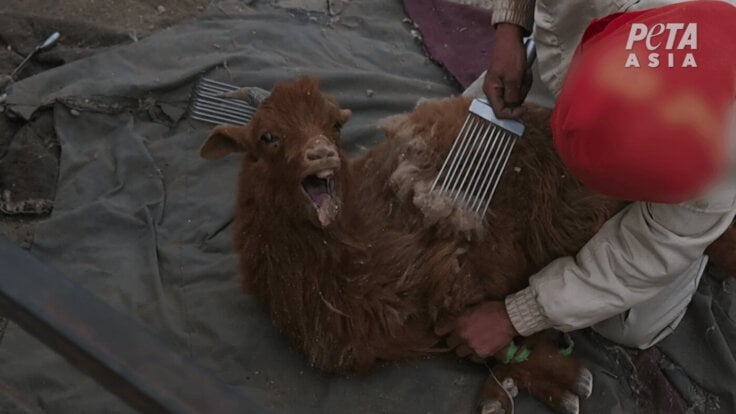
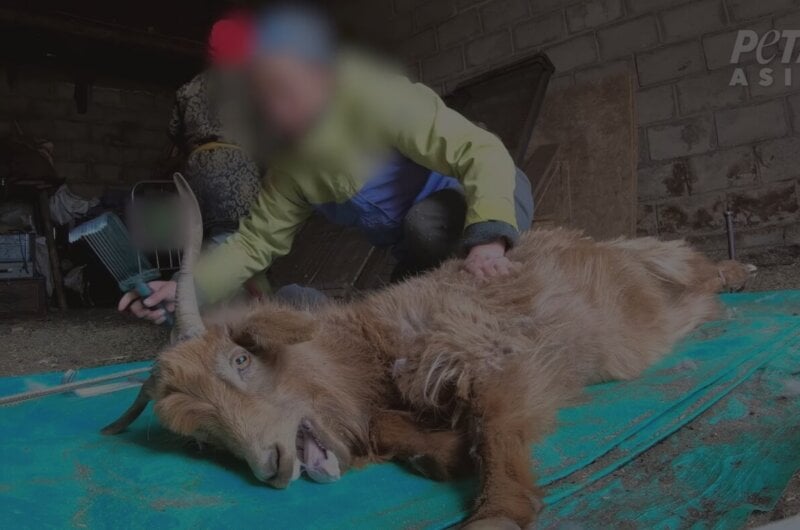
PETA Asia investigations into cashmere operations in China and Mongolia revealed workers pinning terrified goats to the ground before ripping out their hair with sharp, rake-like metal combs. Investigators documented goats crying out, struggling to escape, and being left with raw, bleeding wounds after their coats were torn from their bodies. Because cashmere must be collected during a limited moulting period, workers often race to “process” large numbers of animals, resulting in rough handling and injuries.
The investigations also exposed routine mutilations. Kid goats had their testicles cut off without any pain relief, while older goats whose fleece production had declined were viewed as no longer profitable. Investigators documented workers bludgeoning goats with hammers before their throats were slit.
“Anyone watching this footage can see the distress these animals endure, and it’s appalling that any company could continue to defend cashmere in light of it,” says Packham.
Goats Are Someone, Not Something
Cashmere goats are inquisitive, social animals who form bonds with one another and experience fear, pain, and stress. Yet the global cashmere trade reduces them to commodities, valued only for the fibre that grows from their bodies.
An increasing number of modern textiles made from recycled and plant-based materials offer warm, luxurious alternatives without harming animals. Burberry ought to show real leadership by replacing cashmere with innovative animal-free fibres.
Take Action for Goats
You can help goats today by urging Burberry, and other designers, to drop cashmere from their collections.
Help Animals in 2026: Renew Your PETA Membership!
Donate Now