A Landmark Win for Animals: Europe Moves Closer to Ending Chemical Tests on Animals
After years of tireless campaigning by animal protection groups – and the powerful voices of more than 1.2 million compassionate citizens – the European Commission has finally published its long-awaited ‘Roadmap towards phasing out animal testing for chemical safety assessments’.
This historic moment marks the culmination of unprecedented public pressure and sustained scientific engagement. It signals a clear shift towards a future in which safety decisions rely on modern, species-relevant assessment approaches rather than cruel tests on animals.
At the heart of this achievement is the European Citizens’ Initiative (ECI) “Save Cruelty Free Cosmetics – Commit to a Europe Without Animal Testing”, which sent a clear message: people across Europe do not want animals to suffer and die in laboratories.
From Campaign to Policy
From its inception, PETA played a role in shaping, launching, and advancing the ECI. Together with Cruelty Free Europe, Eurogroup for Animals, the European Coalition to End Animal Experiments, and Humane World for the Animals (formerly Humane Society International), we helped build a coalition that brought together NGOs, policymakers, scientists, and major global brands, including Dove and The Body Shop, for animals.
Now, that collective effort is paying off.
PETA’s contribution did not stop after the signatures were counted. PETA and PETA entity scientists have been closely involved in shaping the EU roadmap from the start. Scientists from PETA entities have been part of expert working groups, helped organise and present at the workshops that informed the roadmap, and led discussions with key stakeholders.
This continuous engagement has helped ensure that the roadmap reflects the necessity of ending tests on animals.
What’s in the Roadmap
A clear end goal – at last. For the first time, the European Commission has committed to phasing out animal testing for chemical safety across the EU – a long-overdue shift towards state-of-the-art, relevant and reliable science.
Real change is possible in the short term. Some tests on animals could be replaced within years, not decades. For example, acute toxicity testing is flagged for replacement by 2029, showing that widely used tests on animals are already outdated and can be replaced.
Additional quick wins include recommendations to waive tests on animals and use existing non-animal assessment approaches that, if acted on swiftly, could save thousands of animals.
Policy is finally catching up with science. The Commission recognises what experts have long said: non-animal methods are often faster, cheaper, and more relevant to human health than tests on animals.
A broad, structured plan for change. With 30+ targeted actions across multiple sectors, the roadmap outlines a pathway to expand and validate non-animal methods and to develop a new regulatory system using humane, relevant assessment approaches. A new 3-step system to identify regulatory needs could help ensure that resources are focused on developing methods that regulators will accept.
Investment and collaboration are on the table. The EU plans to fund innovation, including AI-driven approaches, create “safe spaces” for innovation and regulatory dialogue, and bring stakeholders, including NGOs, into decision-making. The inclusion of NGOs in the Roadmap Steering Team creates a real opportunity for meaningful engagement as the plan moves from paper to practice.
Greater transparency. New monitoring tools, indicators, and a public dashboard could finally make progress visible and accountable. For example, the catalogue of transitional initiatives hosted by the European Joint Research Centre could become a powerful tool for mapping and coordinating global efforts to replace animal testing and for showing what’s working.
Stronger recognition of public demand. The roadmap links the transition to democratic participation and public expectations, acknowledging the role of citizens’ voices in driving change.
What’s Missing?
Major areas of animal use are excluded. The roadmap does not cover key uses of animals in human and veterinary medicines, such as efficacy testing or testing of biological products like vaccines and gene therapies. Ending testing on animals for veterinary medicines also remains out of scope.
No firm commitment to change the law. The Commission admits that legal reform is needed, but provides no clear timeline or guarantee beyond limited revisions that address only a few test requirements. Without binding changes, tests on animals will continue by default.
Animal testing isn’t ending anytime soon. Even under this roadmap, tests on animals will continue wherever regulators say non-animal methods aren’t yet “acceptable”, meaning animals will still be poisoned, force-fed, and killed as the regulatory system and long-held beliefs slowly change.
Funding gaps could stall progress. The lack of funding for validation and regulatory uptake is a known barrier, and the roadmap doesn’t address it. Without serious investment and a discussion about who will pay the bill, change will be slow.
What the Roadmap Means for Animals – and for Science
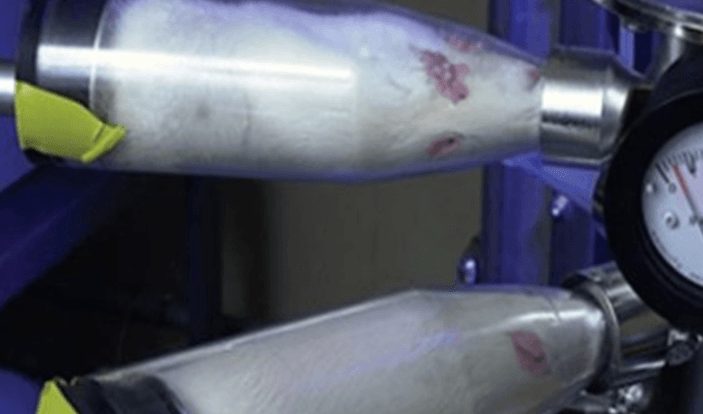
The roadmap inevitably marks the beginning of the end for some of the cruellest routine procedures carried out in laboratories across Europe. Every year, fish are poisoned in lethal toxicity tests, pregnant rabbits are force-fed chemicals through tubes, and rats are restrained in small inhalation chambers for hours, all in the name of safety testing that frequently fails to deliver meaningful protection for humans and the environment.
The roadmap is a vital opportunity to finally replace these horrific practices with non-animal approaches that do not rely on abhorrent suffering.
Publication Is Only the Beginning
All responsible bodies – including the European Chemicals Agency, the European Medicines Agency, the European Food Safety Authority, Commission services, and Member States – must now act swiftly and decisively. This is especially urgent as the EU reviews key regulations concerning chemicals, medicines, biocides, and cosmetics.
PETA scientists stand ready to help, bringing scientific expertise, technical solutions, and a clear commitment to delivering real change for animals.
This moment belongs to the animals – and to the people who spoke up for them. Together, we’ve shown that citizen power works. Now, we must ensure this historic roadmap delivers the cruelty-free future Europe’s animals deserve.
Take Action for Animals Used in Laboratories
Help animals abused in laboratories today with these quick actions:
Help Animals in 2026: Renew Your PETA Membership!
Donate Now