High Welfare and Assurance Labels: What They Really Mean
When you see labels like “Free range” or “RSPCA Assured,” you’re not seeing animal welfare – you’re seeing a marketing strategy.
These certifications actually make life worse for animals because they mislead consumers while animals endure terrifying lives and violent deaths for food and drink. These labels are designed to ease guilt, not end cruelty. Here’s what they don’t want you to know:
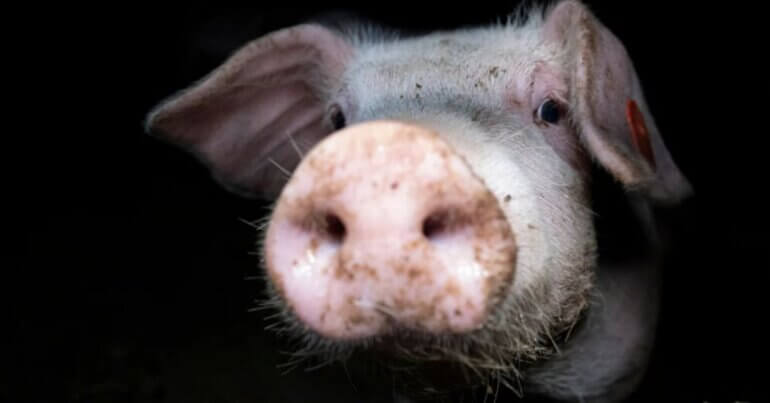
RSPCA Assured
The RSPCA Assured label may soothe the conscience – but it doesn’t stop the violence. Animals on these farms are still subjected to confinement, mutilation, forced breeding, and slaughter, all standard industry practices.
The RSPCA cannot prevent cruelty to animals by giving a pat on the back to farms where they are abused and killed for profit. Investigations into RSPCA Assured farms have repeatedly uncovered shocking treatment of the animals confined there.
Investigations have revealed:
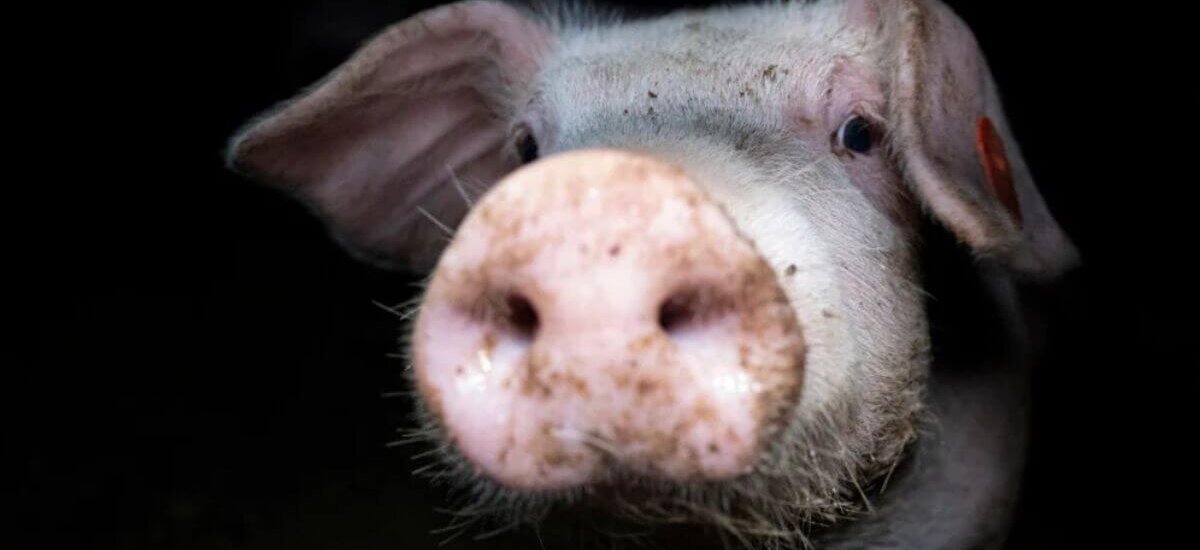
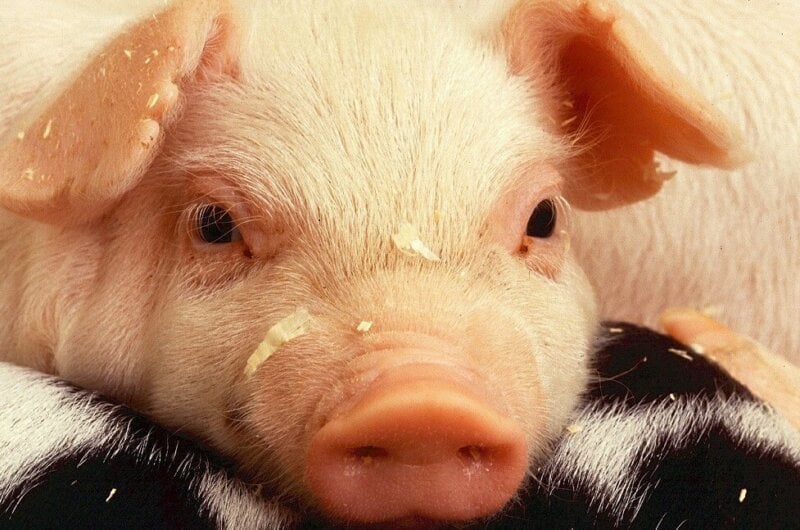
- Pigs kept in filthy, barren pens with untreated wounds.
- Chickens bred to grow so quickly they collapse under their own weight.
Marine Stewardship Council
The Marine Stewardship Council (MSC)’s “sustainable seafood” label hides mass suffering beneath a blue check mark.
Fish are sentient beings – yet under this label, they are hauled from the ocean in huge trawler nets, crushed, suffocated, or gutted alive. This label ignores sentience in favour of profit and scale. On MSC’s website, it openly states that it certifies fisheries that use bottom trawling: a destructive practice that drags huge nets across the ocean floor, destroying habitats, and catching everything and everyone in their path.
Certified operations have:
- Been caught killing dolphins, turtles, sharks and other sea life as “by-catch”.
- Targeted vulnerable populations, such as the Patagonian toothfish.
- Been implicated for shark finning.
Red Tractor
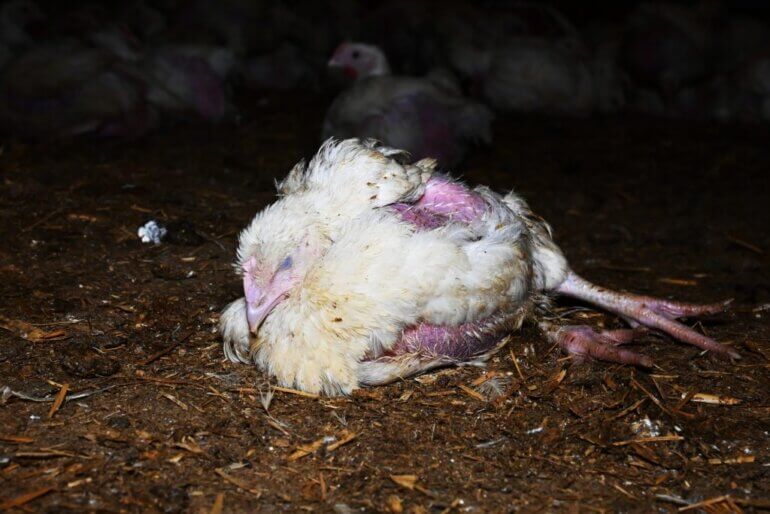
The Red Tractor scheme consistently fails the animals it claims to protect.
This industry-run scheme is more about maintaining supply chains than ensuring any real protection. Farms caught breaking basic welfare laws have been re-certified, even after abuse was exposed.
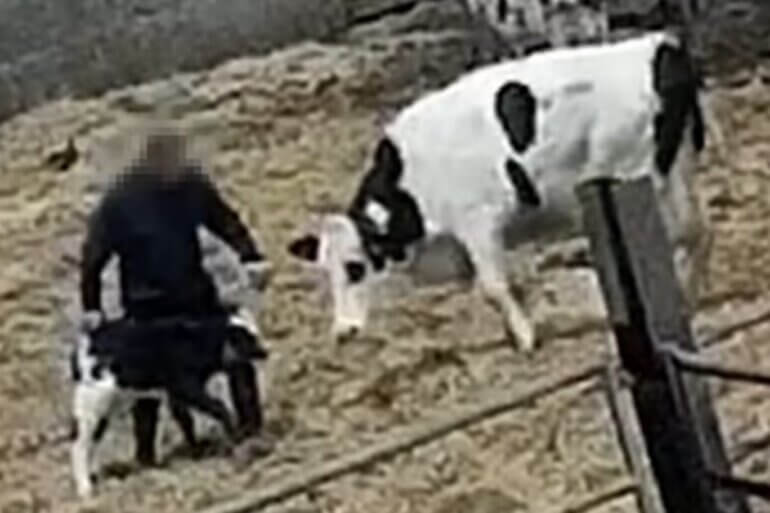
Investigations have uncovered:
- Pigs with severe hernias and prolapses left untreated.
- Dead and dying chickens in filthy sheds.
- Workers hitting animals and throwing them across pens.
- Cows punched and hit with metal brooms
Free range
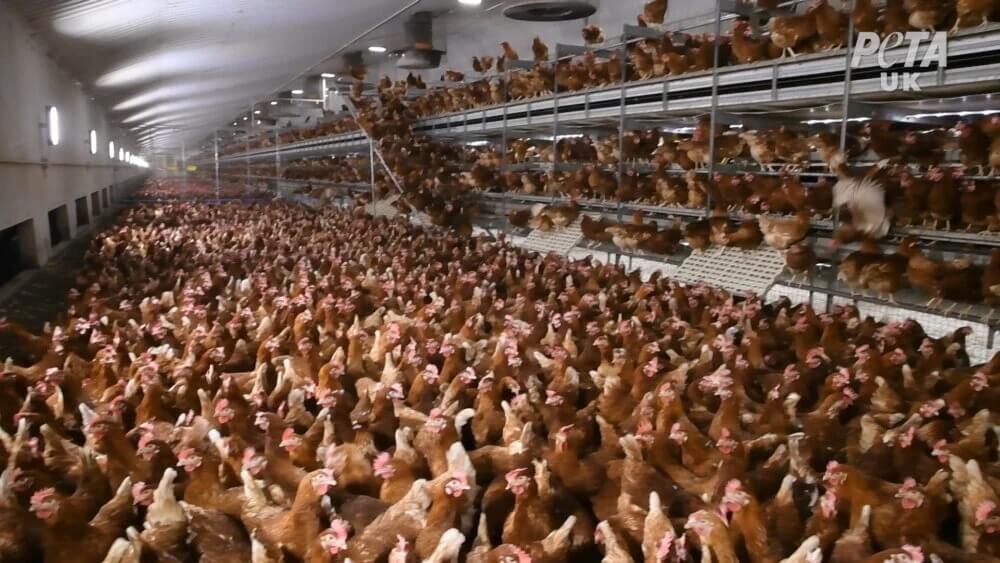
“Free range” might be the most misleading label of all. Most “free range” chickens exploited for eggs spend their short lives in overcrowded sheds – the legal requirement for outdoor access can be met with a small pop-hole that few ever reach.
The suffering is the same: mutilations, open wounds, respiratory infections, and an early death.
Investigations have revealed:
- Hens cannibalising each other due to stress and overcrowding.
- Densely packed, filthy sheds, with little room for birds to stretch or fly.
- Access to the outdoors blocked for multiple consecutive days.
Soil Association (Organic)
Organic doesn’t always mean ethical, and the Soil Association doesn’t mean cruelty-free.
Animals on Soil Association-certified farms are still forcibly impregnated, separated from their babies, and killed when no longer profitable. The focus is on the environment and soil, not the rights or wellbeing of animals.
An investigation at an organic dairy farm certified by the Soil Association found workers force-feeding and hitting newborn calves. While the RSPCA removed its certification after seeing the footage, the Soil Association refused to do so. Shockingly, the CEO of Soil Association claimed that “in many ways the facilities and animal wellbeing look exemplary” in a blog post responding to the footage.
Better Chicken Commitment
The Better Chicken Commitment (BCC) is promoted by supermarkets and food chains as a solution to chicken welfare concerns, but it still supports a system built on suffering and slaughter.
The BCC simply replaces one breed of fast-growing chicken with another that grows slightly slower. It makes no meaningful difference to the animals’ quality of life.
Chickens under the BCC are still:
- Killed at just six to eight weeks old.
- Kept in crowded, dirty sheds.
- Mutilated without pain relief.
- Denied any chance to live naturally.
The BCC is backed by companies trying to reassure consumers, not protect animals.
Lion Quality Mark
The British Lion mark is essentially a marketing tool for an industry that promotes suffering.
This scheme does little to prevent the routine abuse of hens. Instead, it merely standardises their exploitation.
Birds raised under the British Lion Quality standard still endure the following conditions:
- Hens mutilated through beak trimming.
- Sensitive birds are confined in large, overcrowded sheds or “enriched” cages
- Chickens are killed at just 18 months old when their spent bodies are no longer profitable.
- Hens denied access to fresh air, sunlight, and the ability to exhibit natural behaviours.
- Male chicks are killed at birth because they cannot lay eggs.
Love British Food
The “Love British Food” campaign encourages people to buy local animal parts and excretions but animals suffer just as much on local British farms as they do anywhere else.
Local doesn’t mean high-welfare. It doesn’t mean cruelty-free. And it definitely doesn’t mean compassionate.
On British farms certified by UK labels seen above, investigations have exposed:
- Pigs beaten and left to die slowly.
- Hens pecked raw in overcrowded sheds.
- Cows kicked and neglected.
Slaughtering someone close to home doesn’t make it more humane. Exploitation is exploitation – no matter the postcode.
The Only Ethical Choice
Don’t be fooled by feel-good slogans. Every welfare label, certification, and marketing campaign exists to make you feel better about harming animals. Refuse to fund industries that profit from suffering.
There is only one way to be sure no one was exploited, mutilated, confined, or killed for your food: choose vegan.
Leave all animals off your plate. Try vegan for 30 days:
Help Animals in 2026: Renew Your PETA Membership!
Donate Now