
Morrissey Slams Queen Mary University Over ‘Grotesque’ Sepsis Experiments on Mice
Musician and longtime PETA supporter Morrissey has urged Queen Mary University of London (QMUL) to end cruel experiments in which mice are deliberately made to suffer from sepsis.
In a letter to QMUL President and Principal Professor Colin Bailey, Morrissey condemns the university’s history of cutting open mice and puncturing their intestines, allowing faeces to leak into their abdomens. The mice can endure fever, difficulty breathing, and organ failure before being killed.
“And for what, exactly? It seems obvious that mice are not miniature humans,” Morrissey writes. “Their responses to sepsis differ markedly from ours, which is why over 150 drugs that worked in mice have failed in humans.”
Morrissey Demands an End to Sepsis Experiments on Animals
QMUL has confirmed to PETA that it is not currently using caecal ligation and puncture (CLP), the procedure described above. However, the university has not ruled out other methods of deliberately inducing sepsis in animals or using CLP in future experiments.
“But what of other methods to deliberately induce sepsis in animals? Will you confirm that QMUL has abandoned all such experiments and has no intention of inflicting this misery on another animal?” Morrissey asks.
Morrissey has offered to meet Professor Bailey alongside PETA’s scientists during his UK tour.
Read Morrissey’s letter in full here
Animals Don’t Belong in Sepsis Experiments
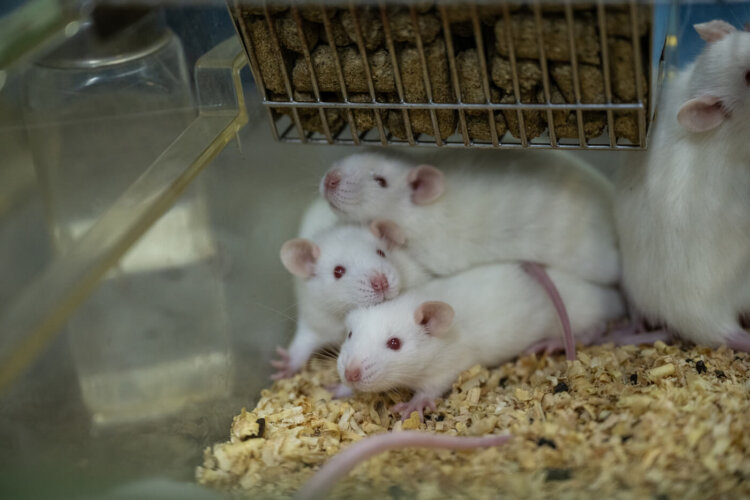
Mice and rats are intelligent, highly social individuals who form close bonds with one another. They are not laboratory equipment to be cut open, deliberately infected, and killed.
These experiments also fail humans. Sepsis is a life-threatening reaction to infection that affects around 245,000 people in the UK each year. Yet decades of experiments on animals have failed to produce a single targeted, effective treatment for humans.
Mice differ from humans in their genetics, immune responses, and metabolism, making them poor models for human sepsis. Scientists can instead study the condition using state-of-the-art, human-relevant methods, including organs-on-chips, human cell-based models, and computational biology, without harming animals.
The University of Kent has already committed to using no animals in future sepsis research. QMUL should follow its lead and leave these cruel, scientifically flawed experiments behind.
What You Can Do
Join Morrissey and PETA in urging Queen Mary University of London to end all experiments that deliberately induce sepsis in animals and adopt human-relevant methods.
Take Action Now
Help Animals in 2026: Renew Your PETA Membership!
Donate Now