Netflix’s Big Chicken’s Big Omission
Netflix’s Big Chicken: A Fast Food Conspiracy pulls back the curtain on the fast-food chicken industry, exposing a business built on exploitation, secrecy, and profit at almost any cost.
The documentary raises serious concerns about worker welfare, public health, and environmental damage. It shows how corporations benefit from a system that leaves communities suffering from pollution, workers facing dangerous conditions, and consumers encouraged to eat products carefully crafted to be addictive, which are linked to chronic health problems.
But the trauma of the individuals who suffer most in this industry, the billions of sensitive chickens bred, confined, and killed every year, is barely given a passing thought. You’d think they were talking about potatoes.
What Big Chicken Fails to Show
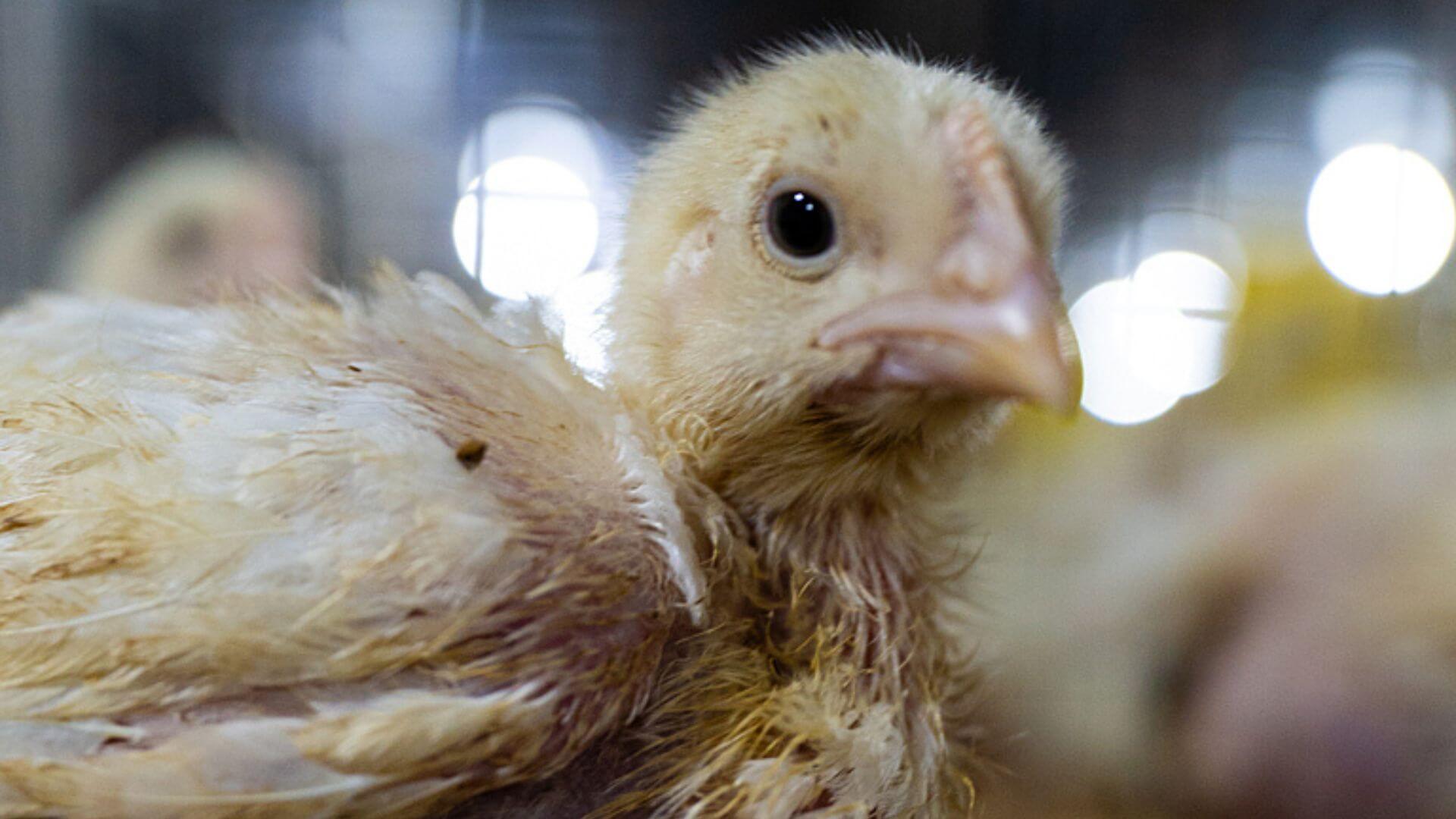
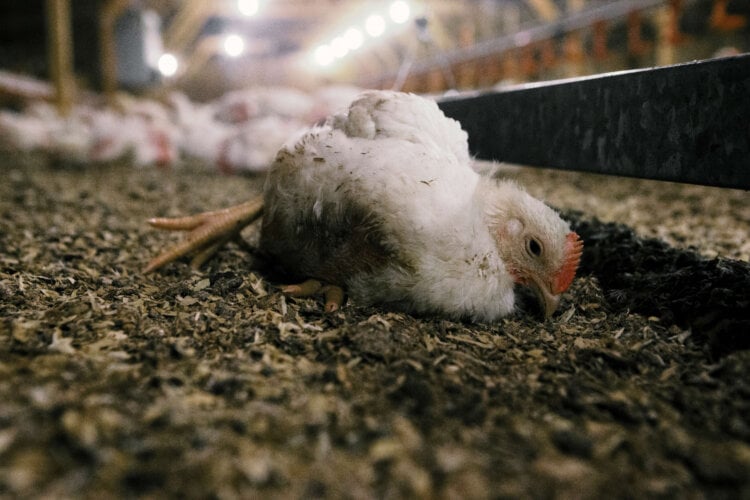
Can we, for a second, imagine the experience of a chicken raised for meat, genetically manipulated to grow at a grotesque rate, at just weeks old, being so unnaturally large that our legs struggle to support our own weight? Collapsing under the strain, suffering painful joint disorders, and heart problems?
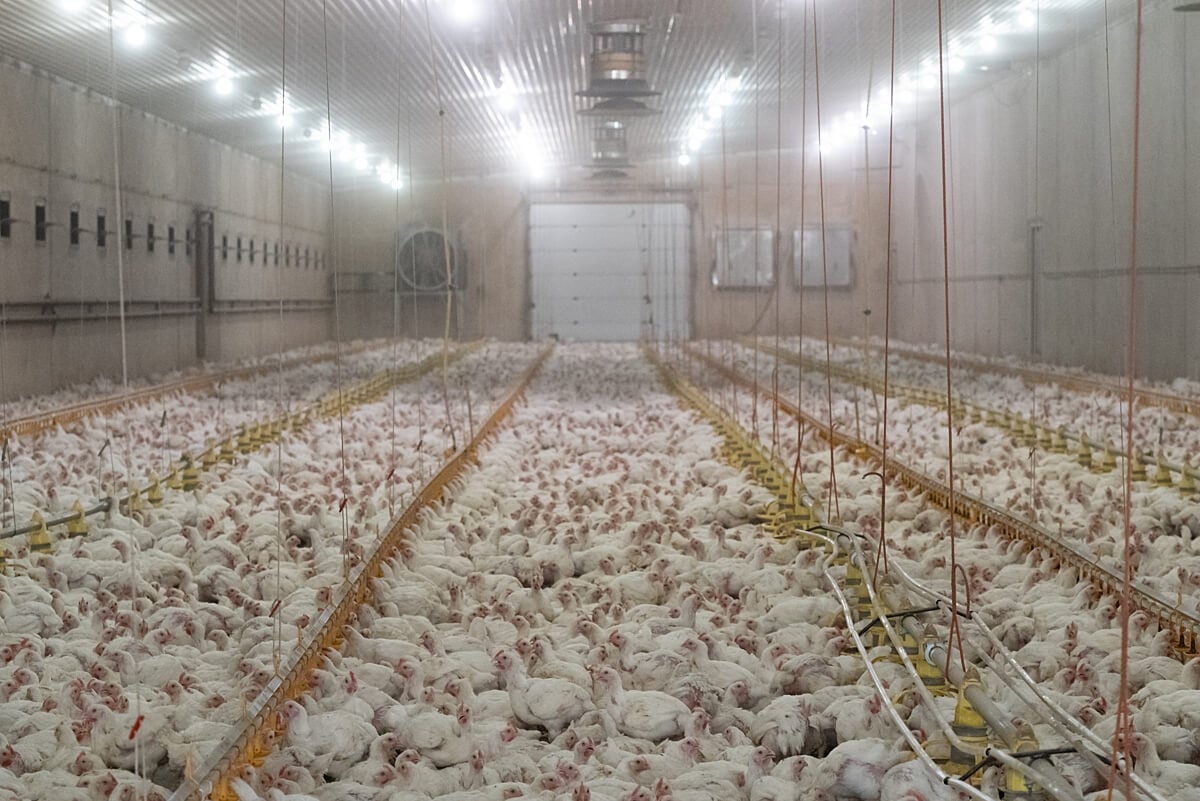
Struggling to breathe alongside tens of thousands of other birds crammed into the same barren shed, packed wall to wall, with little more than artificial light, filthy litter, and air thick with ammonia from waste? Denied everything that matters to you?
For animals capable of feeling fear, frustration, comfort, curiosity, and joy, every moment of their short, miserable lives is filled with suffering.
They cannot explore.
They cannot forage.
They cannot raise families.
They cannot enjoy fresh air, sunlight, or the freedom to move away from aggression and stress.
The fast-food industry depends on consumers thinking of chickens as ingredients rather than individuals.
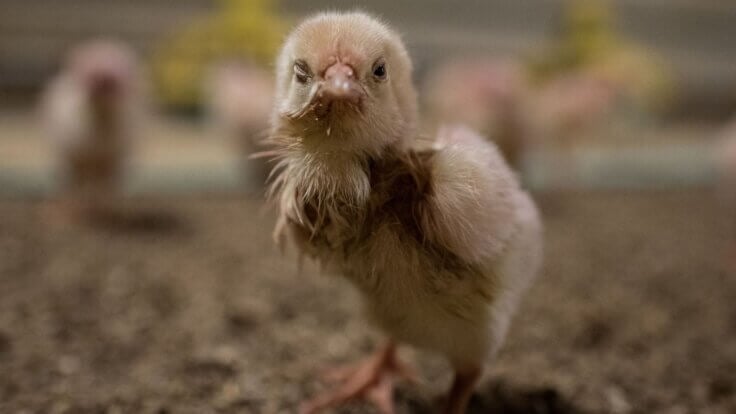
But chickens are intelligent, social, inquisitive animals. They recognise individual faces, communicate using a sophisticated range of vocalisations, solve problems, learn from one another, and form strong social bonds.
Mother hens begin communicating with their chicks before they hatch. Chickens establish friendships, experience stress and fear, and show clear preferences about how they spend their time. Animal behaviourist Dr. Chris Evans has said that when he lists chickens’ abilities at conferences without naming the species, “people think I’m talking about monkeys.”
Anyone who has lived with rescued chickens knows they are every bit as curious and engaging as the dogs and cats who share our homes.
Yet the industry works hard to ensure consumers never see them that way.
Social Media Is Helping Sell the Cruelty
Some public personalities, like Mo Gilligan (as he realised), are part of the problem.
Every day, influencers and online personalities are paid to promote chicken burgers, fried chicken buckets, wings, nuggets, and other products to millions of followers – and cruelty becomes content.
A generation of consumers is being encouraged to view fast-food chicken not as the product of a violent industry but as a fun lifestyle purchase endorsed by their favourite creator.
Corporations could not have built today’s chicken empire without advertising. In the age of social media, influencers have become some of its most effective salespeople.
When content creators accept money to promote these products, they are helping to normalise a system that harms animals, damages the environment, exploits workers, and contributes to poor public health.
The Biggest Victims Are Still Invisible
Big Chicken deserves credit for exposing many of the hidden costs behind fast-food chicken and how this ubiquitous ultra-processed food is ‘literally killing us’. But every discussion about pollution, public health, or labour rights should begin with those trapped at the centre of the system: the chickens.
Not statistics.
Not commodities.
Not menu items.
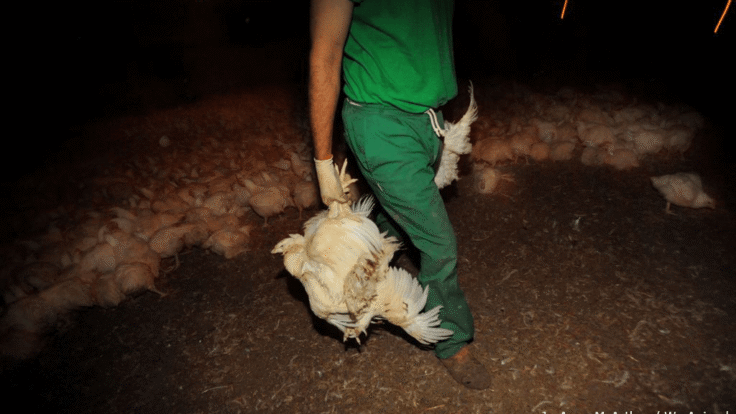
Billions of intelligent, curious, sensitive animals whose entire lives are commodified from hatching to slaughter.
For a moment in the film, the grim lives and deaths of chickens become too much for Mo, who says, “There’s a human part of you that says no animal should ever have to live and suffer like that.” But acknowledging cruelty is not the same as rejecting it. Perhaps the chicken addiction is too strong with him.
The Industry’s Biggest Victims Cannot Be an Afterthought
The chicken industry exists because people keep buying what it sells. If we are serious about ending the suffering exposed in the film, then the answer is simple: stop eating chickens.
The billions of chickens trapped in this violent system cannot choose a different future. We can.
Take Action: Help Stop Egg Mega Farm Expansion
More than 38,000 chickens could be condemned to life inside a giant broiler breeder egg production facility if plans for a Norfolk mega farm are approved. Chickens could be packed into crowded sheds and treated as egg-producing machines. Help stop this expansion before it begins.
Help Animals in 2026: Renew Your PETA Membership!
Donate Now