New Government Statistics Reveal Millions of Animals Suffering in British Laboratories
Electrodes implanted into rats’ brains, pipettes inserted into the vaginas of pregnant mice, piglets struggling to breathe – all in a day’s work for laboratories in Great Britain.
Government statistics published today reveal that more than 2.5 million procedures were conducted on animals in Great Britain in 2025, a small decrease compared with figures from 2024.
While that modest decline may appear encouraging, the latest figures still underline the vast scale of animal suffering taking place behind laboratory doors and highlight the significant challenge ahead if the Government is to deliver on its commitment to phase out the use of animals in science.
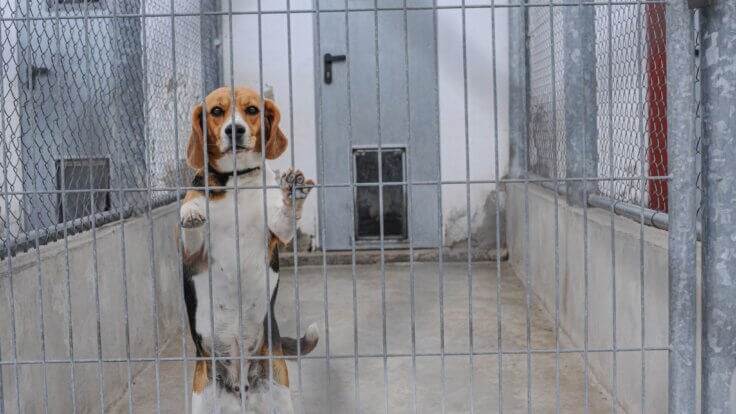
More importantly, these numbers are not just statistics. Behind every figure is an individual animal who spent their life in confinement before being used in procedures and killed.
The Latest Statistics
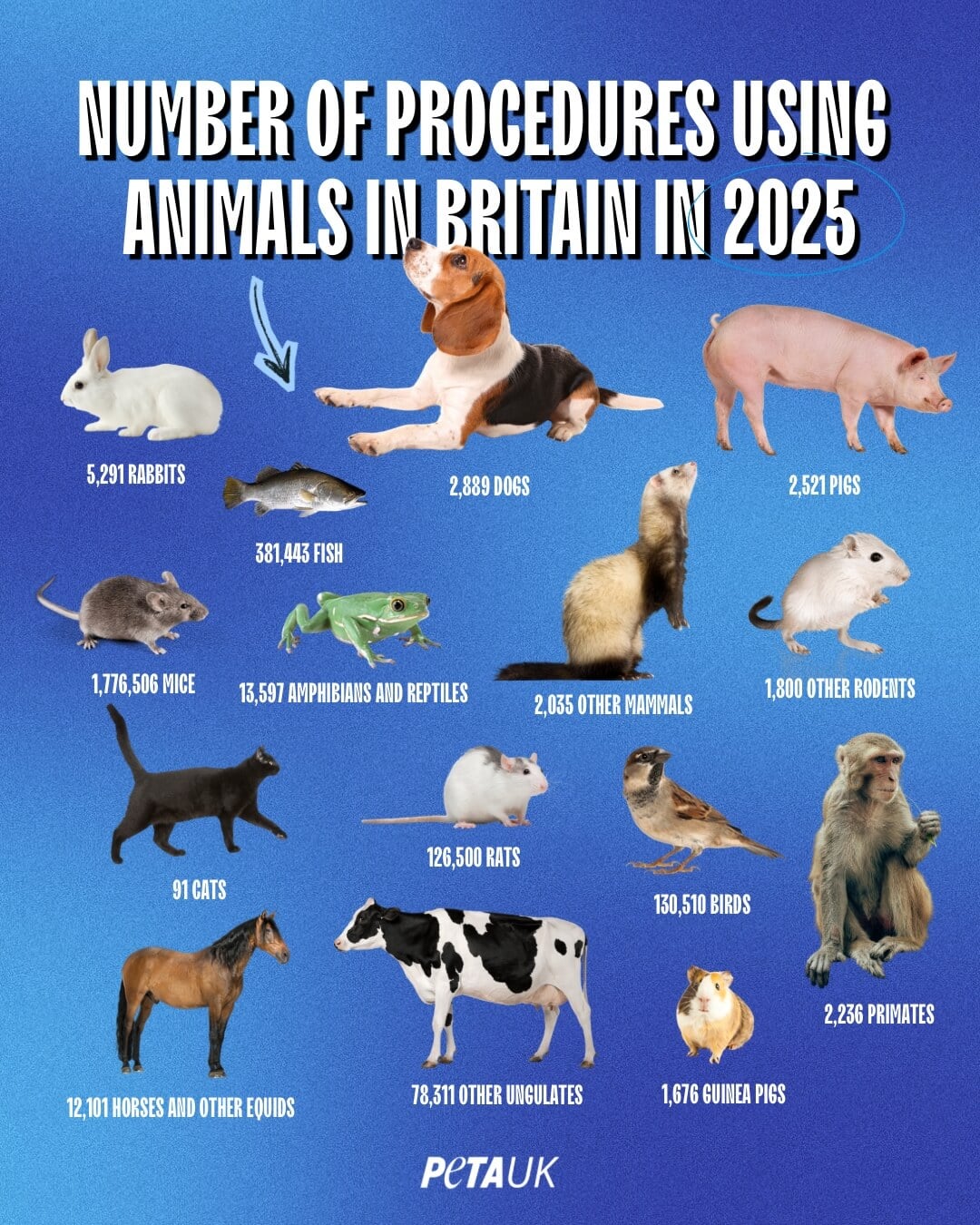
Mice are the most commonly used species overall, while rats are the most commonly used species in toxicity and other safety testing – treated as mere tools rather than as sensitive, social individual beings.
28,205 procedures (including creation and maintenance of genetically altered animals) involved severe suffering, meaning that animals endured intense and protracted pain, suffering, or distress. However, the categorisation of suffering is arbitrary at best – a rat classed as experiencing ‘mild suffering’ may have had a tube forced down their throat to flood the stomach with drugs every day for weeks at a time. ‘Moderate suffering’ can involve sawing off the top of a dog’s head, electrocuting a rabbit, or implanting an electrode in a monkey’s brain.
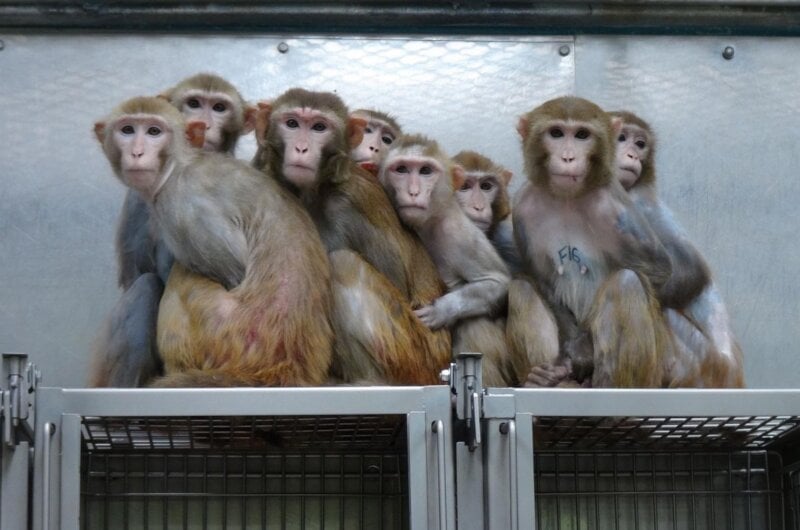
95% of all primates used in procedures are long-tailed macaques, an endangered species, sourced almost entirely from Asia and Africa.
Approximately half of all procedures involved the creation or breeding of genetically altered mice, rats, fish, birds, frogs and other animals who may be forced to live with debilitating conditions such as missing eyes or ears, seizures, and heart failure.
While there was a small decrease in the total number of procedures conducted on animals, there were notable increases in the use of dogs (9%), primates (15%), birds (13%), and horses (5%).
Species Breakdown
These Figures Do Not Tell the Full Story
The headline statistics fail to capture the full experiences of all animals affected by the laboratory industry.
Significant numbers of animals are bred but never used in experiments. They may be killed because they are the wrong sex, possess unwanted genetic traits, or are otherwise considered surplus to requirements.
These animals never appear in annual announcements or reports, despite spending their entire lives within the system of animal experimentation.
The Government Must Pick Up the Pace
A reduction of 3.8% represents progress, but it falls far short of what is needed.
In fact, the past decade has shown only a marginal rate of decline in the use of animals in experiments. Without accelerated action, animals will continue to be bred, experimented on and killed in British laboratories for decades.
The publication of the UK’s Strategy to Replace Animals in Science last November should mark a turning point. More than ever, Britain must accelerate the shift towards modern, non-animal methods.
We need:
- Disease models, such as sepsis, to be included in the strategy.
- Clear and enforceable mechanisms for the replacement of animal tests.
- Regular reporting on progress against strategy commitments.
- Entrenched biases that favour the use of animals to be addressed.
- A level of urgency comparable with emerging international initiatives.
Without clear milestones, transparency, and accountability, the government’s commitment risks remaining words on paper rather than delivering meaningful change for animals.
Modern Science Does Not Need Animals
Human-relevant technologies already exist.
Organs-on-chips, advanced human tissue models, computational approaches, and AI-powered research tools are increasingly able to provide more species-relevant information than experiments on animals.
Yet despite their promise and growing availability, these methods remain underused while animals continue to be bred, confined, experimented on, and killed.
PETA’s Scientists Can Help Make the Replacement Strategy a Reality
PETA’s scientists have decades of experience in researching, validating, and advancing non-animal methods.
We urge the Government to work with PETA to accelerate the transition to animal-free research methods, spare millions of animals from suffering, and establish the UK as a global leader in humane, 21st-century science.
Take Action
The future of science must be species-relevant and animal-free.
Please sign PETA’s open letter calling on the government to include PETA on the Alternative Methods Committee and help accelerate the transition away from experiments on animals.
Take Action
Help Animals in 2026: Renew Your PETA Membership!
Donate Now