
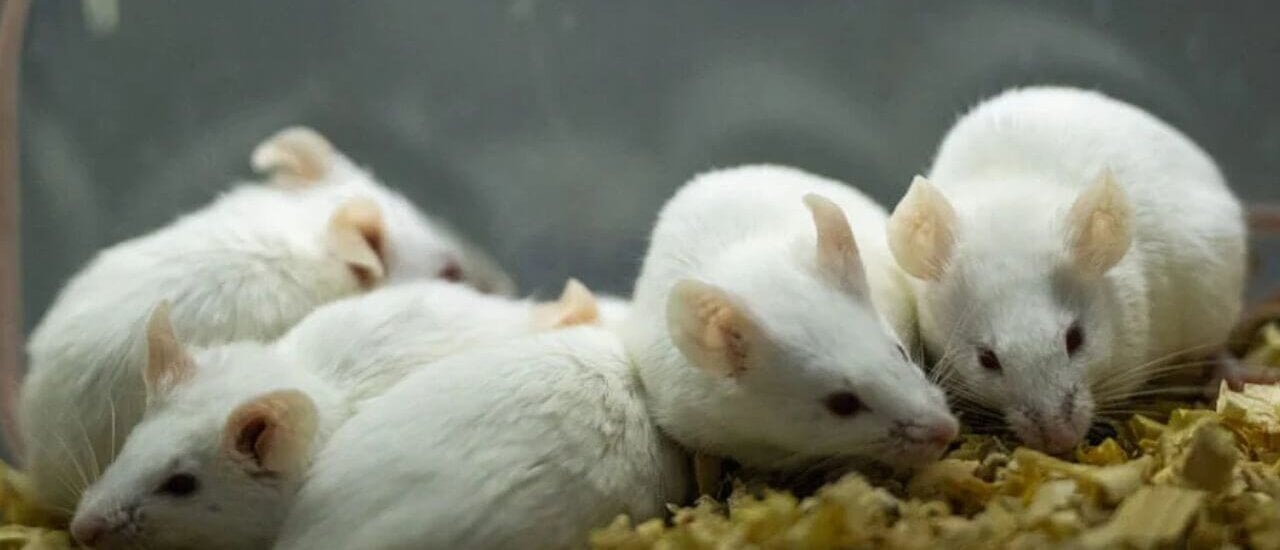
The Animal Testing Crisis in Chemical Regulations
In 2006, the European Union introduced a new regulation on the Registration, Evaluation, Authorisation and Restriction of Chemicals (REACH). This law requires chemical companies to provide information on the health effects and environmental hazards of almost every chemical used in Europe.
Since then, other regions have introduced similar laws, and following Brexit, the UK replicated the EU REACH regulation and maintained its core principles. One of those core principles is that animal testing must only be conducted as a last resort if no other options are available, such as non-animal methods.
In 2020, the European Commission promised to revise REACH to modernise and strengthen the law. Yet reform has been delayed ever since. Despite scientific advances and continued public support for ending animal testing, the system continues to permit experiments that could and should be prevented. In 2022 alone, more than 150,000 tests on animals were conducted to assess industrial chemicals in the EU.
In 2023, after more than one million citizens backed the “Save Cruelty-Free Cosmetics: Commit to a Europe Without Animal Testing” European Citizens’ Initiative, the Commission committed to developing a roadmap to phase out animal testing for chemical safety assessments. Now it must deliver. Yet, the Commission is once again deciding whether to fully revise REACH or scale back reform. Only a full and ambitious revision can properly strengthen the last-resort requirement and pave the way for ending animal testing for chemical safety assessments.
Chemical Tests
Companies are required to assess their chemicals using various tests, including tests on animals. Rats and mice have large quantities of chemicals forced down their throats every day for up to months at a time to determine whether the substance is toxic. In reproductive toxicity tests, experimenters force-feed chemicals to pregnant animals to see whether the substances will cause their offspring to be born with abnormalities or die. Up to 2,500 animals may be used to test just one chemical in a single reproductive toxicity test.
PETA’s Commitment to Ending the Use of Animals in Chemical Tests
PETA entities have been campaigning to protect animals from the threat of EU REACH. For example,
- Our policy experts worked hard to have measures protecting animals included in the legislation and guidance.
- PETA scientists support companies appealing requests for tests on animals.
- PETA has filed complaints to the European Ombudsman when the European Chemicals Agency was not fully exercising its authority to minimise tests on animals.
- PETA co-organised a multi-stakeholder scientific roundtable to identify practical building blocks for the EU roadmap to phase out the use of animals in chemical safety testing.
More information on our work to minimise animal testing for the assessment of chemicals can be found here.
Our dedicated briefing document for policymakers is available here.
What Needs to Happen?
PETA supports the principle of ensuring that the chemicals we are exposed to are not harmful to our health or the environment. As long as we rely on testing chemicals on animals, that goal will never be reached. Forward-thinking scientists and regulators worldwide recognise that besides being unethical, tests on animals can’t do the job. The “Save Cruelty Free Cosmetics – Commit to a Europe Without Animal Testing” European citizens’ initiative (ECI), with over 1.2 million supporters, marks a major turning point in the fight to end tests on animals for regulatory purposes. In response to this overwhelming call for change, the European Commission is developing a roadmap to phase out animal testing for chemical safety assessments.
The UK Government has committed to “partner with scientists, industry, and civil society” to phase out animal testing. It must now deliver on this promise by creating a clear roadmap to end all animal testing in the UK.
PETA’s Research Modernisation Deal(RMD) offers a six-point strategy to guide the transition to animal-free science, including increased funding for developing and validating non-animal methods. PETA scientists are working to accelerate the shift to more reliable non-animal methods for chemical testing, for example, by briefing decision-makers and actively pressing for a REACH revision that strengthens the requirement to test on animals as a last resort and honours the Commission’s promise to phase out animal testing.

What You Can Do
By working together, we can convey to the UK government the importance of ending tests on animals and urge them to invest in and accelerate the development of non-animal methods. Join us by signing the open letter urging the European Commission to mandate an end to chemical experiments on animals.
Help Animals in 2026: Renew Your PETA Membership!
Donate Now
Read More

Shearling

The Truth About Cage-Free Eggs